White Sage / White Meadow Sage
Scientific Name: Salvia nemorosa 'Snow Hill' (or similar white cultivar)
Category: plant
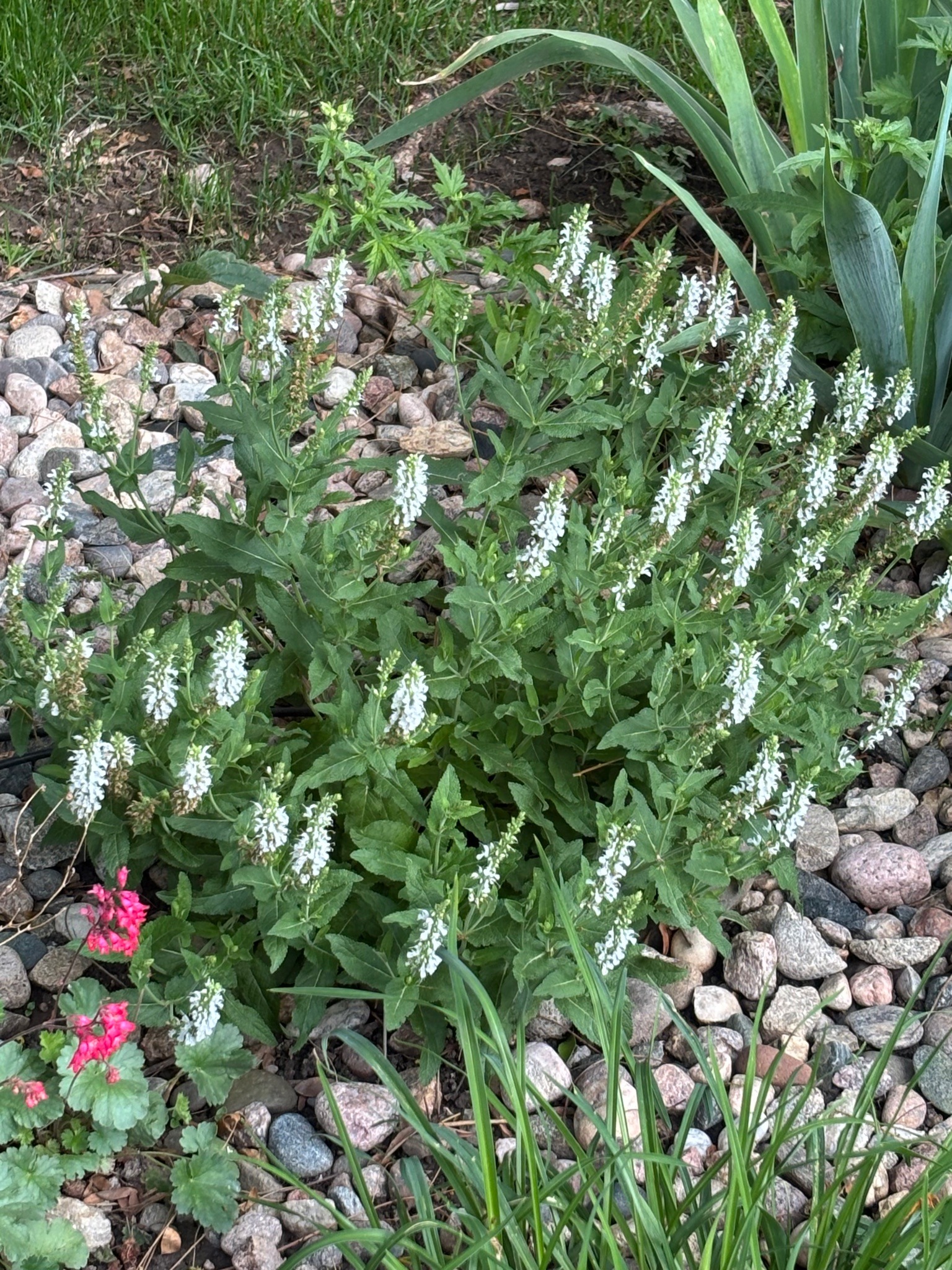
Brief Description
A perennial flowering plant known for its dense spikes of small white flowers and aromatic, textured foliage.
Characteristics
Upright, clump-forming habit with square stems typical of the mint family. It features wrinkled, grayish-green, lance-shaped leaves with serrated edges and vertical spikes (racemes) crowded with small, two-lipped white flowers.
Habitat
Typically found in gardens, meadows, and limestone-rich soils; prefers full sun and well-drained soil.
When to Find It
Blooms primarily from late spring through mid-summer; may rebloom in early autumn if deadheaded.
Conservation Status
N/A
Ecological Role
Highly attractive to pollinators, including bees, butterflies, and hummingbirds. Its aromatic foliage often makes it resistant to deer and rabbit grazing.
Easily Confused With
White Speedwell (Veronica) which has flowers with four petals rather than the two-lipped structure of Salvia; White Lavender, which has narrower, silvery-gray leaves.
Observation Tips
Look for square stems to confirm it is in the Lamiaceae family. Lightly rub the leaves to detect the characteristic sage scent.
Interesting Facts
The genus name 'Salvia' comes from the Latin word 'salvere', meaning 'to heal,' referring to the medicinal properties historically associated with many sage species.