African Daisy
Scientific Name: Osteospermum ecklonis
Category: plant
Brief Description
A vibrant, sun-loving flowering plant in the Asteraceae family, often used in gardening and containers.
Characteristics
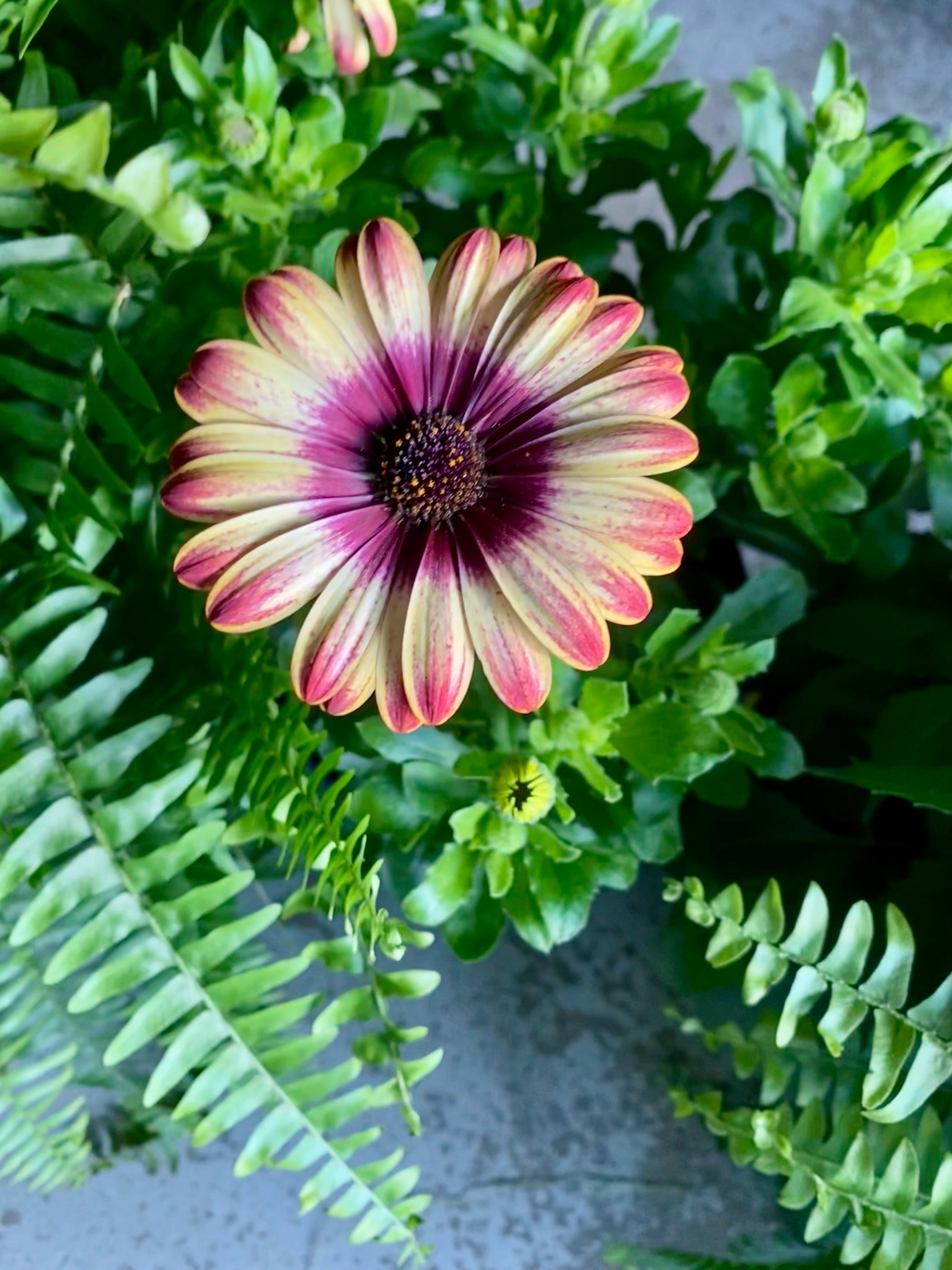
Daisy-like composite flowers with a central disk. This specimen features bicolored petals ranging from deep purple at the center to yellow and pink at the tips. The leaves are typically succulent-like, green, and slightly toothed or lobed.
Habitat
Coastal hills, sandy plains, and shrublands; commonly cultivated in gardens, flowerbeds, and pots worldwide.
When to Find It
Flowers most abundantly in spring and early summer; can bloom through autumn in mild climates. Flowers often close at night or in very cloudy weather.
Conservation Status
N/A - Widely cultivated globally.
Ecological Role
Provides nectar and pollen for various insects including bees, butterflies, and hoverflies.
Easily Confused With
Gerbera Daisies (Gerbera jamesonii) which have thicker stems and larger centers, or Cape Marigolds (Dimorphotheca sinuata) which are often annuals and have slightly different leaf structures.
Observation Tips
Best viewed on sunny days when the flowers are fully open. Deadheading (removing spent blooms) will encourage the plant to produce more flowers.
Interesting Facts
They are native to South Africa, which is why they are often called 'Cape Daisies'. Despite their delicate appearance, they are quite drought-tolerant once established.
User Notes
Bought