Turkey Vulture
Scientific Name: Cathartes aura
Category: bird
Brief Description
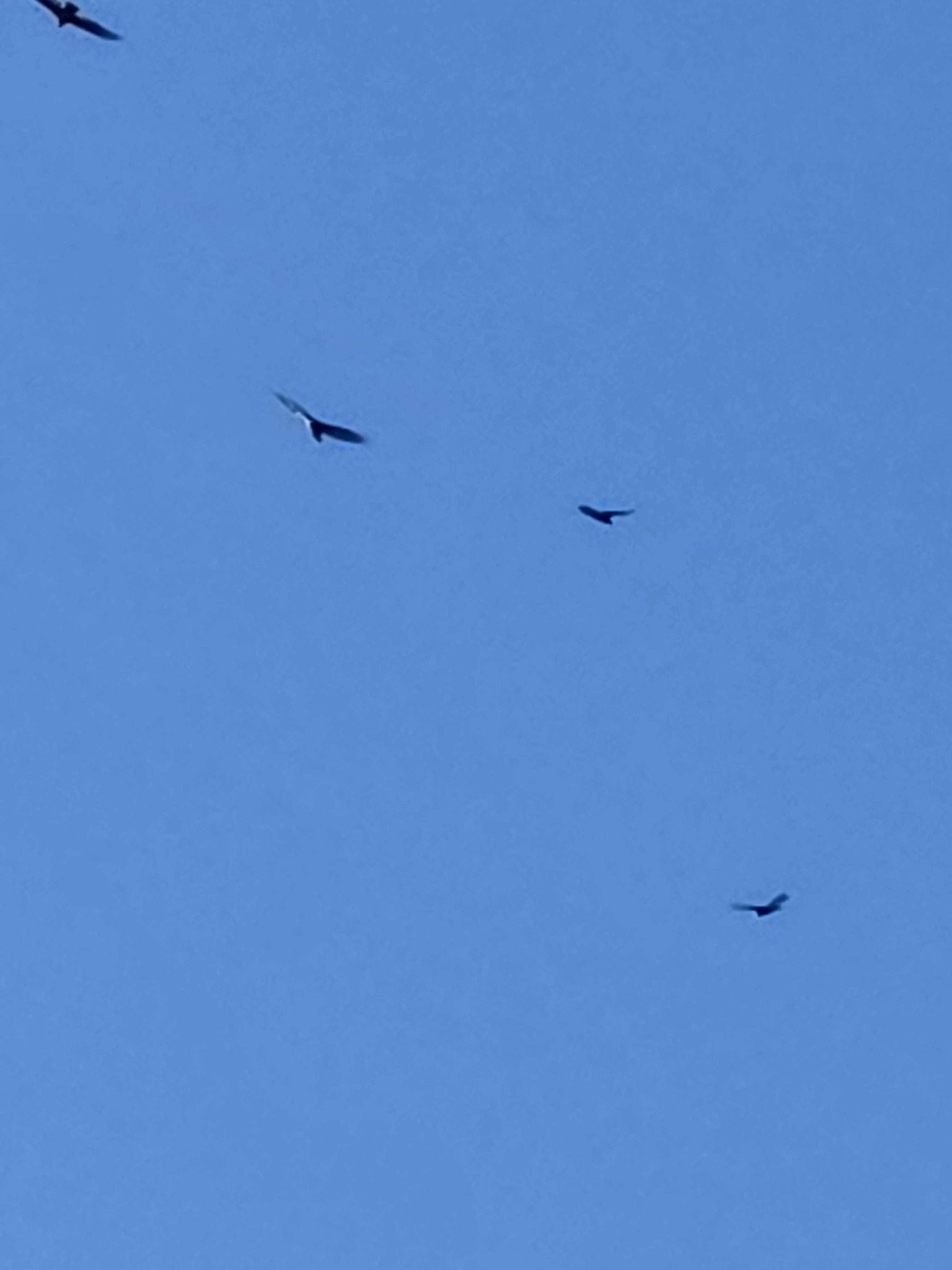
Large soaring scavenger birds flying high in the sky, recognizable by their dihedral (V-shaped) wings and rocking flight.
Characteristics
Broad wings with silvery-grey flight feathers contrasting against darker linings. They fly with wings in a pronounced V-shape and frequently teeter or rock side-to-side while soaring. They have small, featherless red heads (difficult to see at height).
Habitat
Open areas, including agricultural fields, rangelands, parks, and roadsides; they often nest in caves, hollow logs, or thickets.
When to Find It
Commonly seen during the day in warm weather, often arriving in spring in northern regions. They are frequently spotted riding thermal updrafts in the late morning and afternoon.
Conservation Status
Least Concern
Ecological Role
Crucial scavengers that provide clean-up services by eating carrion, which helps prevent the spread of diseases from decaying carcasses.
Easily Confused With
Black Vultures, which have shorter tails and white patches only at the wingtips; Red-tailed Hawks, which soar with flatter wings and lack the rocking motion.
Observation Tips
Look for them in groups called kettles where they circle together to catch thermals. Do not approach nesting sites closely as they may defend themselves by vomiting.
Interesting Facts
Turkey vultures have an incredibly keen sense of smell, allowing them to find carrion hidden beneath forest canopies, a rarity among birds.