Thorny Olive
Scientific Name: Elaeagnus pungens
Category: plant
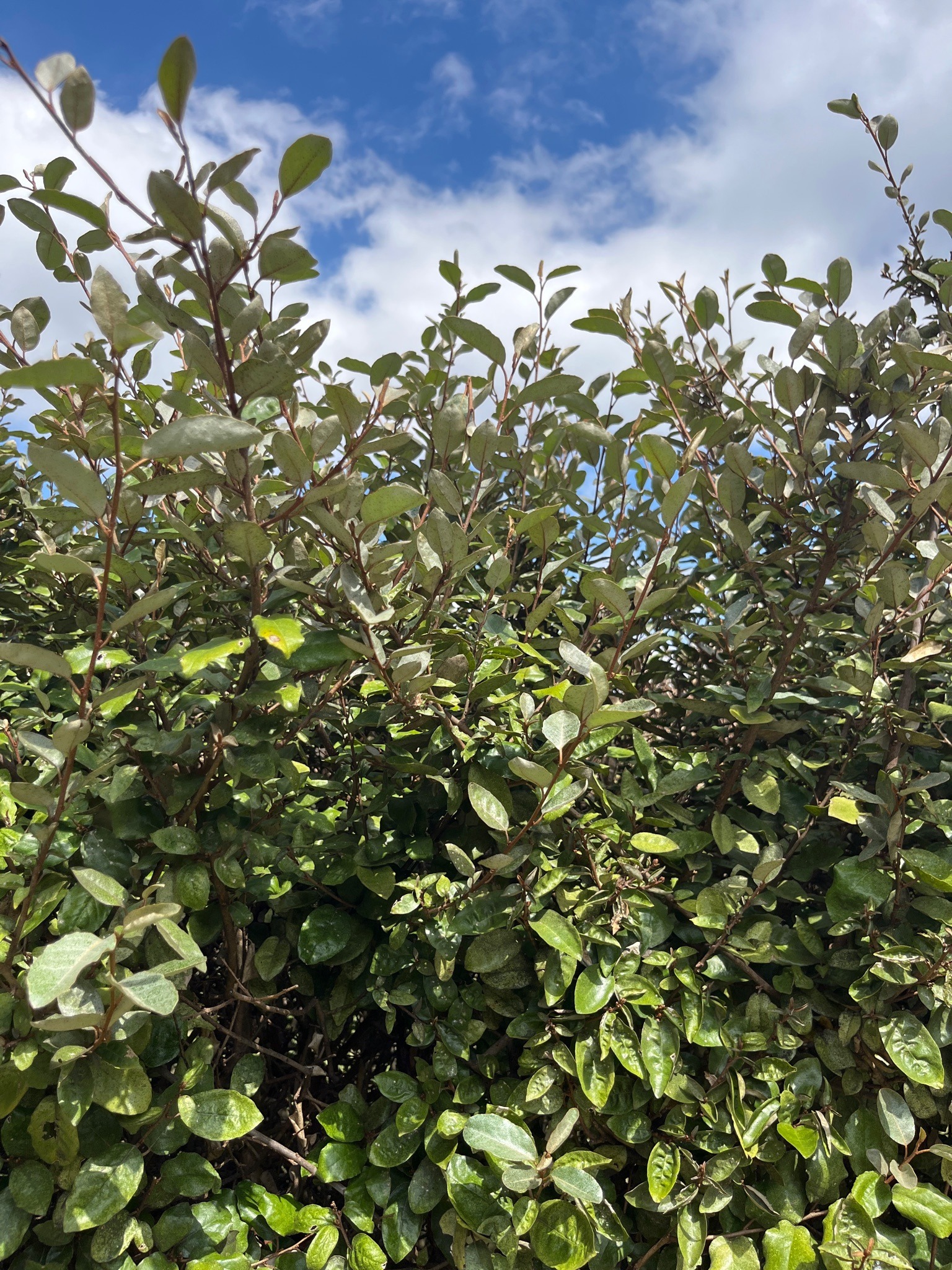
Brief Description
A dense, evergreen shrub or small tree characterized by alternate leaves with silvery-green upper surfaces and brownish-scaly undersides, often growing as a hedge.
Characteristics
Leaves are simple, alternate, oval-to-elliptic, wavy-margined, 2 to 4 inches long, dark green and glossy above, and densely covered with silvery and brown scales below. Stems often have sharp, woody thorns. Small, highly fragrant, silvery-white flowers appear in autumn, followed by oval, brownish-red scaly fruits in spring.
Habitat
Disturbed areas, forest edges, roadsides, old fields, and urban landscapes where it is frequently planted as an ornamental hedge.
When to Find It
Best observed in autumn for its fragrant flowers or spring for its developing scaly fruits. Retains foliage year-round.
Conservation Status
N/A
Ecological Role
Often invasive outside of its native range, displacing native vegetation and altering soil nitrogen levels through actinorhizal nitrogen fixation. Fruits are consumed by birds, which spread the seeds.
Easily Confused With
Russian Olive (Elaeagnus angustifolia), which has deciduous, narrower, more silvery leaves and typically lacks thorns.
Observation Tips
Look for the distinctive silvery-brown scaly undersides of the leaves and check stems for stout thorns. In autumn, follow the sweet fragrance of the small flowers.
Interesting Facts
Elaeagnus pungens is capable of fixing atmospheric nitrogen through a symbiotic relationship with Frankia bacteria, allowing it to thrive in poor soils. It is considered an invasive weed in many parts of the southeastern United States.