Eelgrass
Scientific Name: Zostera marina
Category: plant
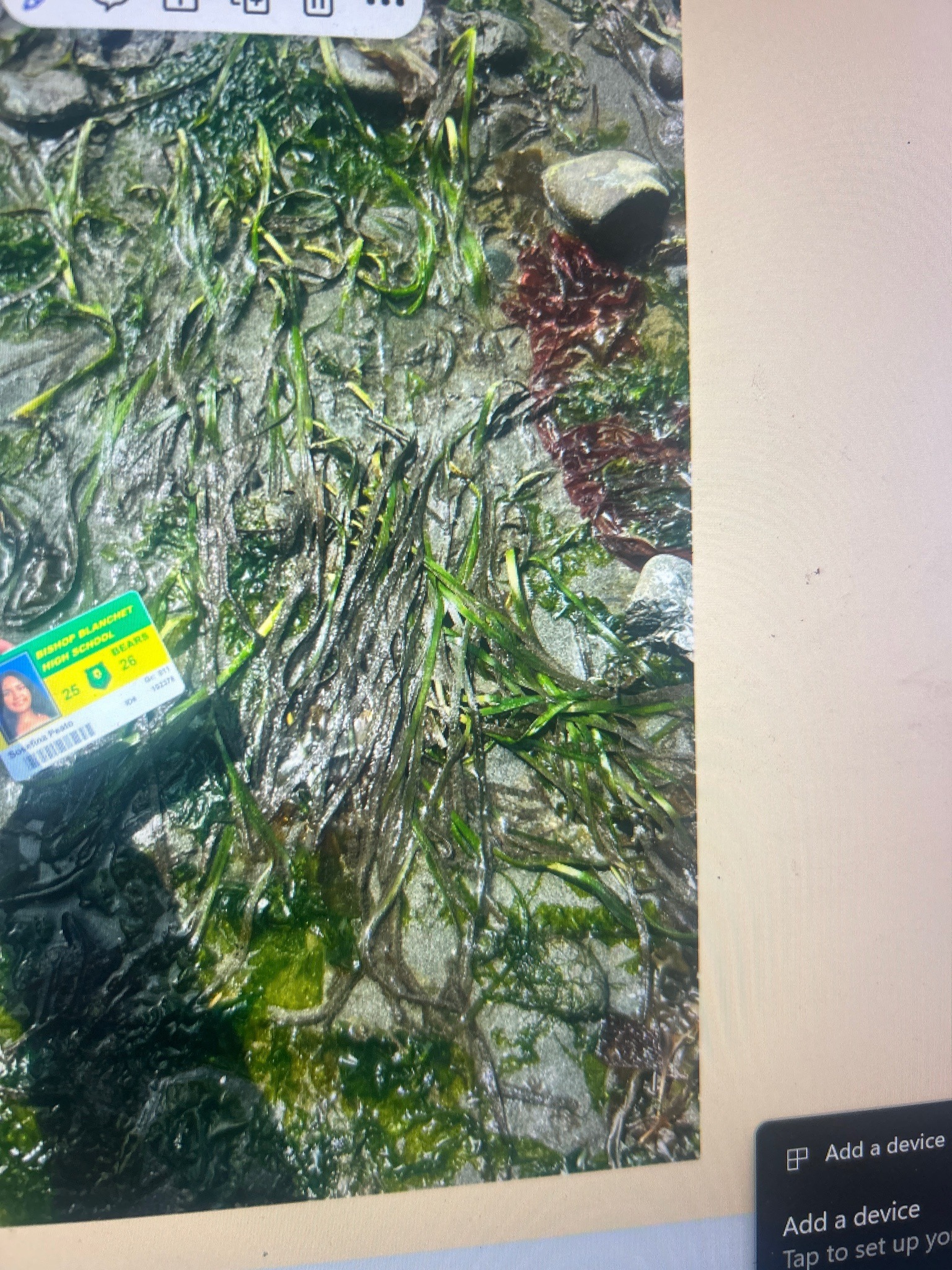
Brief Description
A marine flowering plant that grows in underwater meadows in coastal waters.
Characteristics
Common Eelgrass has long, ribbon-like green leaves that are typically 3 to 10 mm wide and can grow up to several feet long. It forms dense underwater beds with an extensive underground rhizome system.
Habitat
Found in soft-bottomed estuarine and marine environments, particularly in sheltered bays and inlets like Puget Sound.
When to Find It
Perennial; most visible during low tides in spring and summer when growth is most vigorous.
Conservation Status
A 'species of concern' in some regions due to habitat loss, though not globally endangered.
Ecological Role
Provides a critical 'nursery' habitat for juvenile salmon, Dungeness crabs, and Pacific herring. It stabilizes sediment, filters water, and sequesters significant amounts of carbon.
Easily Confused With
Surfgrass (Phyllospadix), which grows on rocks in high-energy surf zones rather than in sandy/muddy substrates.
Observation Tips
Best observed at low tide along the shorelines of the Salish Sea. Avoid walking on the beds as the rhizomes are sensitive to trampling.
Interesting Facts
Unlike seaweed (which is algae), eelgrass is a true flowering plant with roots and seeds, having evolved from terrestrial plants that returned to the sea millions of years ago.
User Notes
Puget Sound