Tree Stump
Scientific Name: N/A
Category: tree
Brief Description
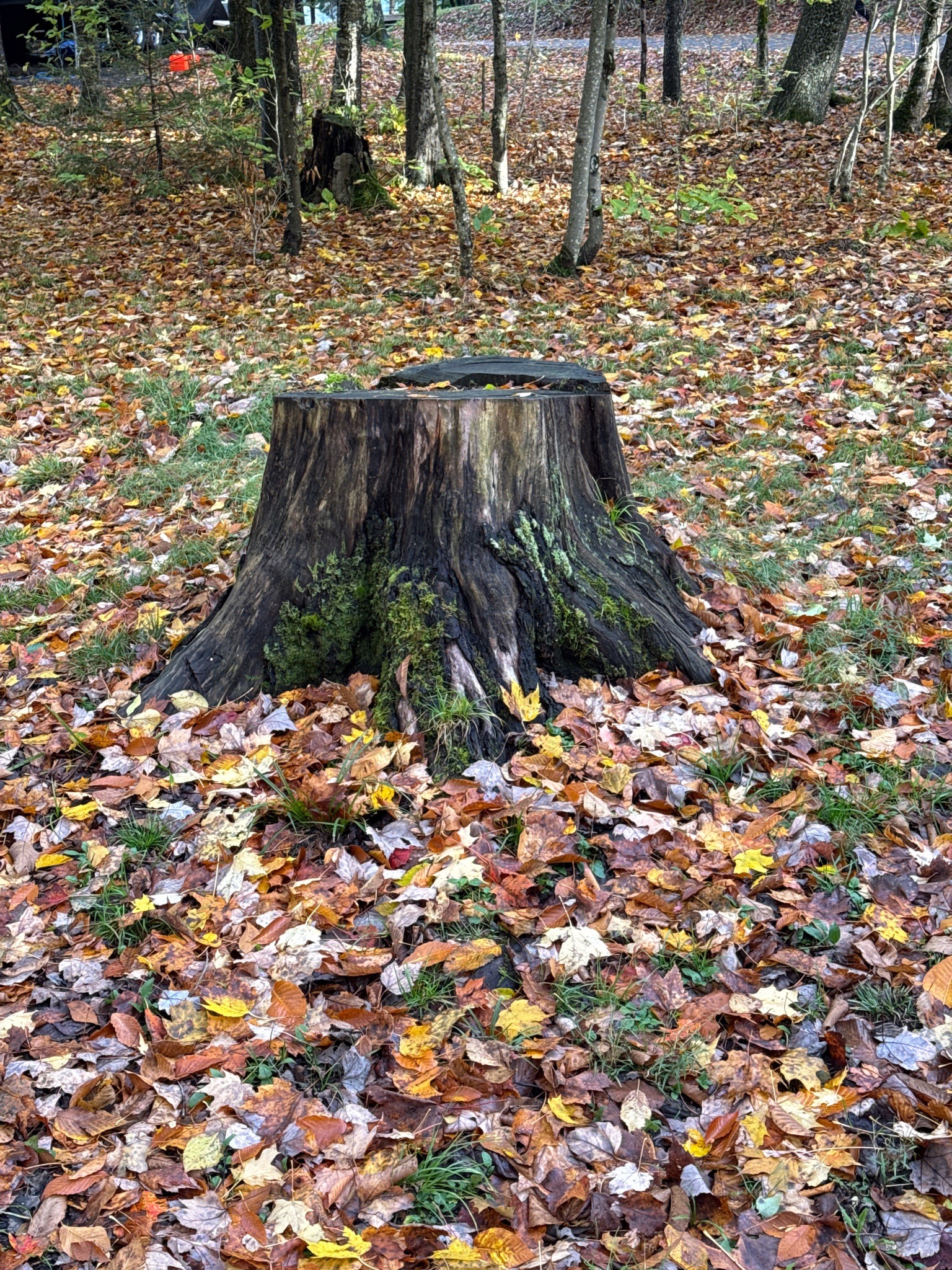
The remaining base of a felled or broken tree, featuring exposed wood, bark, and root flares surrounded by fallen autumn leaves.
Characteristics
Flat cut or weathered top surface showing growth rings, dark weathered bark at the base, patches of green moss growing in crevices, and buttress roots tapering into the ground.
Habitat
Forests, woodlands, clearings, and managed landscapes where trees have been cut or naturally broken.
When to Find It
Found year-round, but often visually prominent in autumn when surrounded by fallen leaves and the decomposition process slows down.
Conservation Status
N/A
Ecological Role
Tree stumps serve as vital microhabitats (nurse logs) for fungi, mosses, insects, amphibians, and small mammals, slowly returning nutrients back into the forest soil.
Easily Confused With
Fallen logs or natural root wads. Stumps are distinguished by being firmly rooted in place with a vertical remnant trunk base.
Observation Tips
Look closely at the bark and cut surface for interesting fungal growths, beetles, or mosses that use the stump as a micro-ecosystem.
Interesting Facts
Even after a tree is cut down, the stump's root system may remain alive for some time, sometimes sending up new shoots or grafting its roots to neighboring living trees of the same species.