Giant Acorn Barnacle
Scientific Name: Balanus nubilus
Category: other
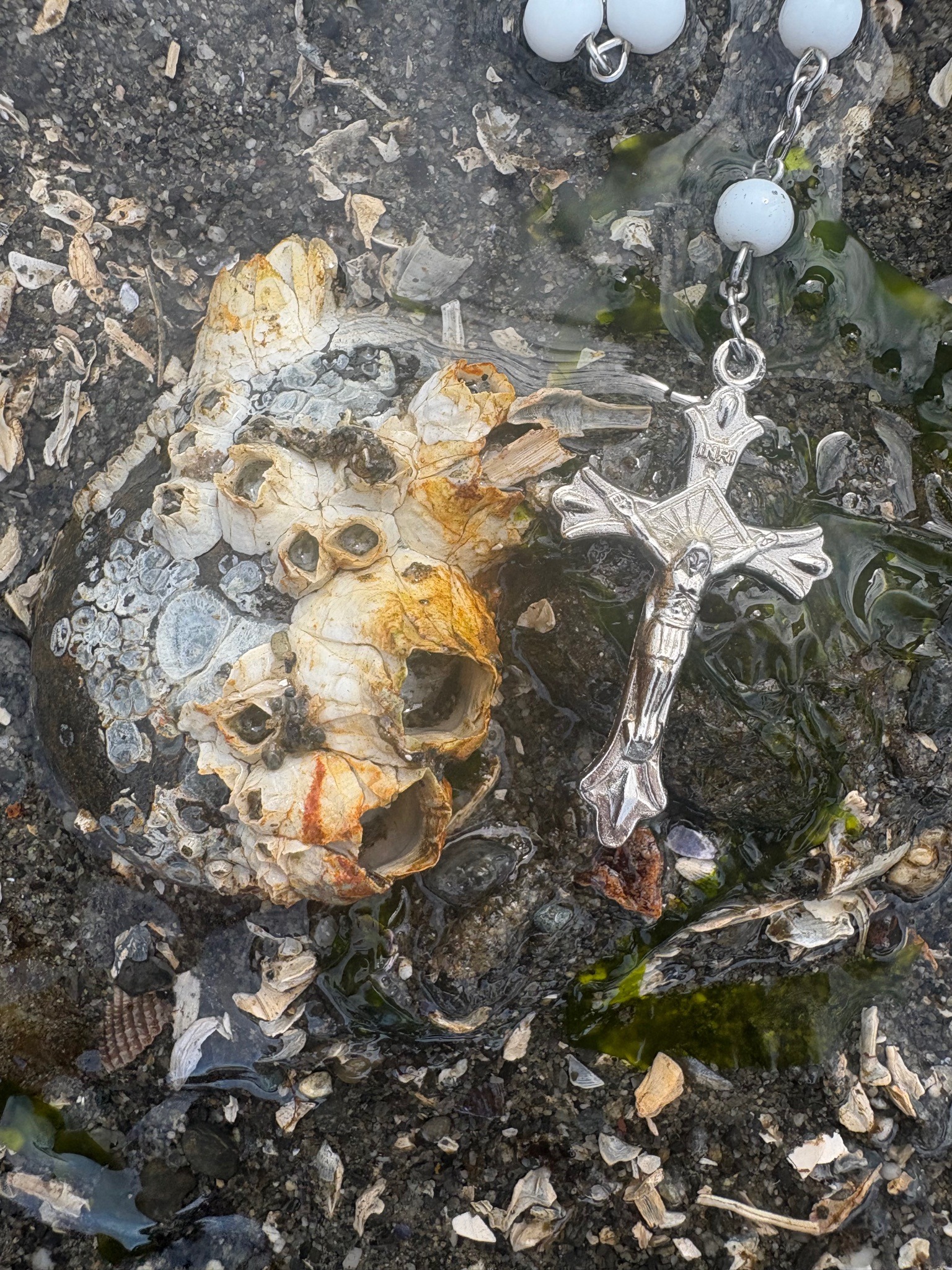
Brief Description
A large, sessile crustacean that attaches itself permanently to hard surfaces, forming a heavy, volcano-shaped shell.
Characteristics
It is the largest barnacle species in the world, with shells that can reach up to 10-15 cm in diameter. The shell is composed of six thick, calcareous plates, often white to light pink but frequently weathered or covered in algae. They are distinguished by their sheer size and deeply ridged plates.
Habitat
Intertidal and subtidal zones, typically attached to rocks, pier pilings, and other hard substrates from the low-tide line to depths of 90 meters.
When to Find It
Can be observed year-round; however, they are most easily seen during minus tides (very low tides) in the Pacific Northwest.
Conservation Status
Not Evaluated (Common)
Ecological Role
Barnacles are filter feeders that consume plankton, helping to transfer energy from the water column to the sea floor. Empty shells provide important habitat and hiding spots for small crabs, snails, and blennies.
Easily Confused With
Acorn Barnacles (Balanus glandula) are much smaller (usually less than 2 cm). Thatched Barnacles (Semibalanus cariosus) have many more vertical, straw-like ridges on their plates compared to the broad, thick plates of the Giant Acorn Barnacle.
Observation Tips
Look for these in the lowest intertidal zones during very low tides. Be careful when walking near them as the shell edges can be extremely sharp. If found underwater, you may see their 'cirri' (feathery feeding legs) raking through the water.
Interesting Facts
Despite being stuck in one place, they have the longest penis relative to body size of any animal in the world, which allows them to reach and fertilize distant neighbors. Native American tribes in the Pacific Northwest once harvested them for food, roasting the 'meat' which is said to taste like crab or lobster.
User Notes
What are those barnacles, found on washington state beach