Wedding Cake Tree
Scientific Name: Cornus controversa
Category: tree
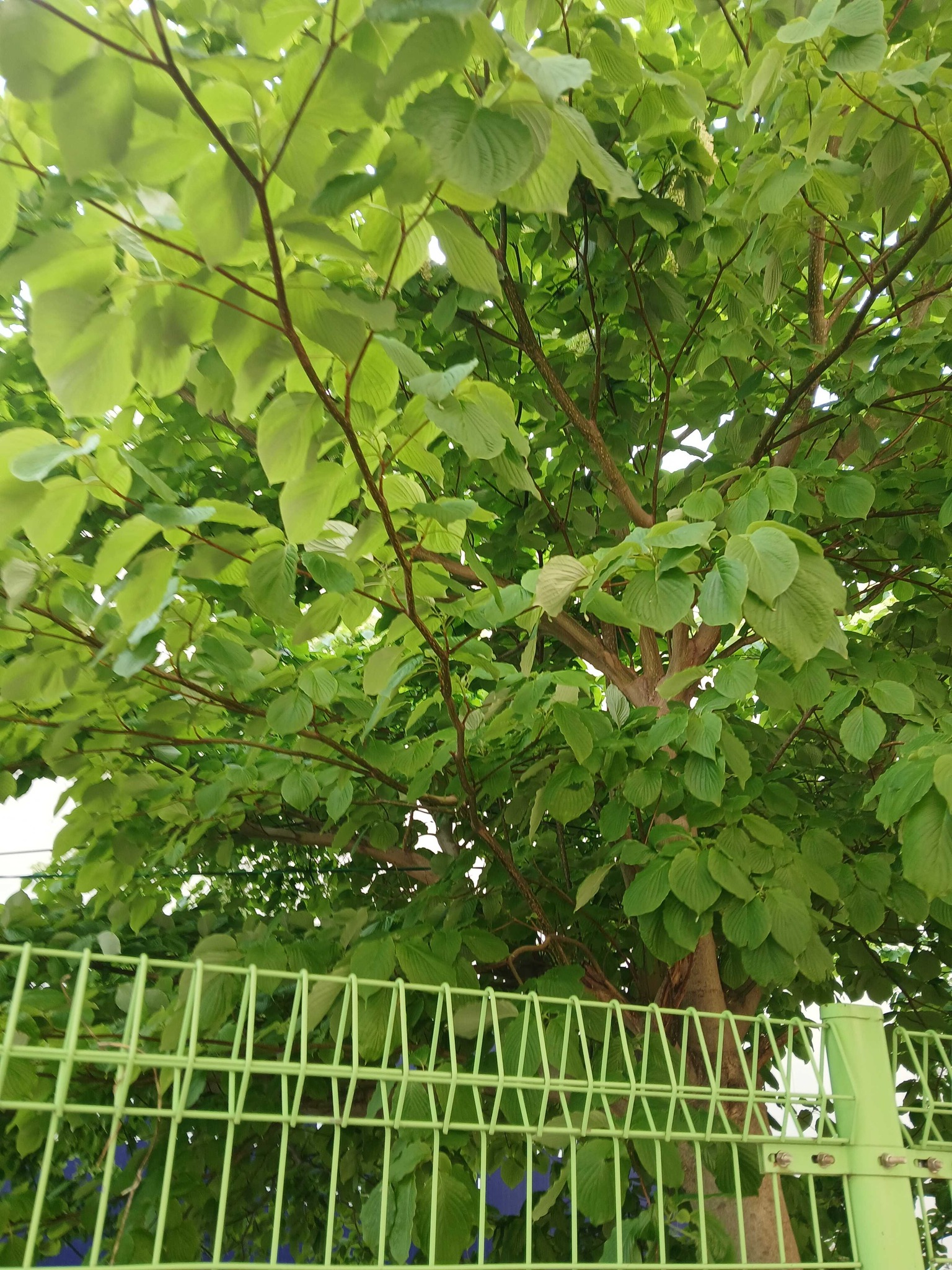
Brief Description
A deciduous tree known for its distinctive tiered, horizontal branching pattern and bright green leaves with prominent veins.
Characteristics
Broad, ovate leaves with 6-9 pairs of prominent curved veins. Bark is smooth, grey-brown, becoming shallowly ridged with age. Branches grow in clearly defined horizontal layers.
Habitat
Damp, fertile soils in deciduous woodlands and valleys; often used as an ornamental tree in parks and gardens.
When to Find It
Best observed in spring (creamy-white flowers) and autumn (purple-red foliage and dark blue-black berries).
Conservation Status
Least Concern
Ecological Role
Provides nectar for pollinators like bees and flies; its berries are an important food source for birds in late summer and autumn.
Easily Confused With
Cornus alternifolia (Pagoda Dogwood), which is smaller and has slightly different leaf base shapes. Common Dogwood (Cornus sanguinea) lacks the tiered structure.
Observation Tips
Look for the unique 'layered' horizontal silhouette from a distance to distinguish it from other broadleaf trees. It thrives in partial shade to full sun.
Interesting Facts
It is called the 'Wedding Cake Tree' because its horizontal tiers of branches resemble the layers of a wedding cake. Unlike most dogwoods which have opposite leaves, this species has alternate leaves.