Pacific Jingle Shell
Scientific Name: Pododesmus macrochisma
Category: shell
Brief Description
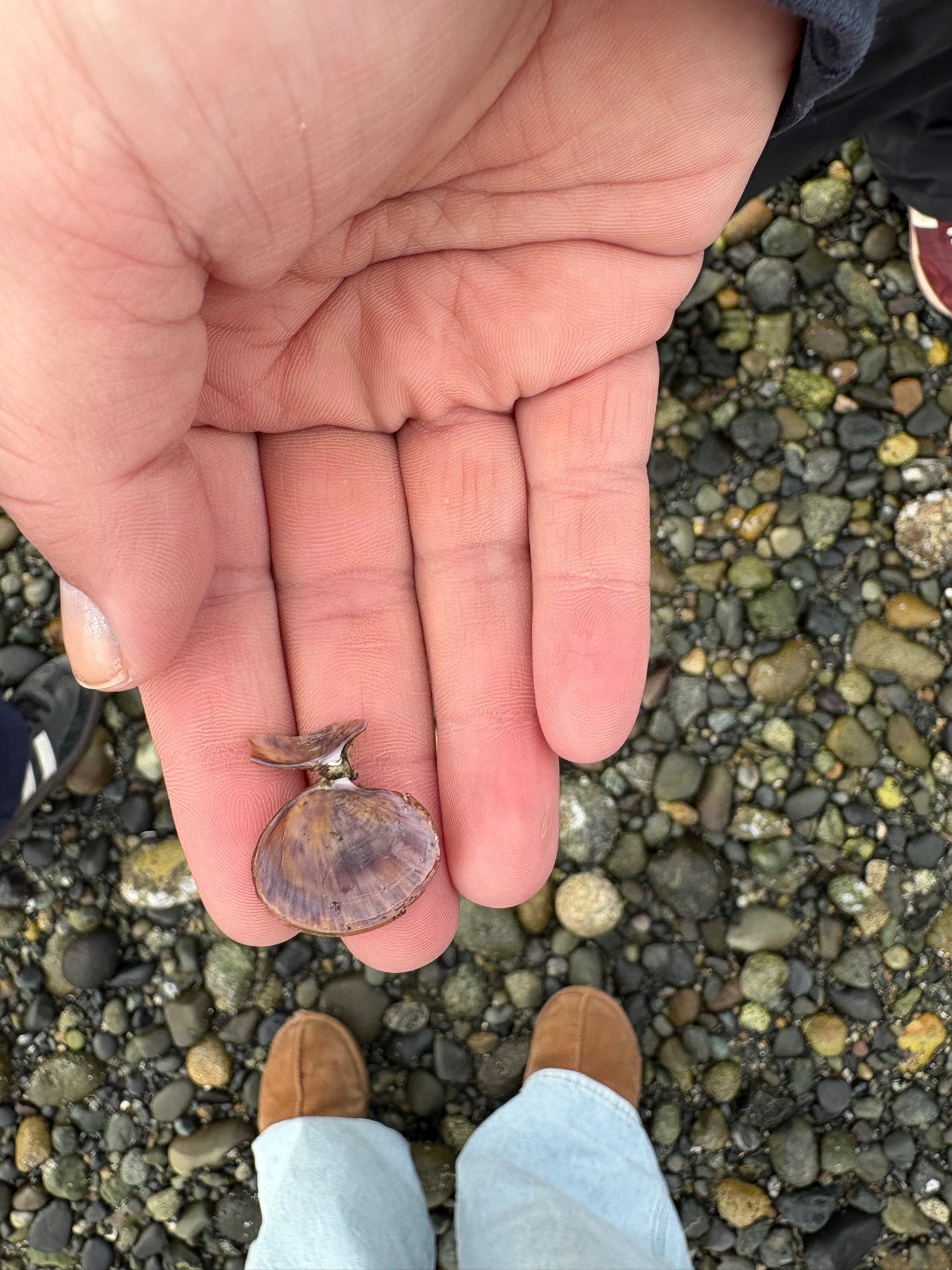
A translucent, thin-walled bivalve shell often found washed up on Pacific Northwest beaches, known for its pearly luster and the 'jingle' sound many shells make together.
Characteristics
Thin, circular to oval shaped, and slightly translucent. One valve is quite flat with a hole (the byssal notch) near the hinge, while the other is more convex. They are often pearly white, greenish, or purplish on the interior.
Habitat
Found in the low intertidal and subtidal zones, typically attached to rocks, other shells, or man-made structures like pilings using a calcified byssal plug.
When to Find It
Can be found year-round, especially after storms or high tides that wash shells onto the beach.
Conservation Status
N/A
Ecological Role
As filter feeders, they help clarify water by consuming plankton and organic detritus. They also provide a hard substrate for other small organisms to settle on.
Easily Confused With
Common Oyster shells (which are much thicker and rougher) and Rock Scallops (which have more distinct ribs and a different hinge shape).
Observation Tips
Look for them in the drift line on rocky beaches or among piles of debris. Hold them up to the light to see their characteristic translucency.
Interesting Facts
They are called 'Jingle Shells' because when several are strung together or shaken in a pocket, they produce a metallic clinking sound. In Washington, they are also sometimes called 'False Jingle Shells' or 'Alaska Jingle Shells'.
User Notes
Found on a Washington state beach