Cutleaf Coneflower
Scientific Name: Rudbeckia laciniata
Category: plant
Brief Description
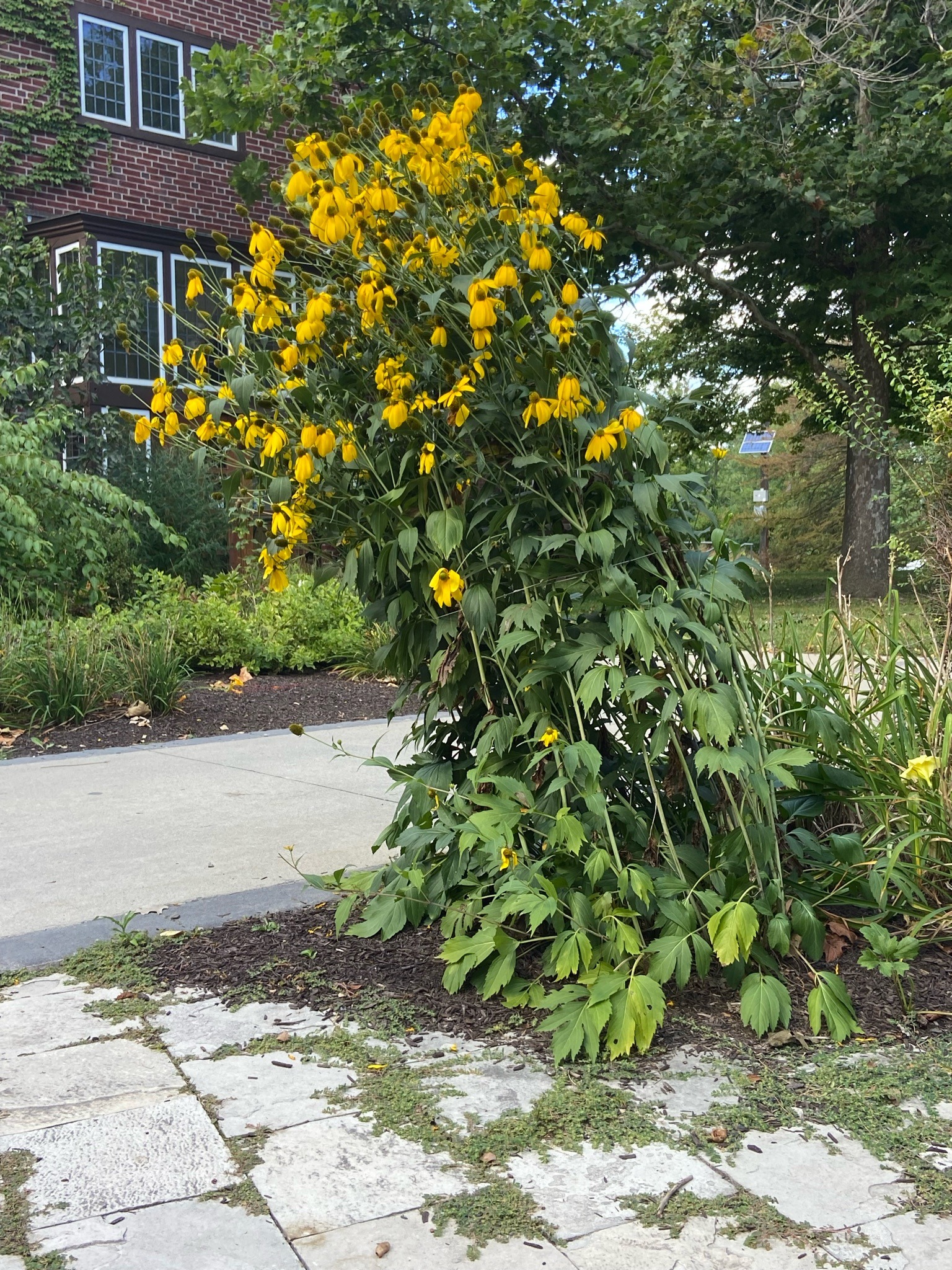
A tall perennial plant with bright yellow, drooping petals and a greenish-yellow central cone, commonly found in moist soils and woodland edges.
Characteristics
Stems are tall (up to 3 meters), smooth, and branching. Leaves are deeply lobed or divided into 3 to 7 segments. Flower heads feature 6 to 14 bright yellow ray florets that droop downward surrounding a columnar, greenish-yellow disc.
Habitat
Moist thickets, woodland clearings, floodplains, and along streams and roadsides.
When to Find It
Blooms from mid-summer through early autumn (July to September).
Conservation Status
Secure
Ecological Role
Provides nectar and pollen for a wide variety of native bees, butterflies, and other beneficial insects. The seeds are eaten by birds.
Easily Confused With
Black-eyed Susan (Rudbeckia hirta), which has hairy leaves and stems and unlobed foliage.
Observation Tips
Look for them along damp trail edges and gardens where they often tower over other herbaceous vegetation.
Interesting Facts
Also known as 'green-headed coneflower', the young shoots were traditionally cooked as greens by some Native American tribes, though older plant parts can be toxic.
User Notes
At Mac (sept 14/26)