Corn Snake
Scientific Name: Pantherophis guttatus
Category: reptile
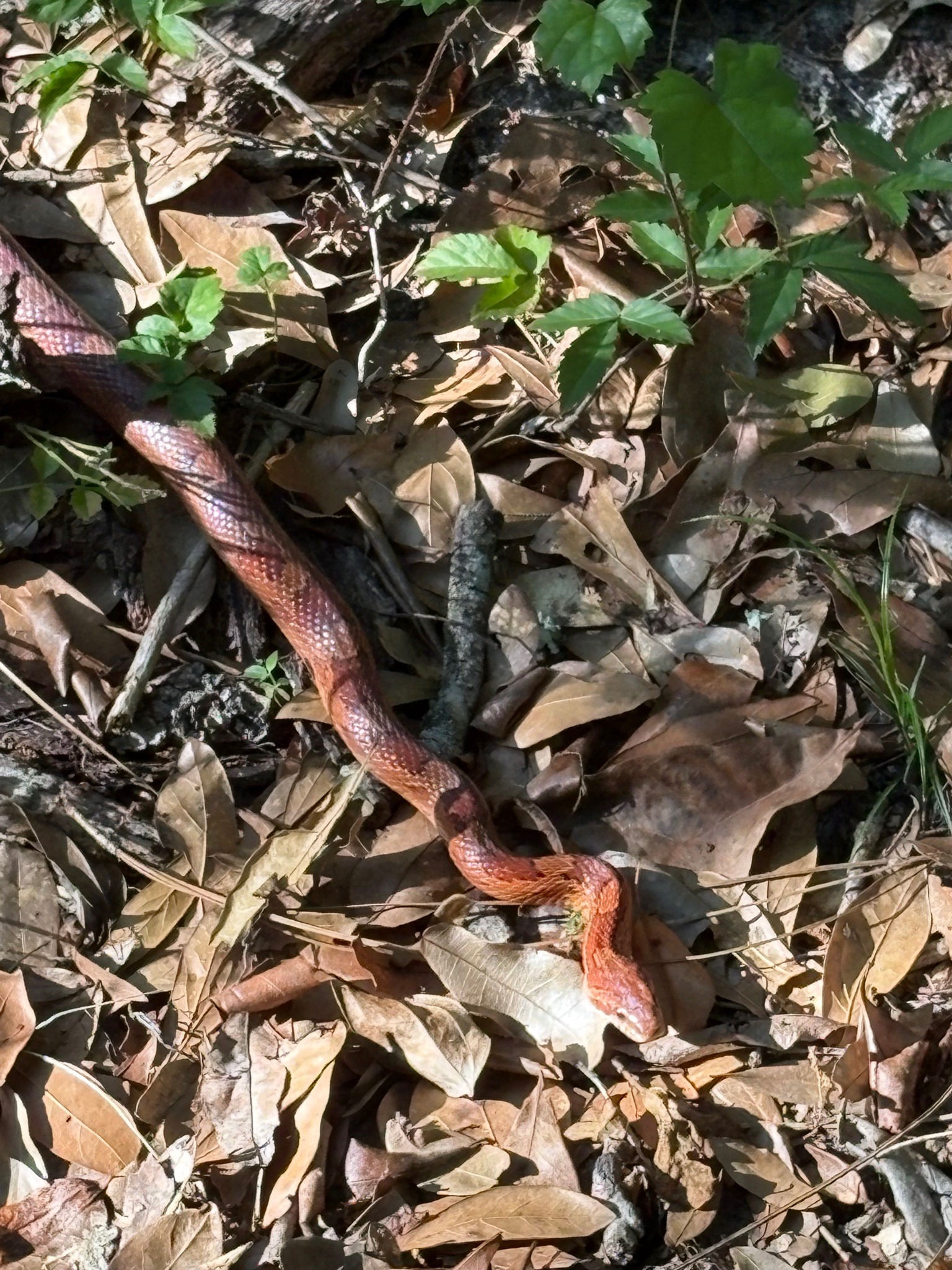
Brief Description
A non-venomous constrictor snake common in the southeastern United States, characterized by its vibrant orange or red-orange coloration and square-shaped blotches.
Characteristics
Slender body typically 2 to 6 feet long with orange, red, or brownish-red dorsal blotches outlined in black against a lighter orange-tan background. They have a distinctive 'V' or spearhead shape on top of the head and a black-and-white checkered belly pattern.
Habitat
Found in overgrown fields, forest openings, pine barrens, and abandoned buildings. They are native to the Southeastern United States, from New Jersey south to Florida and west to Louisiana.
When to Find It
Most active during the day in spring and autumn, but often becomes nocturnal during the hot summer months. They hibernate during the winter.
Conservation Status
Least Concern (IUCN); however, they are protected in some states like Georgia and Florida from commercial trade and collection.
Ecological Role
Acts as an essential natural pest control by preying on rodents like mice and rats that can damage crops and spread disease.
Easily Confused With
Copperheads (venomous) are the most frequent confusion; Copperheads have hourglass-shaped crossbands and a broader triangular head. Milksnakes also have similar colors but different patterns and a 'Y' or 'V' shape on the neck.
Observation Tips
Look near barns, woodpiles, or scanning the edges of sunny forests. They are excellent climbers and may be found in trees. Never handle a snake unless you are 100% certain of the identification.
Interesting Facts
They are named 'Corn Snakes' either because they were often found near corn granaries (hunting rodents) or because the belly pattern resembles the checkered kernels of flint corn. They are among the most popular pet snakes in the world due to their docile nature.