American Bison
Scientific Name: Bison bison
Category: mammal
Brief Description
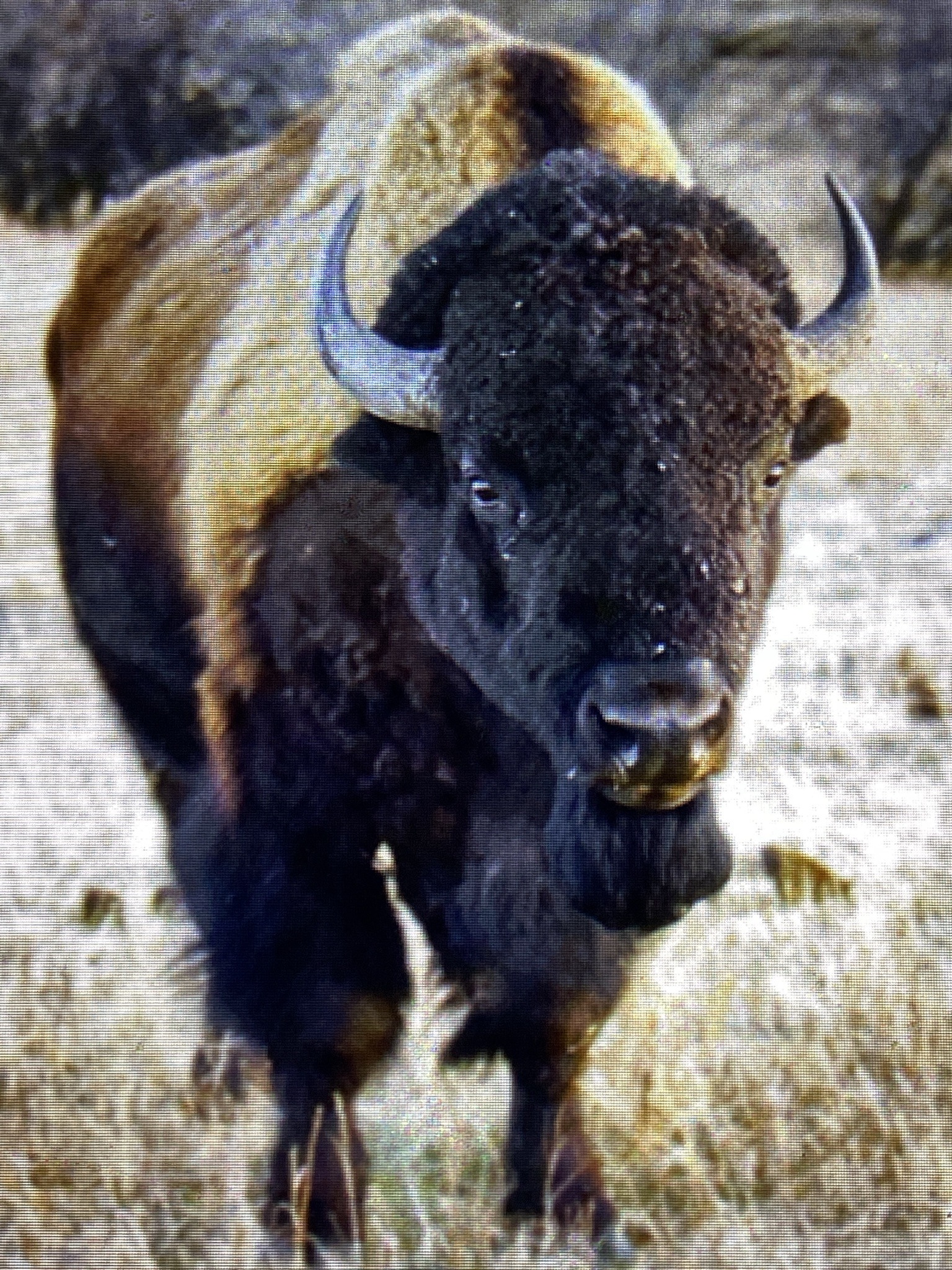
The American bison, commonly known as the American buffalo, is a massive terrestrial mammal native to North America, recognizable by its large head, shoulder hump, and shaggy dark brown fur.
Characteristics
Massive build with a prominent shoulder hump supported by powerful neck muscles. Features a broad head with short, curved black horns, dark woolly coat, and a distinct beard under the chin.
Habitat
Grasslands, prairies, river valleys, and shrublands. Found in protected national parks, wildlife refuges, and private ranches across North America, particularly in the Great Plains region.
When to Find It
Visible year-round; the mating season (rut) occurs in late summer from July through September when bulls actively display and fight.
Conservation Status
Near Threatened (IUCN). Once driven close to extinction in the late 19th century, populations have significantly recovered in managed herds.
Ecological Role
Acts as a keystone species in grassland ecosystems. Their grazing patterns promote plant diversity, their wallowing creates microhabitats for water storage, and they provide food for predators and scavengers.
Easily Confused With
European Bison (Bison bonasus), which tends to be taller with lighter hair and less pronounced shoulder humps, and Domestic Cattle (Bos taurus).
Observation Tips
Maintain a safe distance of at least 25 yards (more during the rutting season), stay inside vehicles in park drive-through areas, and never approach on foot.
Interesting Facts
Despite their massive weight of up to 2,000 pounds, American bison can run at speeds up to 35 mph and jump up to 6 feet high.