Tiger
Scientific Name: Panthera tigris
Category: mammal
Brief Description
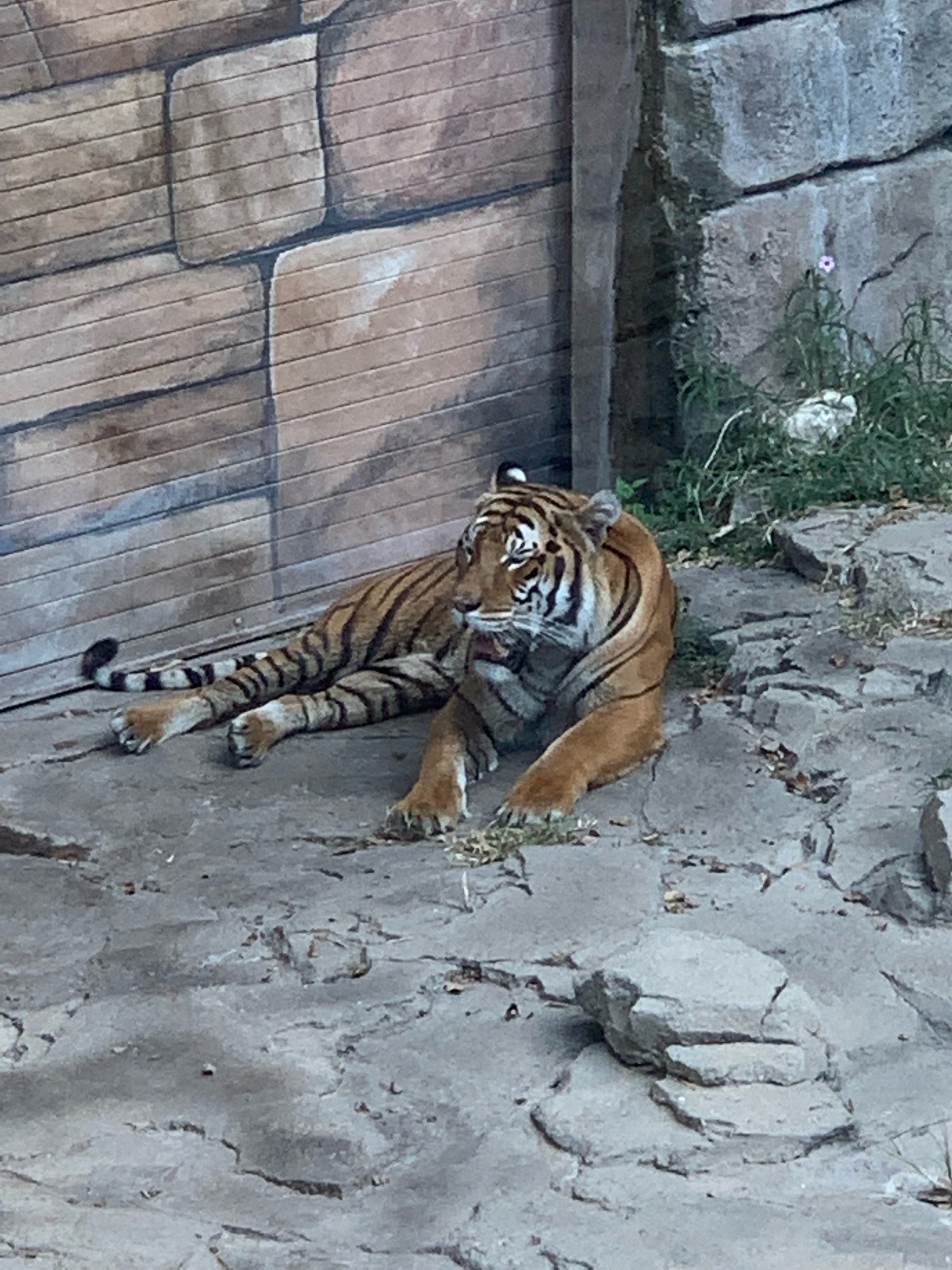
The tiger is the largest living cat species, immediately recognizable by its dark vertical stripes on orange-brown fur with a lighter underside.
Characteristics
Distinctive orange coat with dark vertical stripes, muscular body, large head, and long tail. Each tiger has a unique pattern of stripes, similar to a human fingerprint.
Habitat
Found in various habitats including tropical rainforests, evergreen forests, temperate forests, mangrove swamps, and grasslands.
When to Find It
Active throughout the year; primarily nocturnal or crepuscular (active at dawn and dusk) to avoid heat and hunt and prey.
Conservation Status
Endangered (IUCN Red List)
Ecological Role
As an apex predator, tigers play a crucial role in maintaining the health and diversity of their ecosystems by controlling prey populations.
Easily Confused With
Leopards (have rosettes, not stripes) and Lions (typically solid tan with manes in males).
Observation Tips
In the wild, tigers are best observed in protected reserves in India or Southeast Asia during the dry season when they congregate around watering holes.
Interesting Facts
Tigers are excellent swimmers and actually enjoy water, unlike many other cat species. They can roar, but unlike house cats, they cannot purr.