Longnose Gar
Scientific Name: Lepisosteus osseus
Category: fish
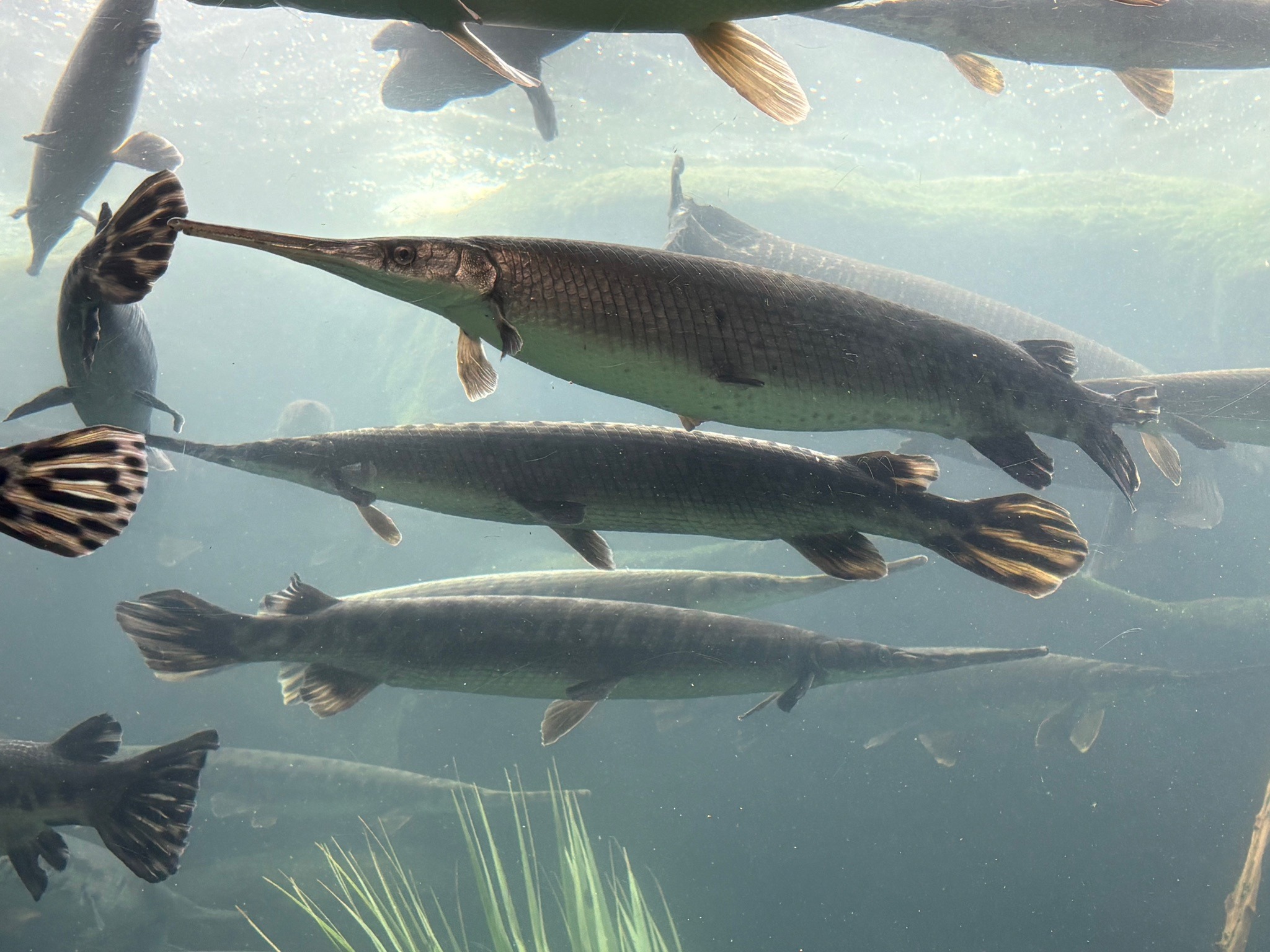
Brief Description
A primitive, ray-finned fish with a long, slender body and a needle-like snout filled with sharp teeth.
Characteristics
Elongated, cylindrical body covered in diamond-shaped ganoid scales. Characterized by a snout more than twice the length of the rest of the head. Typically olive or brownish on top with a white belly. Fins often have dark spots.
Habitat
Found in slow-moving rivers, bayous, and lakes with abundant vegetation. They can tolerate low-oxygen water by breathing atmospheric air using their vascularized swim bladder.
When to Find It
Active year-round but most visible in shallow water during the spring spawning season (April to June).
Conservation Status
Least Concern
Ecological Role
As an apex predator, they help control populations of forage fish. Their eggs are toxic to many mammals and birds, serving as a unique defense mechanism.
Easily Confused With
Shortnose Gar (Lepisosteus platostomus) and Alligator Gar (Atractosteus spatula). Longnose Gar are distinguished by their much narrower and longer snouts compared to the other species.
Observation Tips
Look for them near the surface in sluggish water or around submerged logs. They are often seen 'basking' near the surface on warm days.
Interesting Facts
Gars are often called 'living fossils' because they have remained largely unchanged for over 100 million years. They can survive out of water for short periods by gulping air.