Paxillus involutus group
Scientific Name: Paxillus involutus
Category: fungi
Brief Description
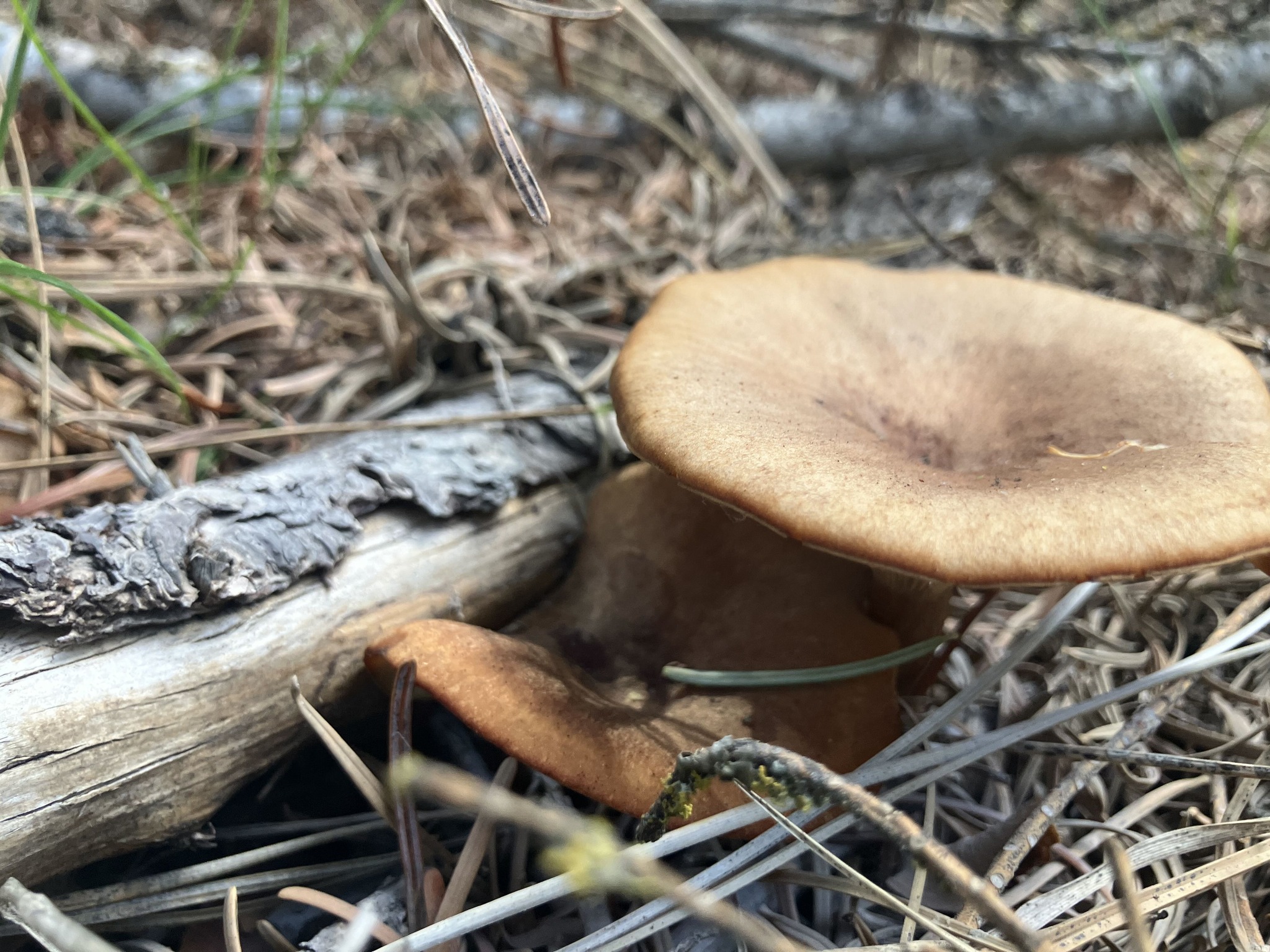
A medium-to-large agaric fungus known for its funnel-shaped cap and gills that bruise brown.
Characteristics
Features a brownish, funnel-shaped cap with a characteristically inrolled margin (involute edge). The gills are decurrent, yellowish-brown, and stain dark brown when bruised. The stem is short and often thickens towards the base.
Habitat
Found in coniferous and deciduous forests, often forming mycorrhizal relationships with birch, pine, or spruce trees.
When to Find It
Late summer to late autumn.
Conservation Status
Common and widespread
Ecological Role
Acts as a mycorrhizal symbiont, helping trees absorb nutrients while receiving carbohydrates in return. It also plays a role in soil nutrient cycling.
Easily Confused With
Lactarius species (milk-caps) which exude latex when cut, and Paxillus cuprinus which is similar but associated with different tree hosts and has slight color variations.
Observation Tips
Look near the floor of temperate forests after rainfall. Avoid consumption as it is dangerously toxic, containing a protein that can trigger an autoimmune reaction (Paxillus syndrome).
Interesting Facts
Though historically eaten in some regions, it is now known to cause life-threatening immune-mediated hemolytic anemia through repeated consumption.