Eurasian Red Squirrel
Scientific Name: Sciurus vulgaris
Category: mammal
Brief Description
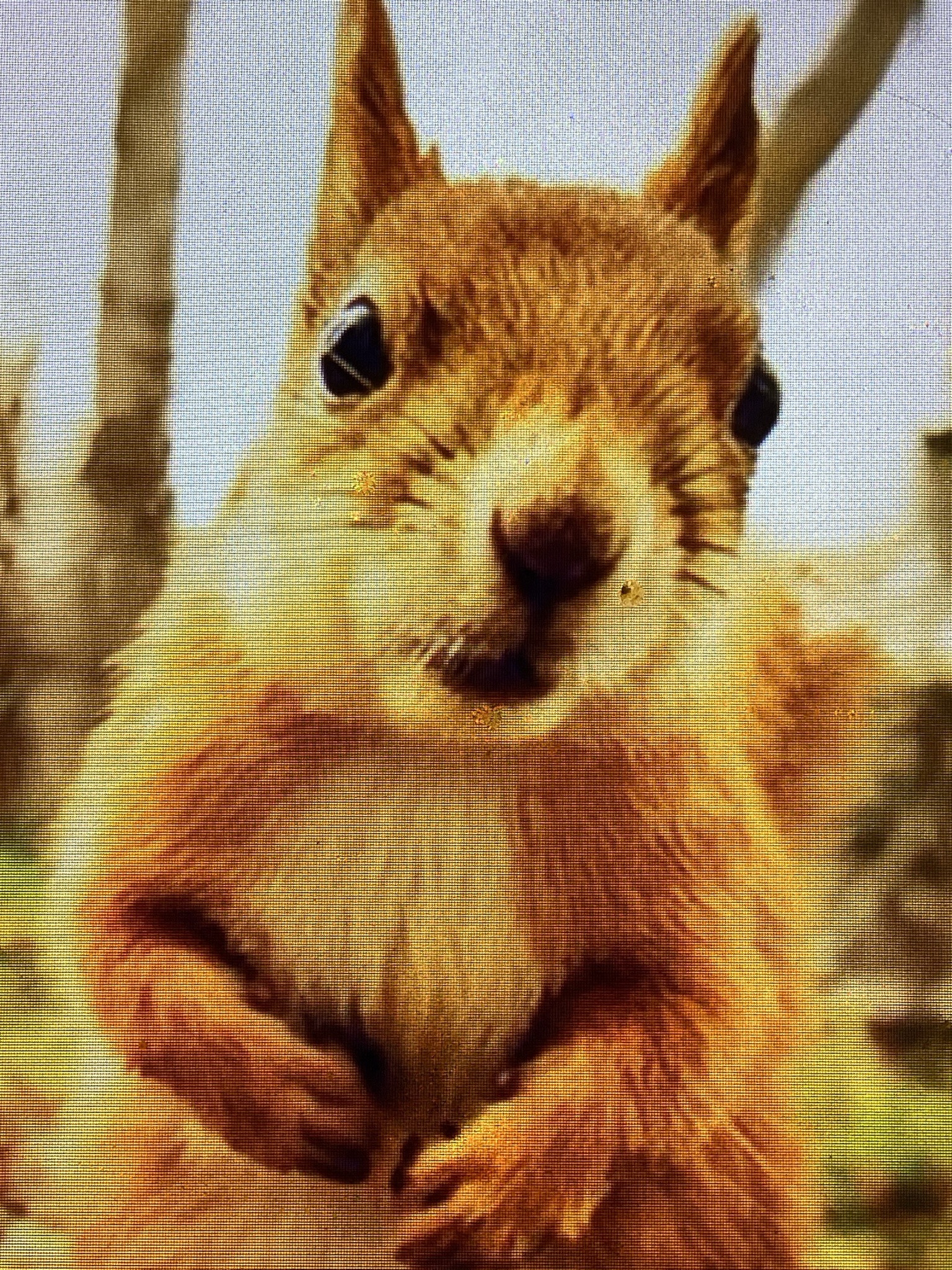
A close-up view of a Eurasian red squirrel looking directly at the camera. Known for its reddish-brown fur, white underbelly, and prominent ear tufts, especially during winter months.
Characteristics
Reddish-brown coat, prominent ear tufts (tufts grow longer in winter), bushy tail, large dark eyes, and small, nimble front paws.
Habitat
Coniferous, deciduous, and mixed woodlands across Eurasia, as well as urban parks and gardens where mature trees are present.
When to Find It
Active year-round, primarily diurnal (active during early morning and late afternoon). Ear tufts become more prominent in autumn and winter.
Conservation Status
Least Concern globally, though localized populations (e.g., in the UK) are threatened and declining due to competition from introduced Eastern grey squirrels and squirrelpox virus.
Ecological Role
Acts as an important seed disperser for coniferous and deciduous trees by caching nuts and seeds, many of which germinate into new trees.
Easily Confused With
Eastern Grey Squirrel (Sciurus carolinensis) - larger, predominantly grey with reddish patches, lacks large ear tufts, and has a white-bordered tail; American Red Squirrel (Tamiasciurus hudsonicus) - native to North America, smaller with a white ring around the eyes.
Observation Tips
Look in quiet pine or mixed forests during early morning hours. Listen for chattering alarm calls or falling seed scales from pine cones.
Interesting Facts
Red squirrels do not hibernate; instead, they store food reserves in caches buried in the ground or hidden in tree hollows to survive cold winter months.