Gharial
Scientific Name: Gavialis gangeticus
Category: reptile
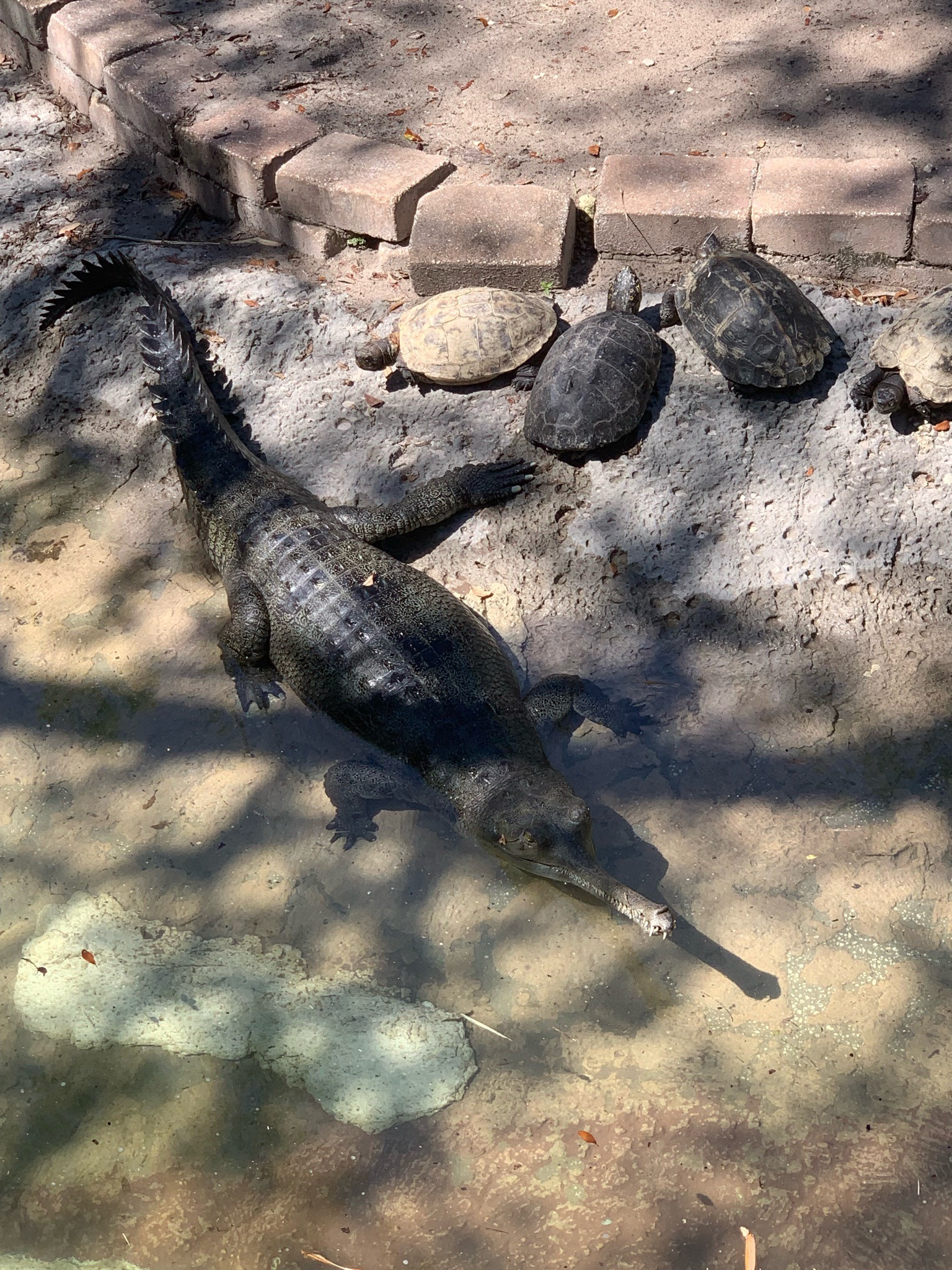
Brief Description
A unique, fish-eating crocodilian characterized by its extremely long, narrow snout and prominent bulbous growth on the nose of adult males.
Characteristics
Features an exceptionally long, thin snout lined with sharp, interlocking teeth. They have olive to dark-brown leathery skin, webbed feet for swimming, and a powerful flattened tail. Males develop a 'ghara' (pot-like structure) at the tip of their snout upon reaching maturity.
Habitat
Deep, fast-flowing rivers with high sandbanks for nesting and basking. Historically found across the northern Indian subcontinent; currently restricted to fragmented populations in India and Nepal.
When to Find It
Basking behavior is most frequent during winter months (November to February) to regulate body temperature. Breeding occurs in spring.
Conservation Status
Critically Endangered
Ecological Role
As a top predator in river ecosystems, they help maintain healthy fish populations and indicate the overall health and water quality of their freshwater environments.
Easily Confused With
Often confused with the False Gharial (Tomistoma schlegelii), which also has a thin snout but belongs to a different family and lacks the distinct 'ghara' of the true Gharial.
Observation Tips
In the wild, they are best observed from a distance using binoculars to avoid disturbance, especially during basking sessions on sandbars. In captivity, look for their unique resting posture in shallow water.
Interesting Facts
The name 'Gharial' comes from the Hindi word 'ghara', which means 'pot', referring to the bulbous growth on the male's snout. They are among the longest of all living crocodilians, sometimes reaching up to 6 meters (20 feet) in length.