Bishop's Weed
Scientific Name: Aegopodium podagraria
Category: plant
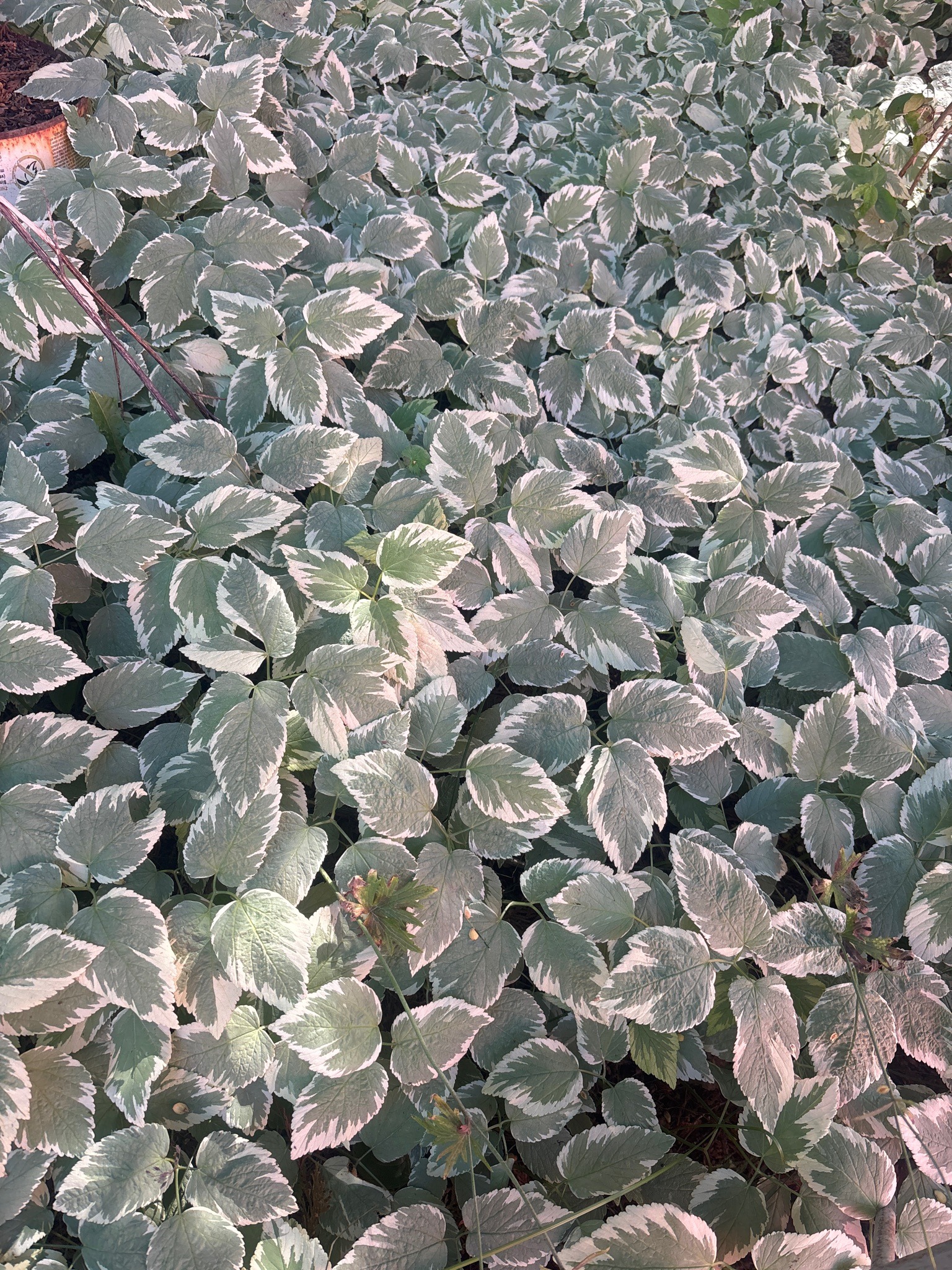
Brief Description
A vigorous, herbaceous perennial plant known for its striking variegated leaves featuring green centers and irregular white margins.
Characteristics
Compound leaves divided into leaflets with sharply toothed margins, variegated green and white coloration, creeping underground rhizomes that form dense ground cover, and small white flower umbels produced on upright stems in summer.
Habitat
Gardens, woodland edges, disturbed areas, roadsides, and damp shady places.
When to Find It
Active growth occurs from spring through autumn; foliage dies back completely in winter.
Conservation Status
N/A
Ecological Role
Provides dense ground cover, though often considered invasive outside its native range due to its aggressive spread which can outcompete native understory plants.
Easily Confused With
Other variegated shade perennials or umbellifers, but distinguished by its distinctively lobed, coarsely toothed leaflets and aggressive rhizomatous spread.
Observation Tips
Often found cultivated in gardens or escaping into nearby natural areas; best observed during spring and summer when the variegated foliage is vibrant.
Interesting Facts
Also commonly known as goutweed, snow-on-the-mountain, and bishop's goutroot because it was historically used in herbal medicine to treat gout.