Common Milkweed
Scientific Name: Asclepias syriaca
Category: plant
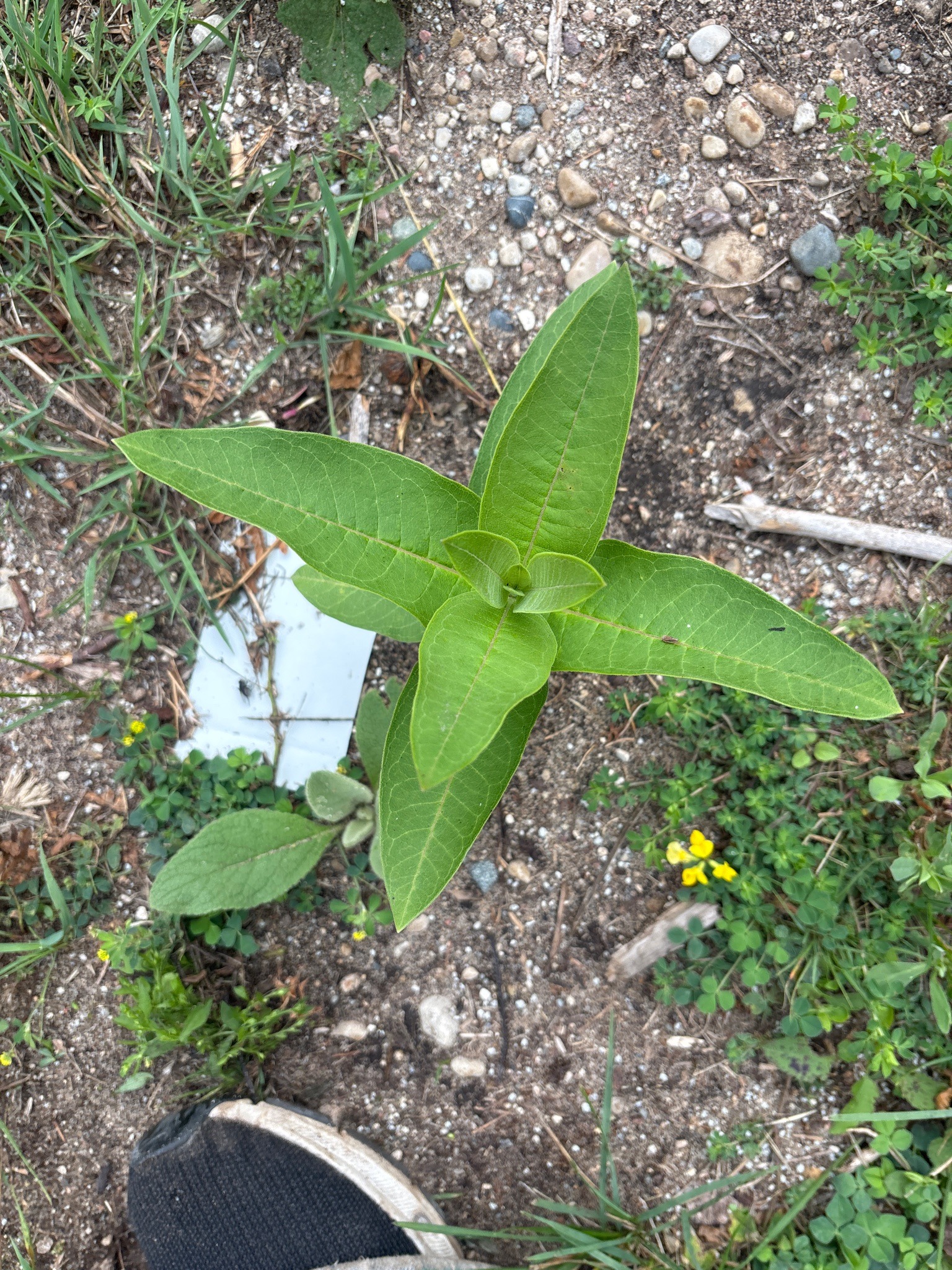
Brief Description
A robust perennial herb recognized by its large, opposite, oblong leaves and milky sap, famous for being the primary host plant for monarch butterfly caterpillars.
Characteristics
Stout, unbranched stems with opposite, oval to oblong leaves that feature prominent pale veins and fine hairs underneath. When broken, stems and leaves exude a sticky, milky white latex sap.
Habitat
Found in open fields, prairies, pastures, roadsides, and disturbed ground preferring well-drained soils and full sun.
When to Find It
Grows vigorously through spring and summer, flowers in mid-summer, and produces large seed pods in autumn.
Conservation Status
N/A
Ecological Role
Crucial larval host plant for monarch butterflies and provides abundant nectar for a wide variety of native pollinators, bees, and beneficial insects.
Easily Confused With
Dogbanes (Apocynum species), which also have milky sap but possess much smaller leaves and branching stems.
Observation Tips
Look for them along rural roadsides and old fields during summer; inspect the undersides of the leaves for monarch eggs or caterpillars.
Interesting Facts
The milky sap contains toxic cardiac glycosides that are sequestered by monarch caterpillars, making them unpalatable to most vertebrate predators.