West Indian Manatee
Scientific Name: Trichechus manatus
Category: mammal
Brief Description
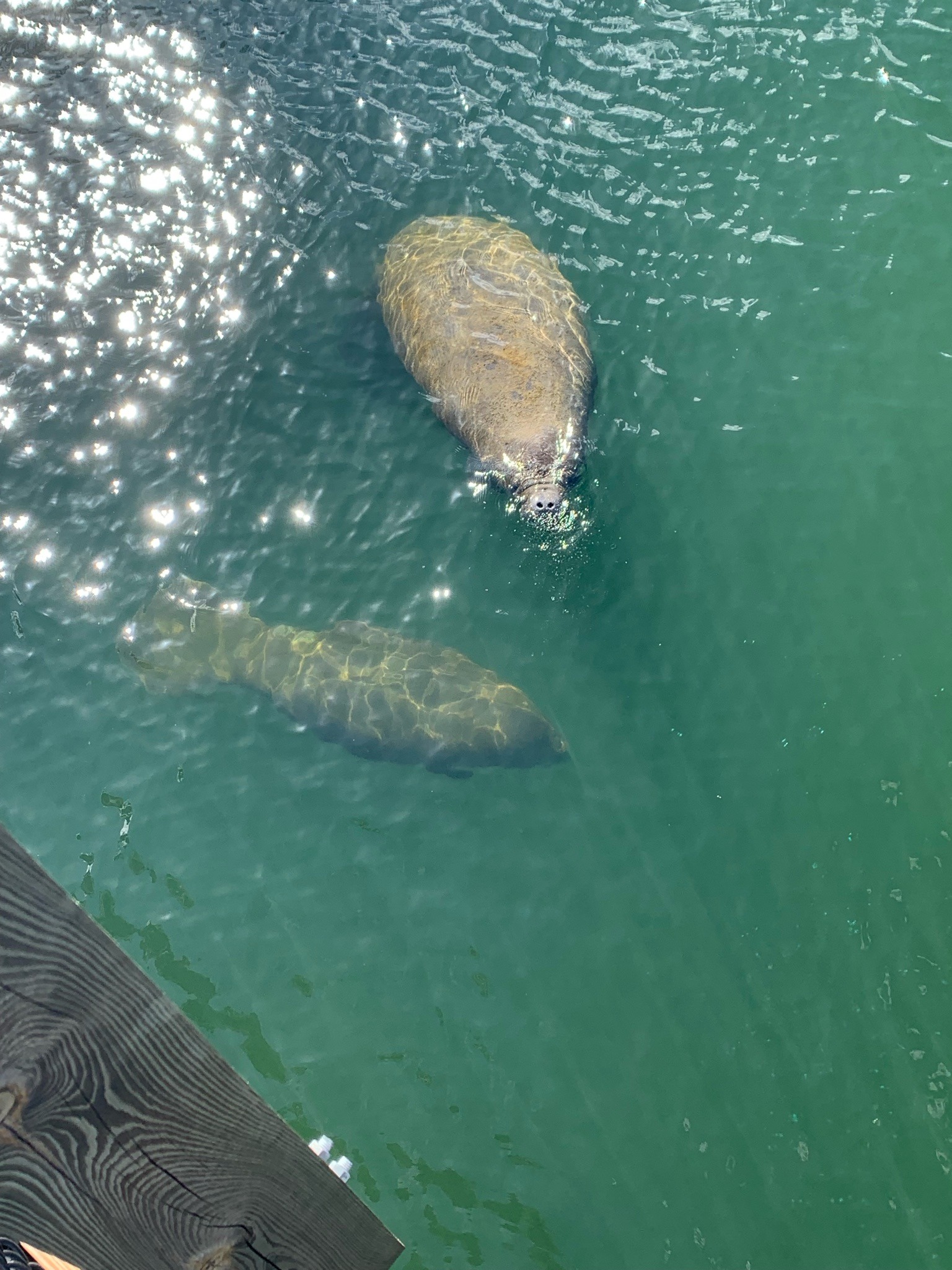
A large, slow-moving aquatic mammal often called a 'sea cow', seen here swimming in clear coastal water.
Characteristics
Large, grayish-brown bulbous body, paddle-like flipper with nails, a flat rounded tail, and a wrinkled face with whiskers on the snout. Their skin often has algae or barnacles attached.
Habitat
Shallow coastal waters, estuaries, bays, and rivers. They frequently move between fresh, brackish, and salt water.
When to Find It
In winter, they congregate near warm-water springs or power plant discharge canals; in summer, they range more widely.
Conservation Status
Vulnerable (IUCN Red List); protected under the Marine Mammal Protection Act.
Ecological Role
They are important herbivores that consume large amounts of aquatic vegetation, helping to keep seagrass beds healthy and maintain waterway flow.
Easily Confused With
Dugongs, which have fluked tails like dolphins instead of rounded paddle tails, and are found in the Indo-Pacific.
Observation Tips
Maintain a distance of at least 50 feet. Never touch, feed, or give water to manatees as it disrupts their natural behavior. Polarized sunglasses help spot them better through the water's surface.
Interesting Facts
Manatees are more closely related to elephants than to other marine mammals. They are 'polyphyodonts', meaning their teeth are continuously replaced throughout their lives as they wear down from eating sandy vegetation.