Crape Myrtle
Scientific Name: Lagerstroemia indica
Category: tree
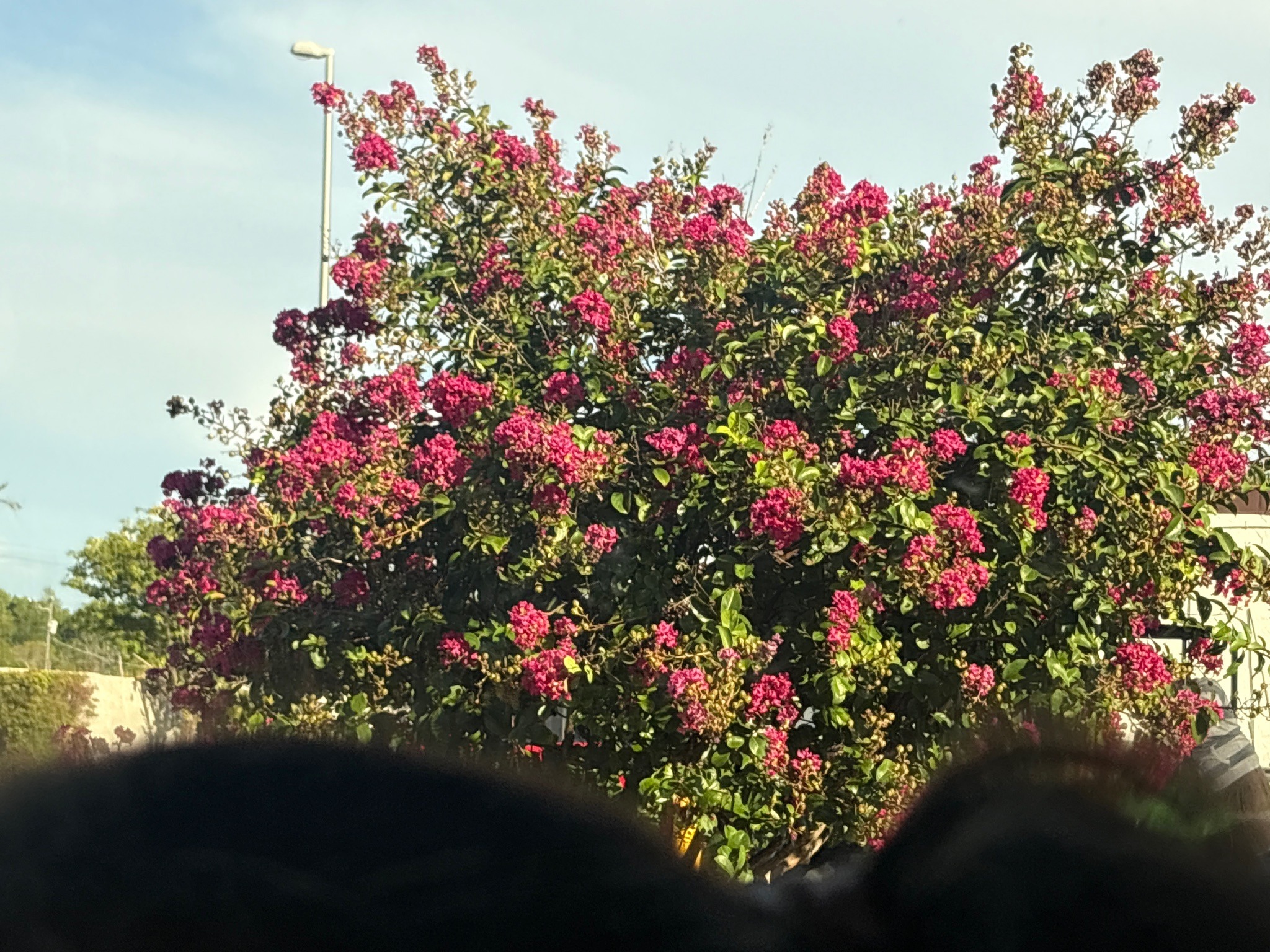
Brief Description
A popular deciduous ornamental tree known for its showy, crinkled summer blooms and smooth, peeling bark.
Characteristics
Features distinctive clusters of flowers with crinkled petals resembling crepe paper. It has smooth, mottled, cinnamon-colored bark that peels to reveal lighter layers beneath. Leaves are small, oval, and dark green, often turning vibrant colors in autumn.
Habitat
Thrives in full sun and well-drained soil; commonly used in urban landscaping, gardens, and along streets.
When to Find It
Blooms in mid-to-late summer (July through September) and provides fall color and interesting bark texture in winter.
Conservation Status
N/A
Ecological Role
Provides nectar for bees, butterflies, and other pollinators during the peak of summer when other blooms may be scarce. Its seeds can provide food for songbirds.
Easily Confused With
Oleander, which has narrower leaves and different flower structures, or lilacs, which bloom in spring rather than summer.
Observation Tips
Look for these trees in sunny residential or commercial areas during the hottest parts of summer to see them in full bloom. Avoid heavy pruning ('crepe murder') to maintain their natural form.
Interesting Facts
Often called the 'Lilac of the South.' Despite being native to East Asia, it has become a staple of Southern United States landscapes due to its heat and drought tolerance.
User Notes
What is this