Goldenrod
Scientific Name: Solidago spp.
Category: plant
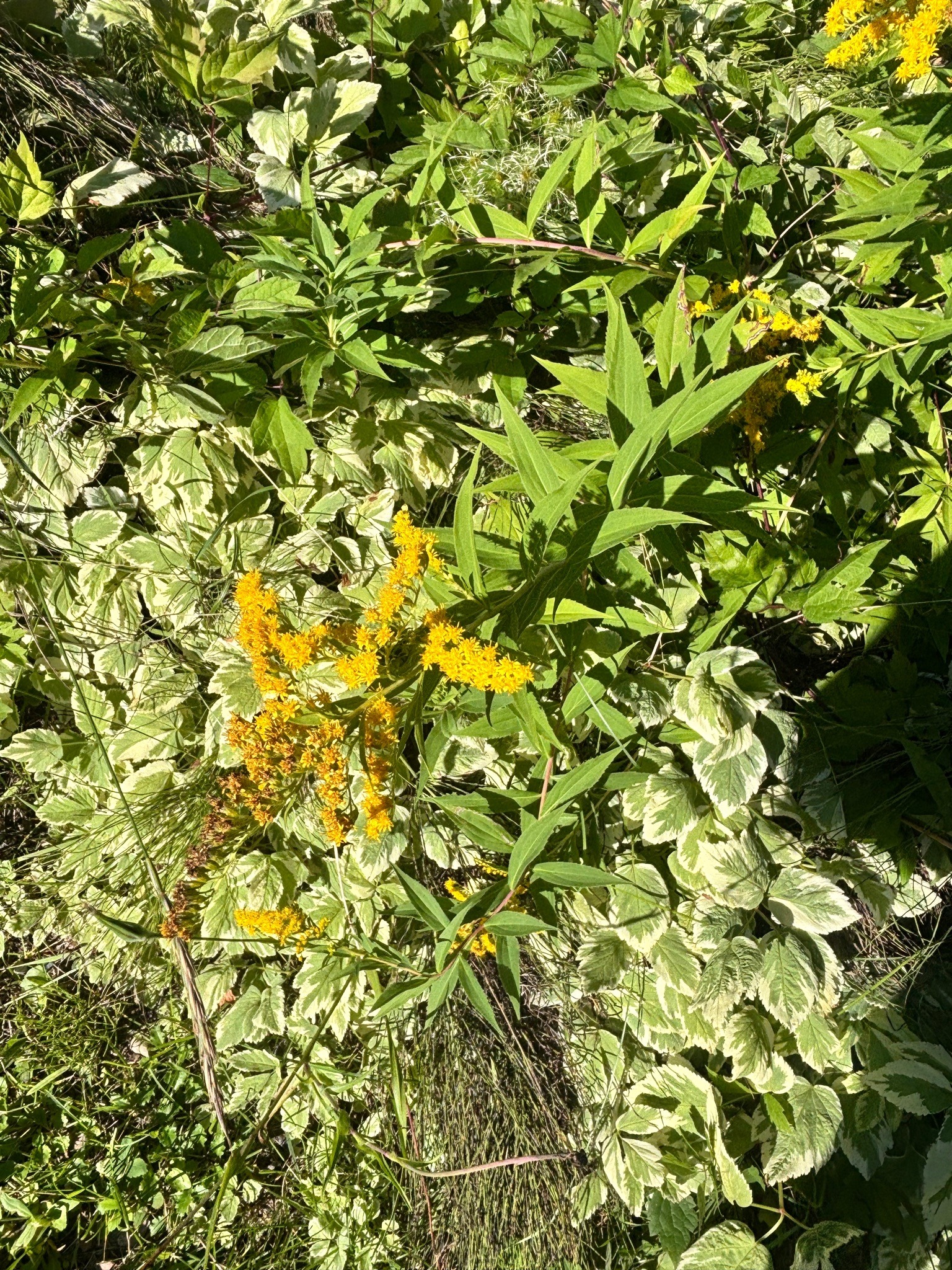
Brief Description
Goldenrod is a perennial wildflower known for its bright, plume-like clusters of yellow flowers that bloom in late summer and autumn.
Characteristics
Features branching stems covered in alternate, simple leaves and dense clusters of small yellow flower heads, typically growing from 1 to 5 feet tall.
Habitat
Found in open areas such as prairies, meadows, fields, roadsides, and open woodlands across various soil types.
When to Find It
Blooms primarily from mid-summer through autumn, making it most noticeable and vibrant during late August and September.
Conservation Status
N/A
Ecological Role
Crucial late-season nectar and pollen source for numerous pollinators including bees, butterflies, and migrating monarch butterflies.
Easily Confused With
Often confused with ragweed, but goldenrod has showy yellow flowers and smooth pollen (not wind-borne), whereas ragweed has inconspicuous green flowers and causes hay fever.
Observation Tips
Look for sunny fields and roadsides in late summer; approach quietly during midday to observe a diverse array of feeding pollinators.
Interesting Facts
Despite common misconceptions, goldenrod does not cause hay fever; its heavy, sticky pollen is pollinated by insects rather than the wind.