North Sulawesi Babirusa
Scientific Name: Babyrousa celebensis
Category: mammal
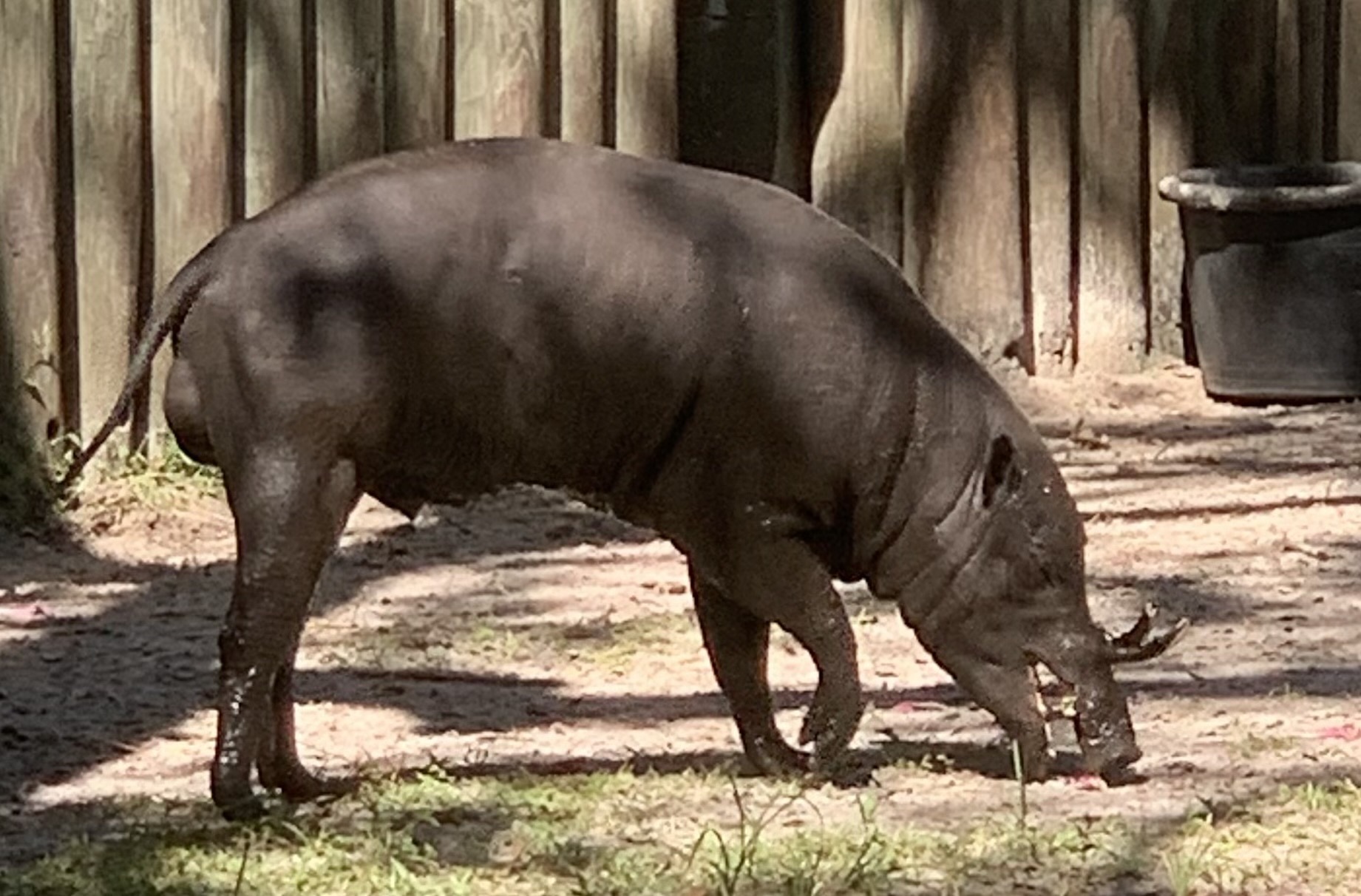
Brief Description
A unique species of wild pig known for its bizarre curving tusks and hairless appearance.
Characteristics
Features a barrel-shaped body, thin legs, and wrinkled gray skin that is nearly hairless. Males are distinguished by four tusks: two upper canines that grow upward through the snout and curve back toward the forehead, and two lower canines. Females have small or absent tusks.
Habitat
Tropical rainforests, especially near riverbanks and swamps. Found only on the Indonesian island of Sulawesi and some neighboring islands.
When to Find It
Diurnal; most active in the morning. N/A for seasonal migration.
Conservation Status
Vulnerable (IUCN Red List)
Ecological Role
Acts as a seed disperser and soil aerator. Their rooting behavior helps maintain the health of the rainforest floor.
Easily Confused With
Warthogs or wild boars. Distinguishable by the babirusa's skin wrinkles, lack of thick hair, and the specific upward-curving growth of the upper tusks through the skin of the snout.
Observation Tips
In the wild, they are very shy and difficult to spot. In captivity (zoos), look for them during morning feeding times or in wallowing areas. Always observe from a distance as they can be unpredictable.
Interesting Facts
The name 'Babirusa' translates to 'pig-deer' in Indonesian. It is estimated that if a male lived long enough and did not wear down his upper tusks, they could eventually grow long enough to pierce through his own skull.