Red Squirrel
Scientific Name: Sciurus vulgaris
Category: mammal
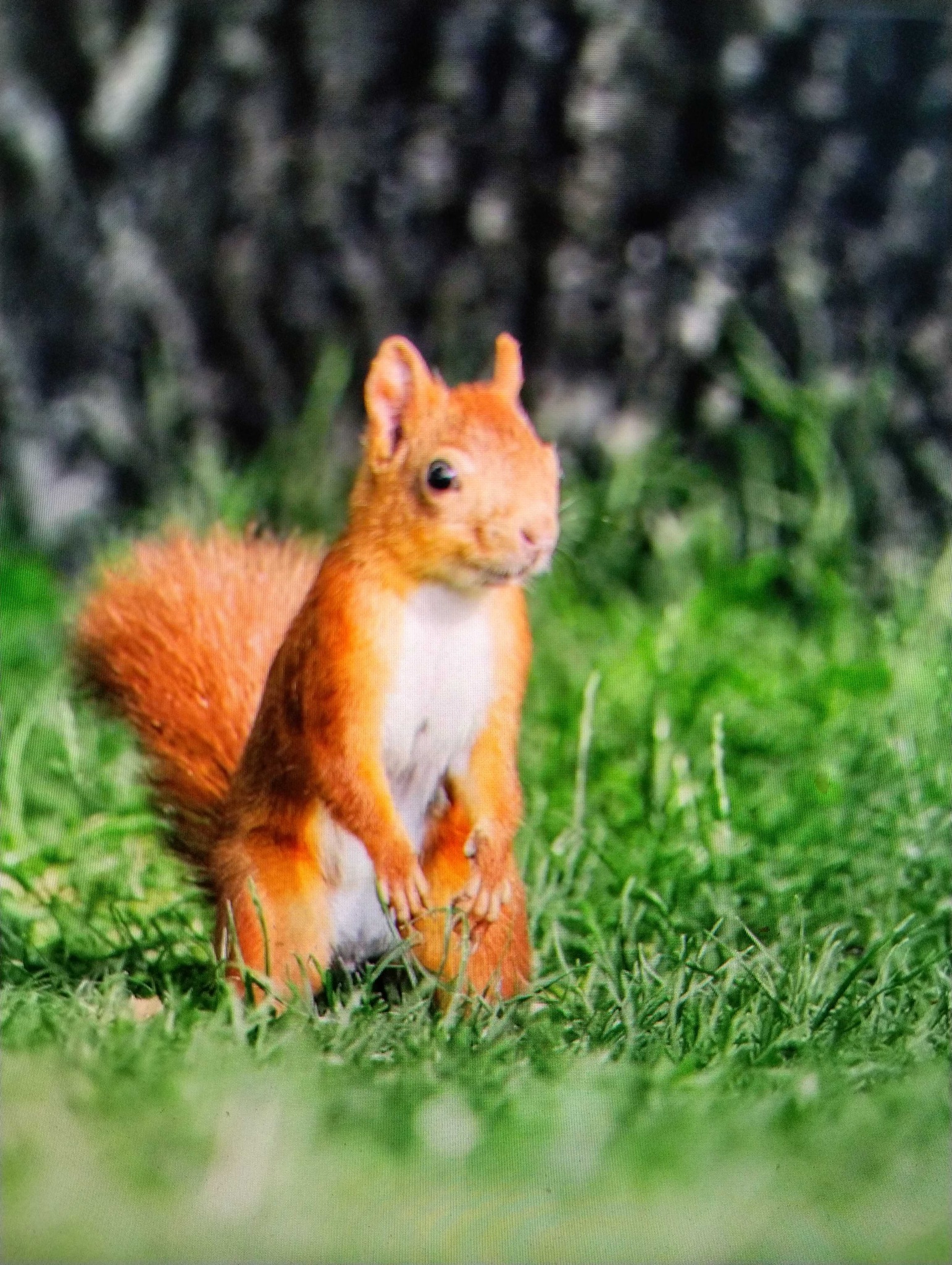
Brief Description
A small, tree-dwelling rodent with reddish fur, prominent ear tufts during winter, and a bushy tail.
Characteristics
Features a reddish-brown to bright red coat, a white belly, a large bushy tail, and distinct ear tufts which are especially prominent in winter. Head and body length range from 19 to 23 cm, with a tail length of 15 to 20 cm.
Habitat
Coniferous and deciduous woodlands, boreal forests, parks, and large gardens.
When to Find It
Active year-round, most visible in early morning and late afternoon, particularly in autumn when foraging and caching food.
Conservation Status
Least Concern globally, but declining or locally threatened in certain regions due to habitat fragmentation and competition with the introduced Eastern Grey Squirrel.
Ecological Role
Acts as an important seed disperser, particularly for conifer seeds, and plays a key role in forest regeneration through forgotten caches.
Easily Confused With
Eastern Grey Squirrel (Sciurus carolinensis), which is larger, typically grey with white underparts, and lacks ear tufts.
Observation Tips
Look and listen for falling pinecone scales and chattering sounds in tree canopies, especially in mixed or coniferous forests during morning hours.
Interesting Facts
Red squirrels do not hibernate; instead, they rely on cached food stores (larders) buried in the ground or hidden in tree hollows to survive the winter.