Green Iguana
Scientific Name: Iguana iguana
Category: reptile
Brief Description
A large, arboreal, herbivorous lizard native to Central and South America.
Characteristics
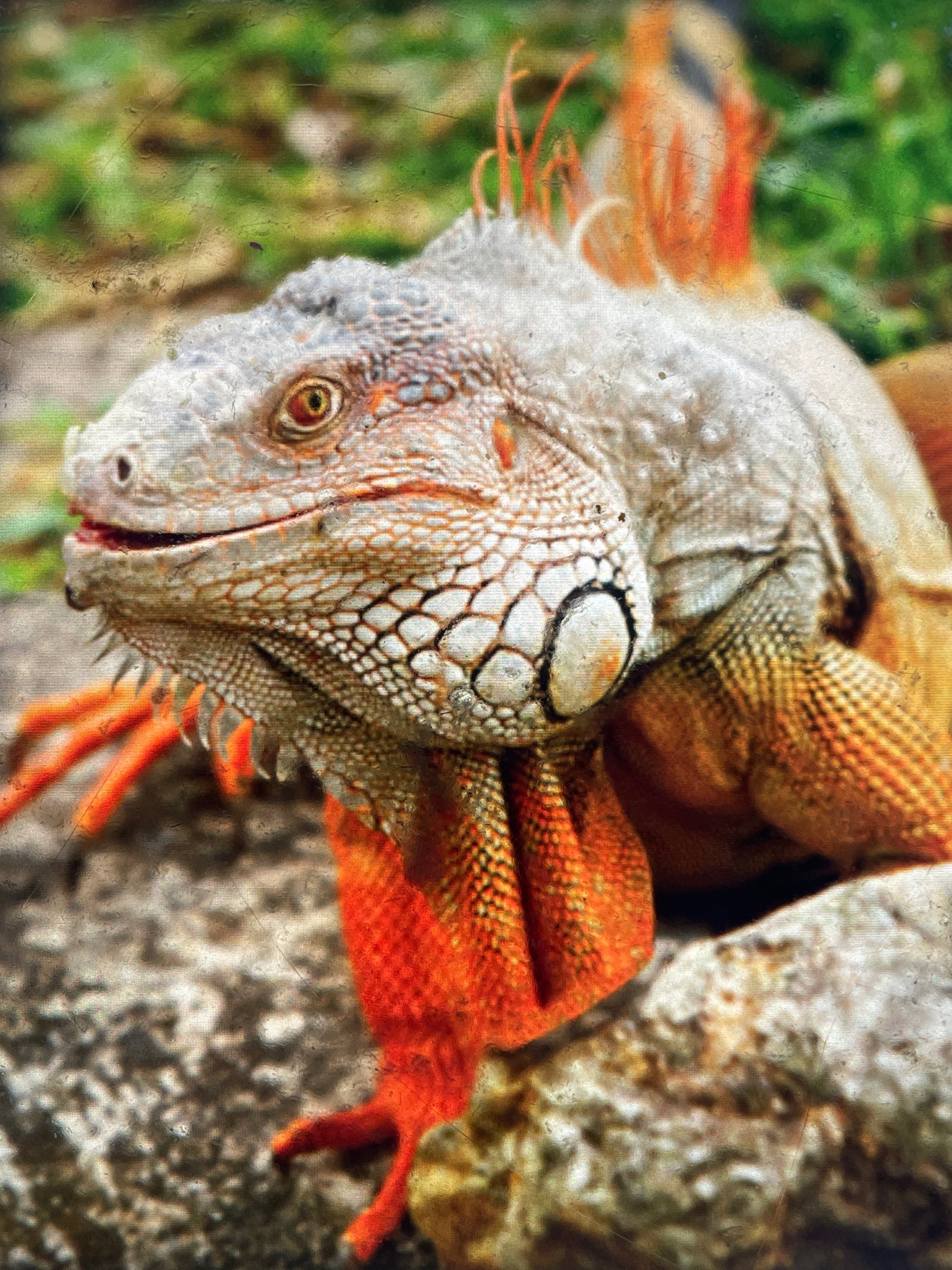
Large size, reaching up to 5 feet including tail. They feature a sagging dewlap under the throat, a crest of spines running down the back, and a large circular scale on the cheek known as the subtympanic shield. While called 'Green Iguanas', they can range in color from green to orange, blue, or lavender.
Habitat
Lowland tropical rainforests, often found near bodies of water such as rivers or lakes. They spend most of their time in the tree canopy.
When to Find It
Diurnal; most active during the day while basking in the sun to regulate body temperature.
Conservation Status
Least Concern (IUCN), though they are invasive in Florida, Hawaii, and parts of the Caribbean.
Ecological Role
They act as primary consumers and seed dispersers for several tropical plant species. They also serve as a food source for large birds of prey and crocodilians.
Easily Confused With
Spiny-tailed Iguanas (Ctenosaura), which lack the large circular subtympanic shield on the cheek and have more distinctively armored tails.
Observation Tips
Look for them along watercourses in sunny spots. They are often found high in trees but may drop into water to escape threats. Use binoculars to see the detail of their scales without disturbing them.
Interesting Facts
Iguanas have a 'third eye' on top of their head known as the parietal eye, which helps them detect changes in light and movement from predators above. They are also excellent swimmers and can hold their breath for up to 30 minutes.