Princess Tree
Scientific Name: Paulownia tomentosa
Category: tree
Brief Description
A fast-growing deciduous tree known for its extremely large, heart-shaped leaves and invasive nature.
Characteristics
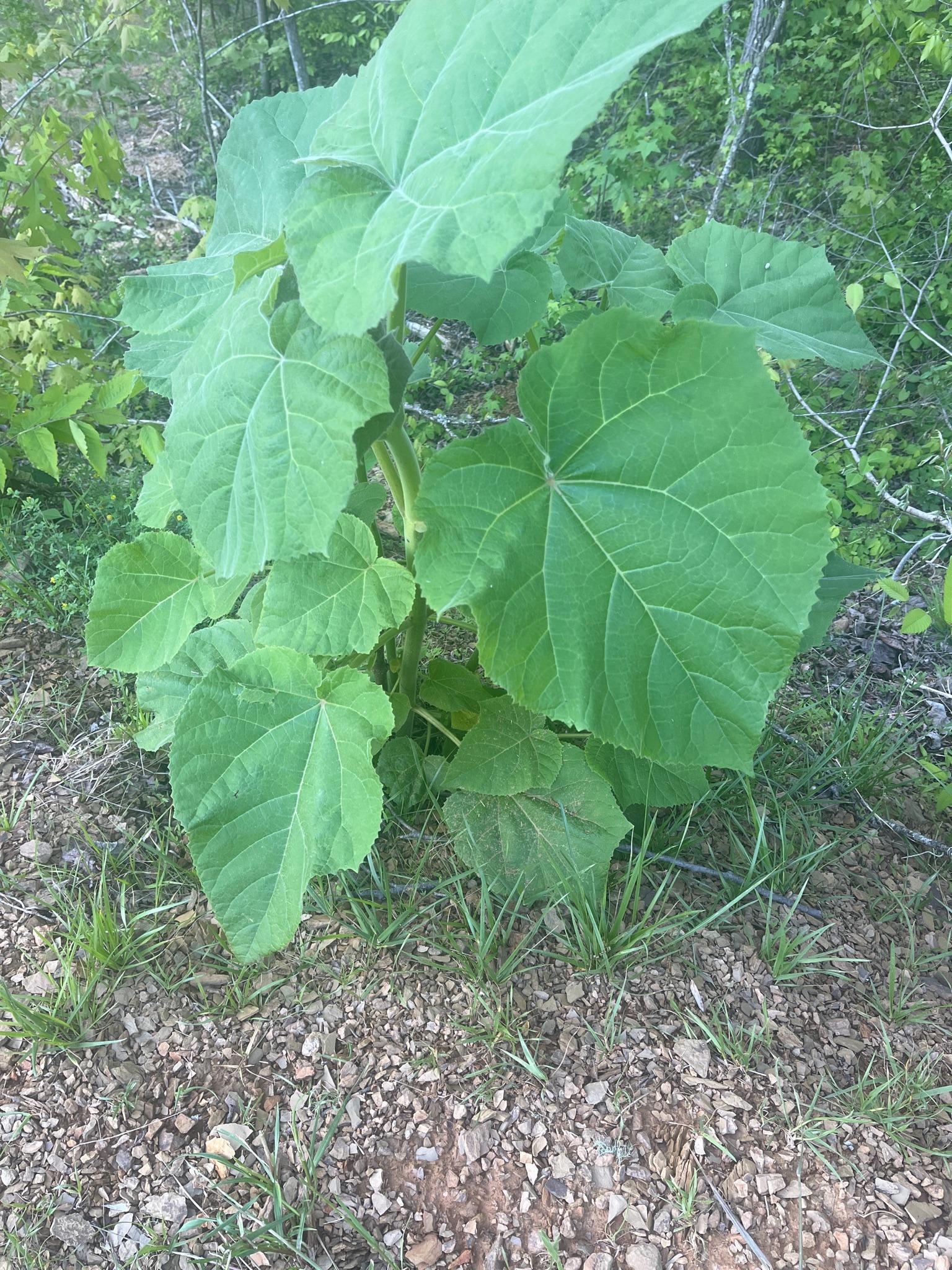
Large, heart-shaped (cordate) leaves that can reach over 30 cm across, covered in fine, velvety hairs. Stems are thick and pithy. As a sapling, it grows rapidly from a central trunk.
Habitat
Disturbed sites, roadsides, forest edges, and rocky slopes. It is highly adaptable to poor soil conditions.
When to Find It
Leaves appear in spring; produces purple, trumpet-shaped flowers in early spring before leaf-out on mature specimens.
Conservation Status
Invasive species (not protected)
Ecological Role
Often considered an invasive species in North America as it outcompetes native vegetation due to its rapid growth and high seed production.
Easily Confused With
Catalpa (Catalpa spp.) which has similar large leaves but they are usually arranged in whorls of three and lack the dense velvet fuzz of Paulownia. Also similar to Velvetleaf (Abutilon theophrasti), which is a smaller annual weed.
Observation Tips
Look for this plant in areas where the soil has been disturbed. When young, the leaves are disproportionately large compared to the stem.
Interesting Facts
A single mature Princess Tree can produce up to 20 million tiny winged seeds each year, which are easily dispersed by wind and water.