Fragmented Oyster Shell
Scientific Name: Ostreidae family
Category: shell
Brief Description
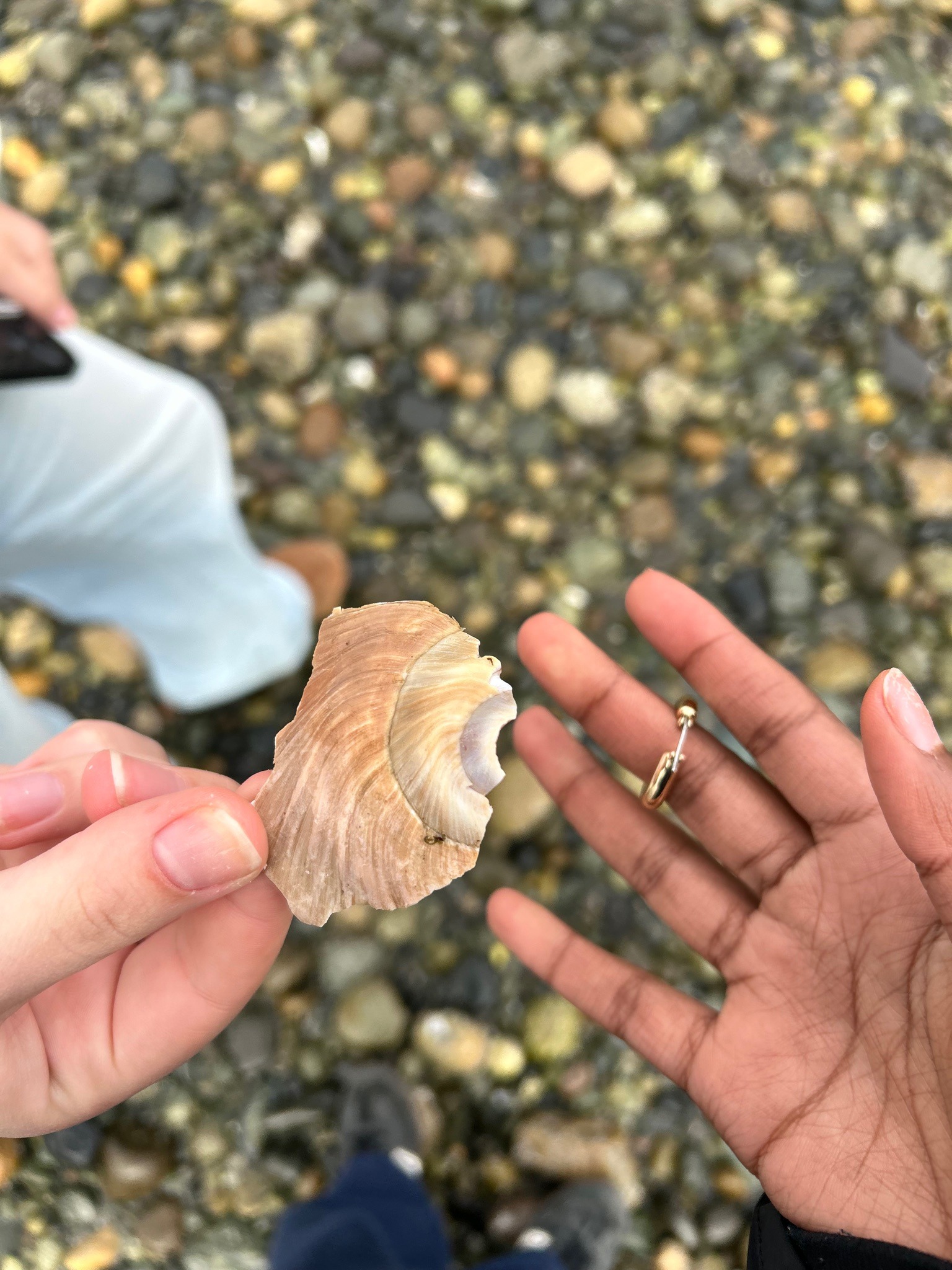
A broken piece of a marine bivalve mollusk shell, likely from an oyster, held by a person over a rocky beach.
Characteristics
Irregular, rough, and laminated texture with visible growth lines. It shows a pearly white interior and a grayish-brown, calcified exterior. The fragment has sharp, jagged edges where it has broken.
Habitat
Intertidal zones, estuaries, and shallow coastal waters. Oysters often attach to rocks, reefs, or other shells.
When to Find It
Can be found washed up on shores year-round, especially after high tides or storms.
Conservation Status
N/A
Ecological Role
Oysters are ecosystem engineers that filter water and create complex reef structures providing habitat for various marine species. Their shells provide calcium carbonate back to the environment.
Easily Confused With
Clam shells (usually smoother and more symmetrical) or Slipper shells (more curved and cap-shaped).
Observation Tips
When beachcombing, look for edges of shells sticking out of the sand or gravel at low tide. Handle sharp fragments carefully to avoid cuts.
Interesting Facts
Oyster shells are made of calcium carbonate. They were often used by indigenous coastal peoples to create shell middens, and today they are recycled to help restore new oyster reefs.