Burdock
Scientific Name: Arctium
Category: plant
Brief Description
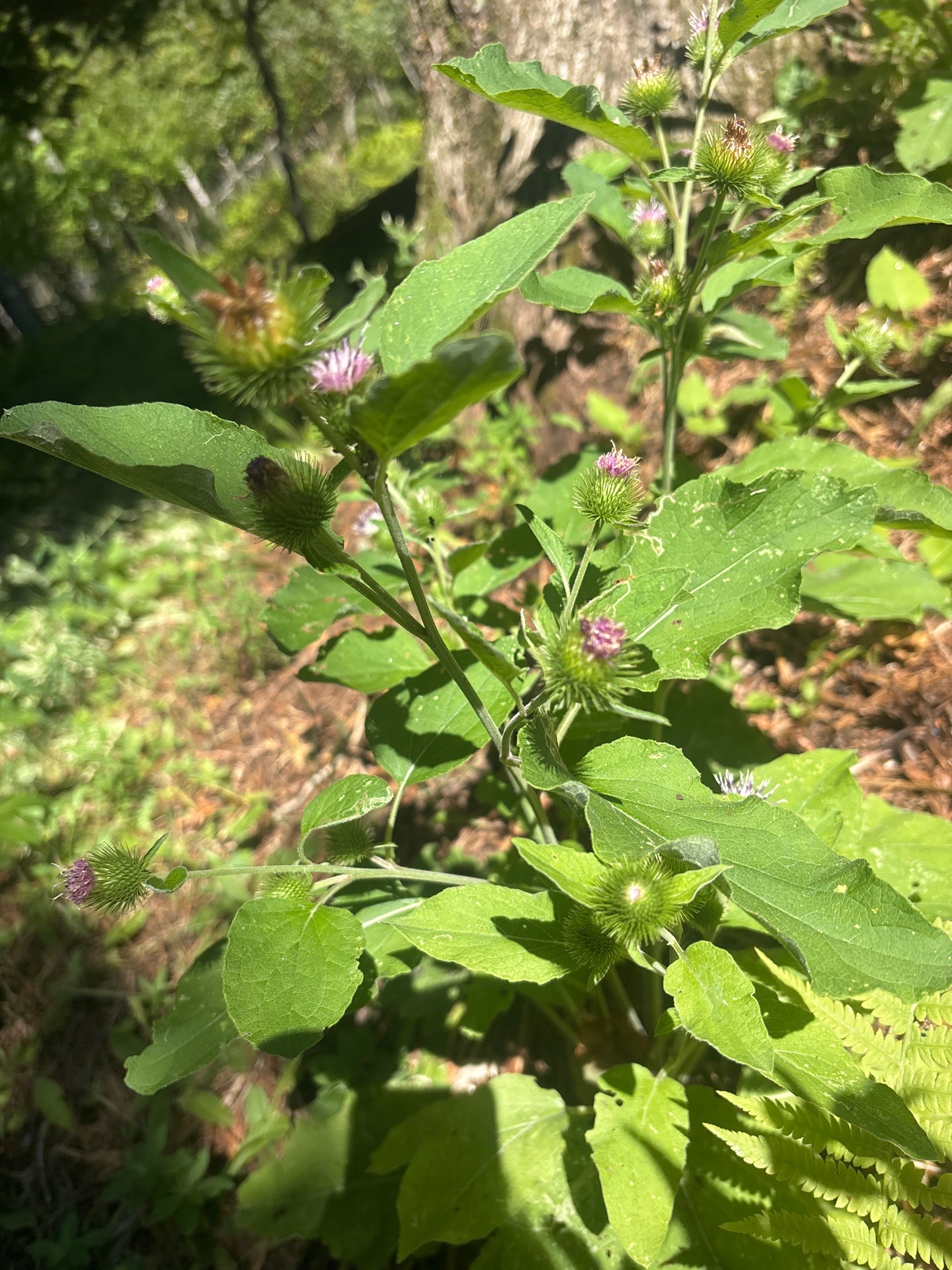
Burdock is a biennial plant known for its large heart-shaped leaves and spherical, hook-covered burrs that cling to clothing and animal fur.
Characteristics
Features large, alternate, coarse leaves that are often whitish and woolly underneath. Produces purple to pink tubular flowers enclosed in a spiny involucre that forms sticky burrs.
Habitat
Disturbed soils, roadsides, ditch banks, pastures, and woodland edges with high nitrogen content.
When to Find It
Flowers typically appear from mid-summer to early autumn, while mature burrs persist through autumn and winter.
Conservation Status
N/A
Ecological Role
Provides nectar for pollinators and seeds for birds, though the burrs can entangle small animals.
Easily Confused With
Often confused with thistles (Cirsium spp.) due to the spiny flower heads, but burdock lacks spiny leaves and has distinct broad, smooth-margined heart-shaped basal leaves.
Observation Tips
Look along forest edges and old fields in summer to see the pink blooms, and wear woven fabrics in autumn if you want to experience how easily the burrs catch.
Interesting Facts
The clinging ability of burdock burrs directly inspired the invention of Velcro by Swiss engineer George de Mestral after he examined them under a microscope in 1941.