Sugar Maple Leaf
Scientific Name: Acer saccharum
Category: tree
Brief Description
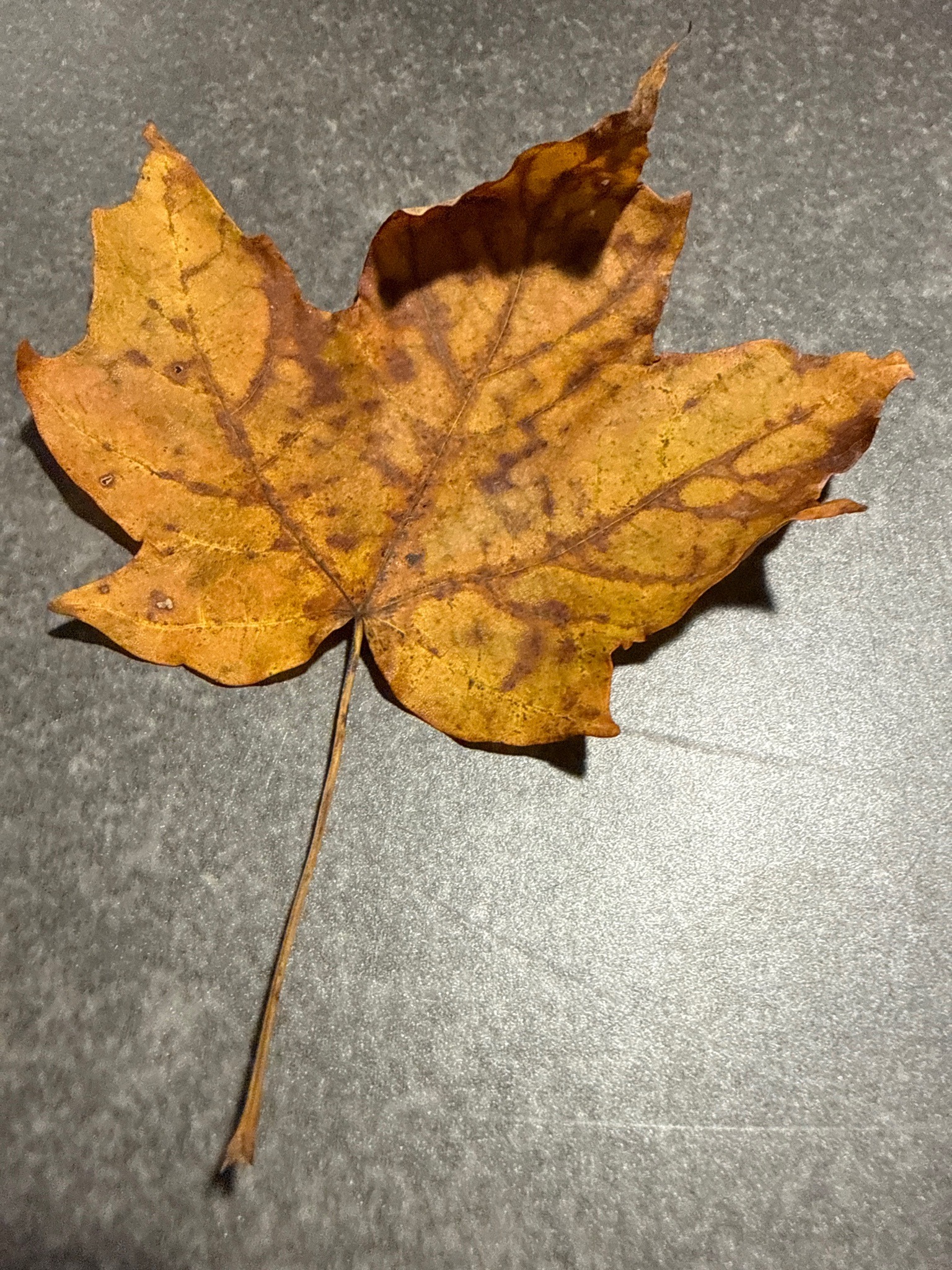
A fallen autumn leaf from a sugar maple tree, displaying characteristic palmate lobes and a golden-brown hue.
Characteristics
Simple, opposite leaves with 5 palmate lobes. The sinuses (indentations between lobes) are typically rounded. In autumn, the color transitions from green to vibrant shades of orange, red, and yellow.
Habitat
Deciduous and mixed forests, typically in moist, well-drained soils.
When to Find It
Autumn is the prime season for observing and collecting these colorful fallen leaves.
Conservation Status
Least Concern
Ecological Role
Fallen leaves decompose to enrich the forest soil with nutrients and provide habitat for micro-organisms and invertebrates.
Easily Confused With
Norway Maple (Acer platanoides), which has milky sap in the petiole and sharper teeth on the lobes, and Red Maple (Acer rubrum), which has more sharply toothed lobes and shallower sinuses.
Observation Tips
Look on the forest floor or up in the canopy during autumn in eastern North America.
Interesting Facts
The sugar maple is the primary source for authentic maple syrup and is famously featured on the Canadian national flag.