Differential Grasshopper
Scientific Name: Melanoplus differentialis
Category: insect
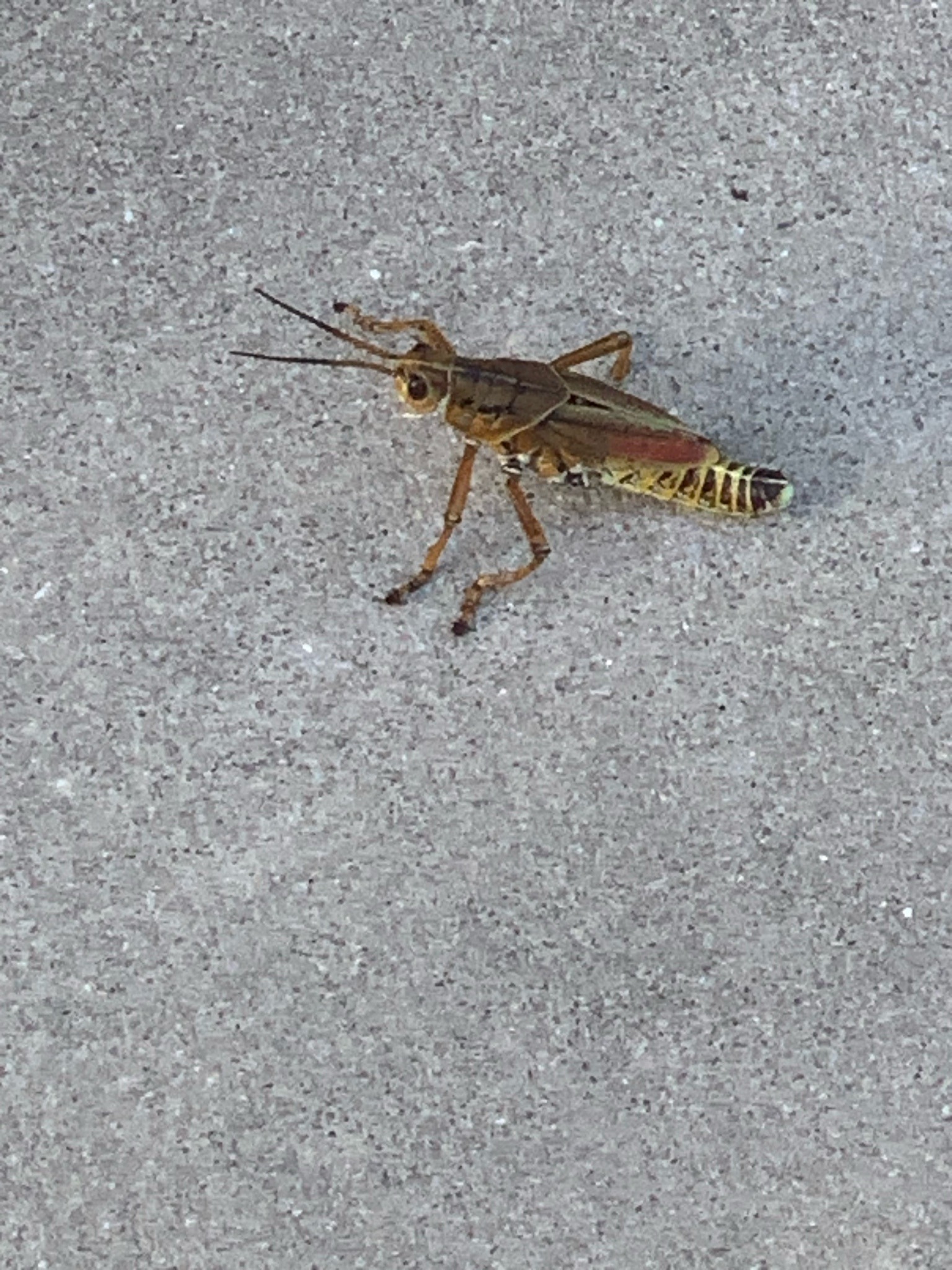
Brief Description
A large, olive-green or yellowish grasshopper known for the distinct herringbone pattern on its jumping legs.
Characteristics
It typically reaches 1.5 to 2 inches in length. Its body color ranges from olive-green to brownish-yellow. The most distinguishing characteristic is the black chevron (herringbone) pattern on the outer side of its hind thighs (femuurs).
Habitat
Commonly found in open fields, croplands, gardens, and grasslands. It is native to most of North America.
When to Find It
Adults are most active from mid-summer through late autumn (July to October).
Conservation Status
Stable/Common
Ecological Role
As a herbivore, it serves as a primary consumer in the food chain and is a significant food source for birds, rodents, and other insectivores. However, it can be a pest to agriculture.
Easily Confused With
Two-striped Grasshoppers (Melanoplus bivittatus) look similar but have two distinct light stripes running down their back. Red-legged Grasshoppers are smaller and lack the bold chevron pattern.
Observation Tips
They are easiest to observe in late summer when they are large and active. Moving slowly through tall grass will often flush them out, making them easier to spot when they jump.
Interesting Facts
Unlike many other insects, grasshoppers have ears (tympana) located on their abdomen rather than their head. This species group is known for its ability to produce sounds by rubbing its hind legs against its wings.