Smooth Sumac
Scientific Name: Rhus glabra
Category: tree
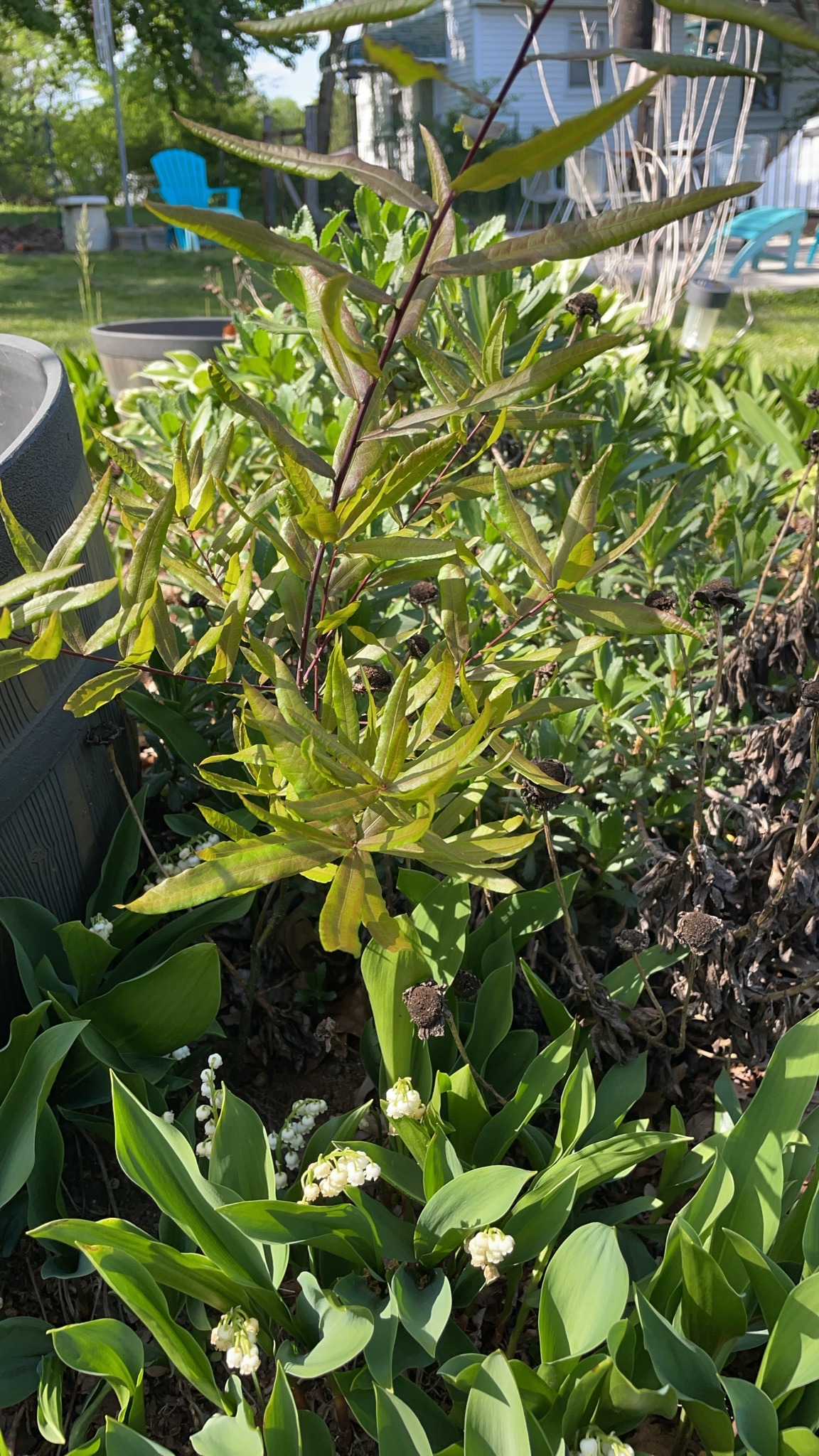
Brief Description
A deciduous shrub or small tree known for its open spreading habit, compound leaves, and vibrant red autumn foliage.
Characteristics
Feather-compound leaves with 9-27 leaflets that are serrated and dark green above, turning brilliant red in fall. The stems are distinctive for being very smooth, hairless, and often covered in a glaucous (waxy) whitish bloom.
Habitat
Commonly found in open woodlands, prairies, fields, roadsides, and railroad rights-of-way.
When to Find It
Flowers in late spring to early summer; fruit matures in late summer and persists through winter; spectacular leaf color in autumn.
Conservation Status
Least Concern (Common)
Ecological Role
Provides vital winter food for many bird species and mammals. It is a larval host for several butterfly species and its flowers are a significant nectar source for bees and beetles.
Easily Confused With
Staghorn Sumac (Rhus typhina), which of distinguished by its densely velvety/hairy twigs; Poison Sumac (Toxicodendron vernix), which has white berries and smooth-edged leaflets rather than serrated ones.
Observation Tips
Look for the smooth, hairless stems to distinguish it from its 'hairy' lookalikes. It often grows in clonal colonies, so where you find one, you will often find many clones from the same root system.
Interesting Facts
Smooth Sumac is the only woody plant native to all 48 contiguous states of the US. Historically, the berries have been used to create a tart, vitamin-C-rich tea often called 'sumac-ade'.