Pacific Trillium
Scientific Name: Trillium ovatum
Category: plant
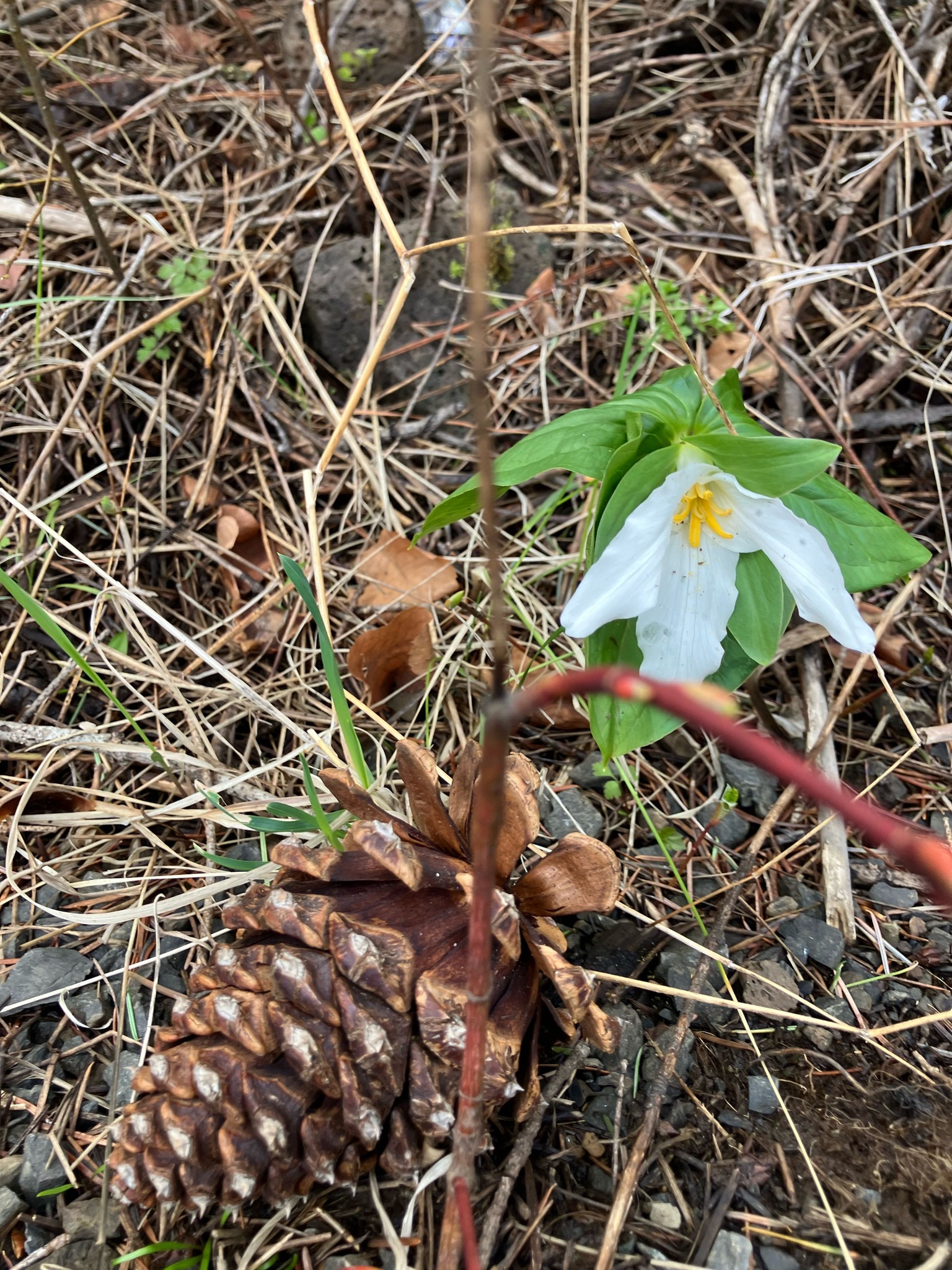
Brief Description
A spring-blooming perennial woodland flower known for its three-petaled flowers and three-leaved structure.
Characteristics
Features three green ovate bracts (leaves), three white petals that fade to pink or purple with age, and three green sepals. The central flower has yellow anthers.
Habitat
Moist, shaded forest floors, particularly under conifers and deciduous trees in coastal and mountain regions.
When to Find It
Early spring, typically blooming from late February through June depending on elevation.
Conservation Status
Secure in many areas, but vulnerable to habitat loss and deer overgrazing; protected in some jurisdictions.
Ecological Role
An early nectar source for pollinators; its seeds are primarily dispersed by ants in a process called myrmecochory.
Easily Confused With
Western Wake-robin and other Trillium species. Recognized specifically by its white petals that turn deep pink or reddish as they wilt.
Observation Tips
Look for these in damp, rich soils of the Pacific Northwest. Do not pick them, as removing the leaves and flower can take years for the plant to recover from or may kill it.
Interesting Facts
Trillium ovatum can live for up to 70 years. The white flower changes color to pink or purple as it ages to signal to pollinators that it has already been fertilized.