Poison Ivy
Scientific Name: Toxicodendron radicans
Category: plant
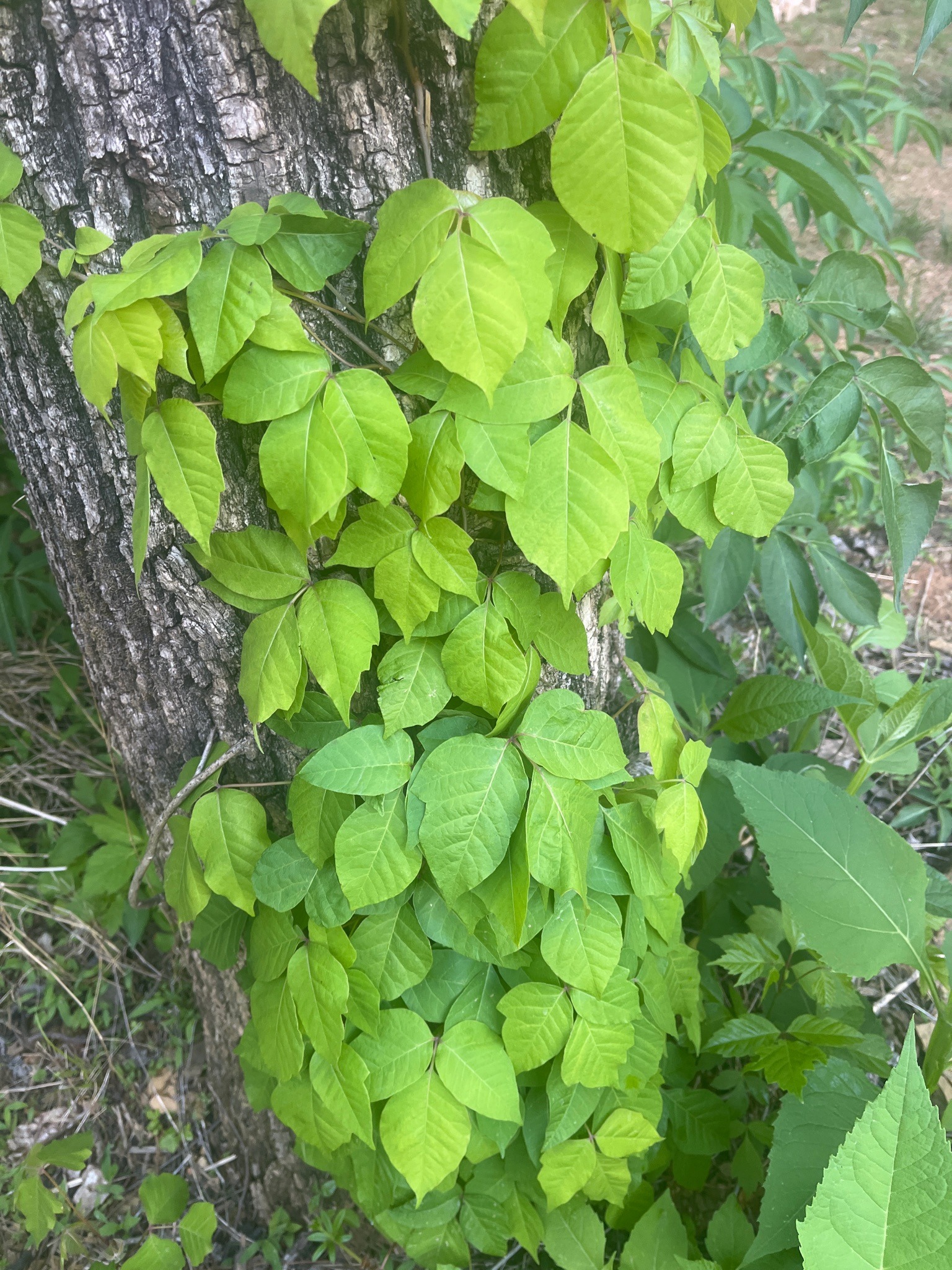
Brief Description
A common woody vine or shrub well-known for causing an itchy, allergic rash in humans after contact.
Characteristics
Identified by its clusters of three leaflets ('leaves of three, let it be'). The leaves can be smooth, lobed, or notched and often have a glossy or dull green appearance. Mature vines climbing trees are often 'hairy' with dark aerial roots.
Habitat
Found in wide range of habitats including woodlands, fields, thickets, and urban edges. It thrives in both sun and shade.
When to Find It
Leaves emerge reddish in spring, turn green in summer, and bright red, yellow, or orange in autumn. Berries persist through winter.
Conservation Status
Common / Not Threatened
Ecological Role
Provides a high-fat food source for many bird species and small mammals through its white berries. It also serves as a host plant for various insects.
Easily Confused With
Boxelder (Acer negundo) saplings have opposite leaf arrangements, whereas Poison Ivy is alternate. Fragrant Sumac (Rhus aromatica) has fuzzy berries and no aerial roots. Virginia Creeper (Parthenocissus quinquefolia) typically has five leaflets.
Observation Tips
Observe from a distance to avoid contact with urushiol oil, which is present in all parts of the plant year-round. If touched, wash immediately with soap and cold water.
Interesting Facts
The allergic reaction is caused by urushiol, an oil that can remain active on surfaces like clothing, tools, or pet fur for years. Only humans and some higher primates are sensitive to it; most animals are immune.