Catbrier / Greenbrier
Scientific Name: Smilax
Category: plant
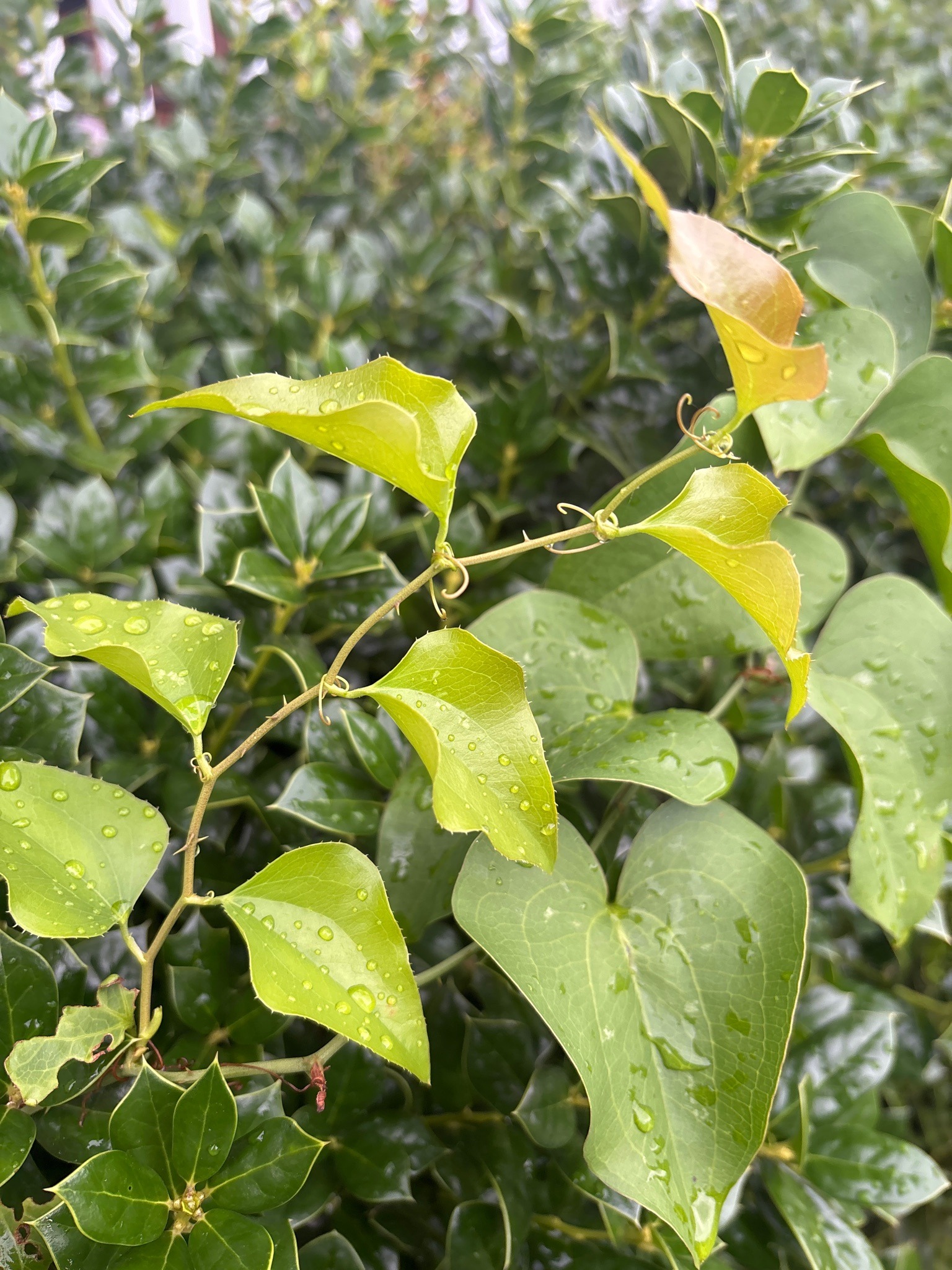
Brief Description
A woody, often prickly vine featuring glossy green leaves and tendrils that help it climb over other vegetation.
Characteristics
Woody stems often armed with prickles or thorns, alternate leaves which are frequently heart-shaped or ovate with prominent parallel veins, and paired tendrils arising from the leaf stalks used for climbing.
Habitat
Found in thickets, forest edges, woodlands, and disturbed areas across temperate and tropical regions.
When to Find It
Active growth and lush green foliage occur during spring and summer; deciduous species drop leaves in autumn.
Conservation Status
N/A
Ecological Role
Provides essential dense cover and nesting sites for birds and small mammals. The fruits are an important food source for wildlife during winter.
Easily Confused With
Other climbing vines such as morning glories or wild grapes, but greenbriers are readily distinguished by their characteristic prickles, tough woody stems, and tendrils attached to leaf bases.
Observation Tips
Look along woodland edges and hedgerows where these vines scramble over shrubs and trees; watch out for the sharp prickles when observing closely.
Interesting Facts
Many species of greenbrier have starchy underground tubers that have historically been used by indigenous peoples and foragers to make a jelly or a nutritious drink.