Intertidal Shoreline (Driftline)
Scientific Name: N/A
Category: habitat
Brief Description
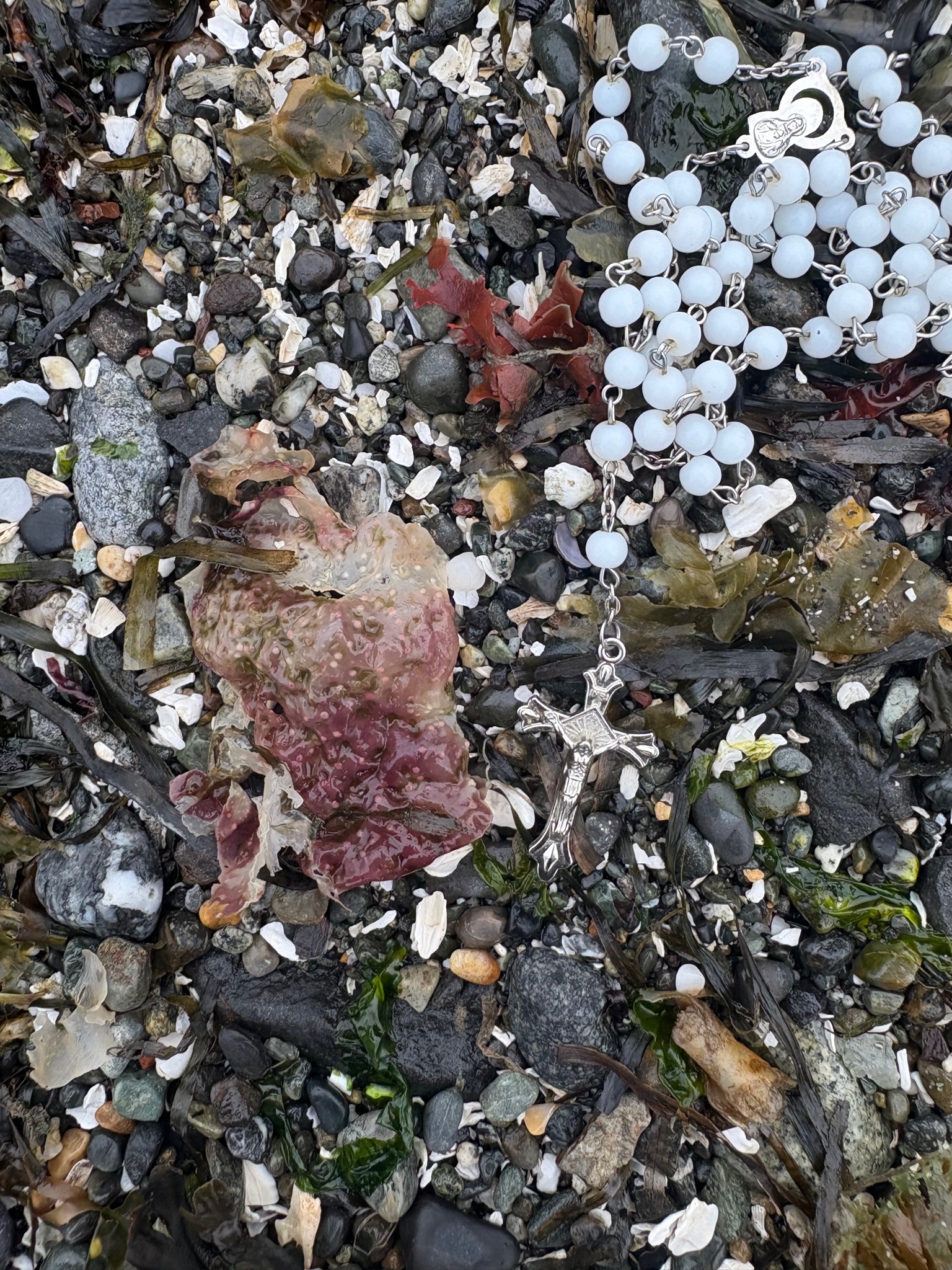
A section of a rocky beach shoreline in Washington state, showing a mix of marine algae, shell fragments, and stones at the high-tide mark.
Characteristics
A mixture of wet pebbles, broken mollusk shells, and various species of seaweed (macroalgae) including green, brown, and red varieties. The presence of a human-made rosary indicates this is a driftline where the tide deposits both natural and anthropogenic debris.
Habitat
Temperate marine intertidal zone, specifically the driftline or wrack line on a rocky beach.
When to Find It
Visible year-round; best observed during low tide after a storm or high tide cycle.
Conservation Status
Varies by location; coastal habitats are sensitive to pollution and climate change.
Ecological Role
The wrack line provides essential nutrients to the beach ecosystem as seaweed decays, offering food and shelter for amphipods, isopods, and shorebirds.
Easily Confused With
Salt marshes or sandy dunes; distinguished by the dominance of rocky substrate and specific Pacific Northwest marine flora.
Observation Tips
Check local tide tables and visit during receding tides. Be careful not to step on sensitive tide pool organisms. Always practice 'leave no trace' by removing human-made trash.
Interesting Facts
The red seaweed shown, possibly from the genus Porphyra or similar, is part of a diverse group of algae in the Pacific Northwest that are vital oxygen producers and form the base of the marine food web.
User Notes
Washington state beach