Satan's Bolete
Scientific Name: Rubroboletus satanas
Category: fungi
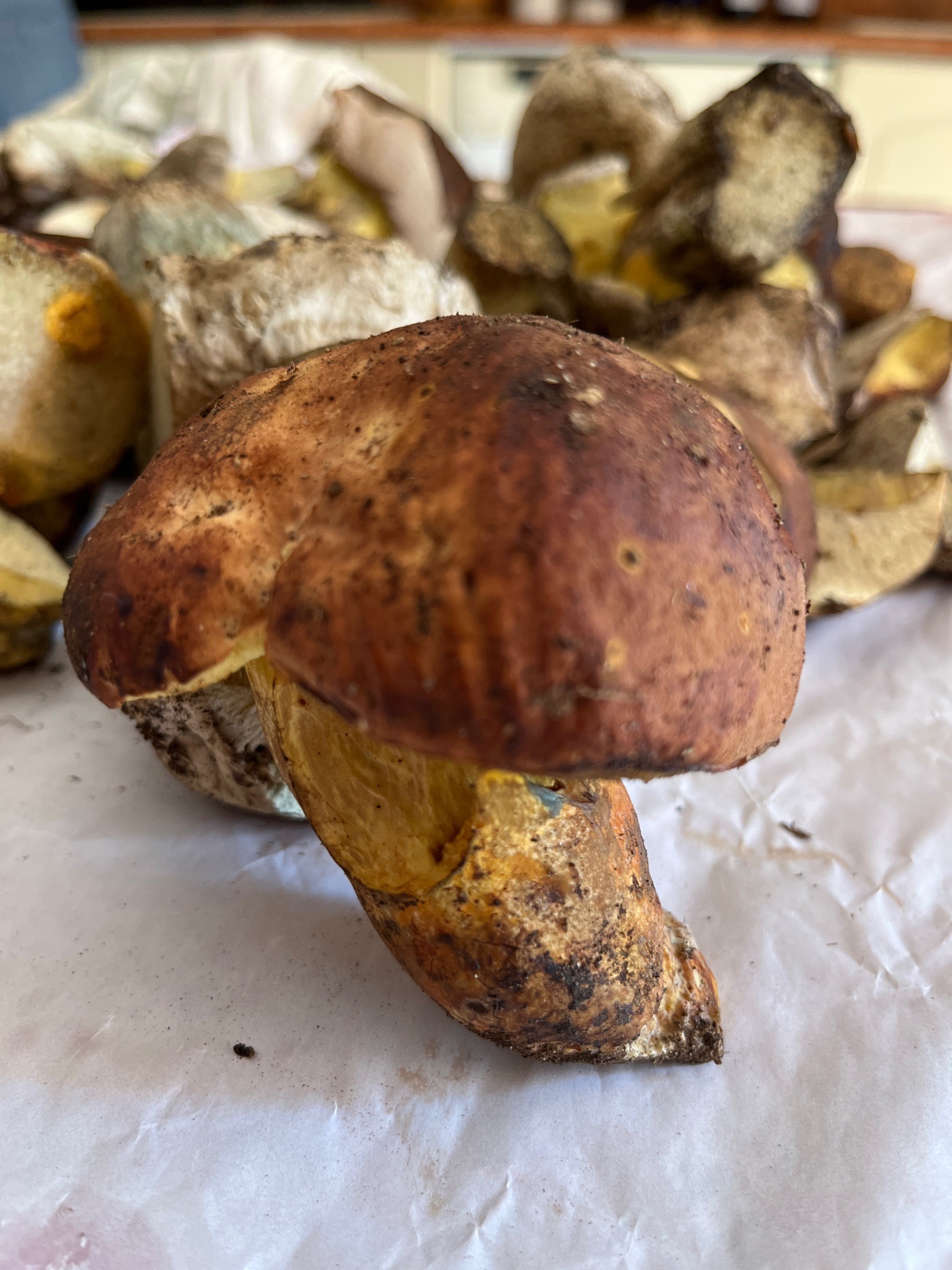
Brief Description
A large, toxic bolete mushroom characterized by a velvety pale cap, bright red to orange pores, and a robust stem with a red network pattern (reticulation).
Characteristics
Cap is 8-30 cm across, whitish to pale gray or ochre, smooth to velvety. Pores are initially yellow, quickly turning blood-red to orange-red, and bruise blue when damaged. Flesh bruises blue. Stem is thick, yellowish-red with a prominent red reticulation pattern. Has an unpleasant, sickly-sweet or foul odor when older.
Habitat
Deciduous woodlands, specifically found in mycorrhizal association with broad-leaved trees such as beech and oak, preferring calcareous (chalky) soils.
When to Find It
Summer to early autumn, typically from July to October.
Conservation Status
N/A
Ecological Role
Forms vital ectomycorrhizal relationships with trees, helping them absorb water and essential nutrients from the soil.
Easily Confused With
Can be confused with other red-pored boletes like Neoboletus luridiformis, which has darker brown caps and lacks the pale velvety cap, or Rubroboletus pulcherrimus. Distinguish by cap color, reaction to bruising, and odor.
Observation Tips
Look for calcareous beech or oak forests during warm, wet periods in late summer. Do not handle without washing hands afterwards.
Interesting Facts
Despite its terrifying name, Satan's Bolete is rarely fatal, but ingestion causes severe and prolonged gastrointestinal distress (vomiting and severe diarrhea).