American Alligator
Scientific Name: Alligator mississippiensis
Category: reptile
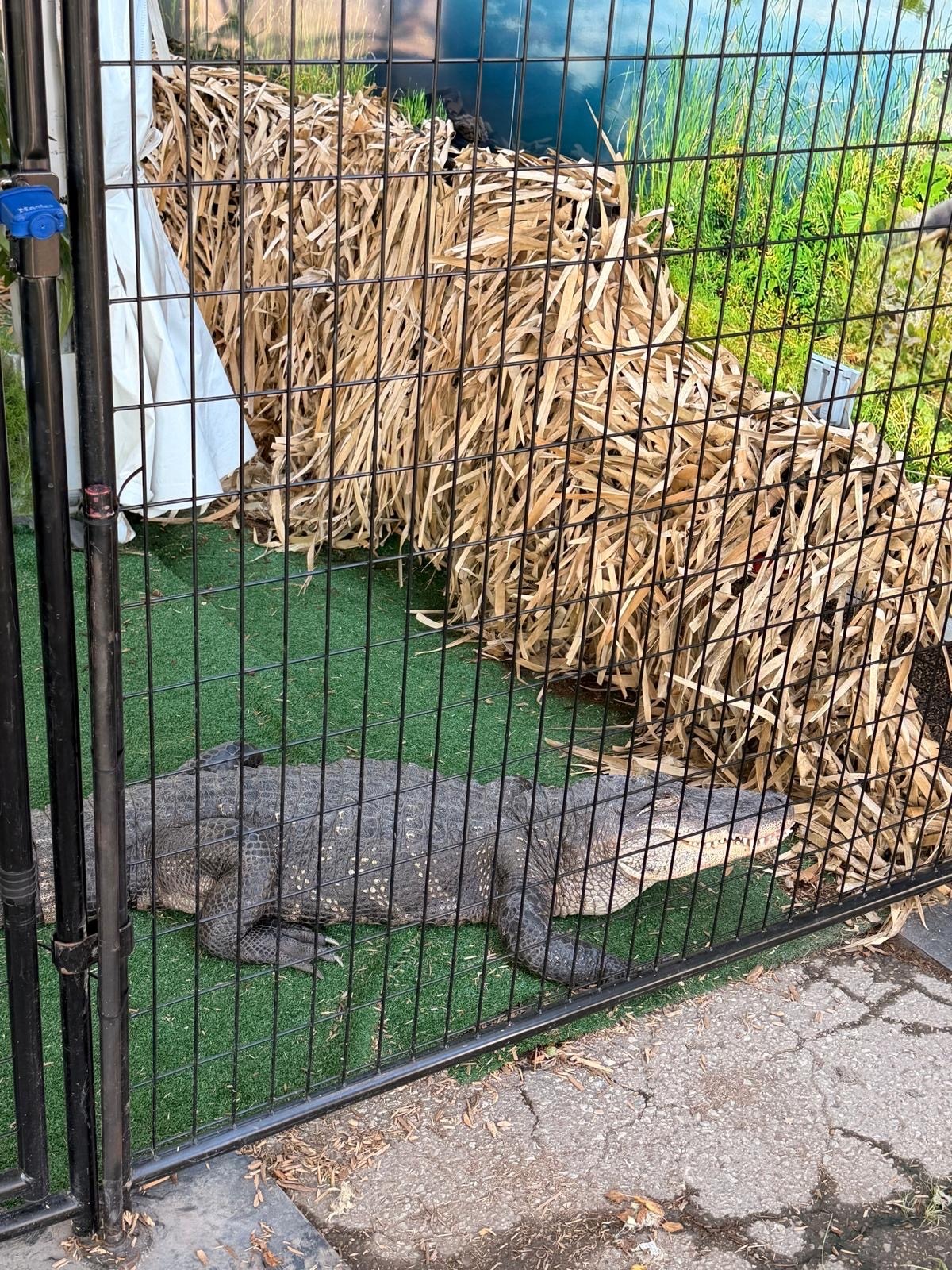
Brief Description
A large crocodilian reptile native to the southeastern United States, characterized by a broad snout and dark, armored skin.
Characteristics
Dark green, brown, or nearly black scaly skin with yellowish bands in juveniles; broad, rounded U-shaped snout; when the mouth is closed, the large lower fourth tooth is hidden.
Habitat
Freshwater wetlands, swamps, marshes, rivers, and occasionally brackish water environments.
When to Find It
Most active during warmer months; tends to bask in the sun during mornings and brumate in burrows or mud during colder winter periods.
Conservation Status
Least Concern
Ecological Role
Acts as a keystone species and ecosystem engineer by creating alligator holes that retain water during dry periods, providing habitats for various aquatic organisms.
Easily Confused With
American Crocodile; can be distinguished by the crocodile's more pointed, V-shaped snout and a lower tooth that remains visible when the mouth is closed.
Observation Tips
Observe from a safe distance behind sturdy barriers or using telephoto lenses, especially near water bodies where they may bask or nest.
Interesting Facts
Alligators are known to form complex social structures and display surprisingly attentive maternal care, guarding their nests and young for up to a year.