Sycamore Maple
Scientific Name: Acer pseudoplatanus
Category: tree
Brief Description
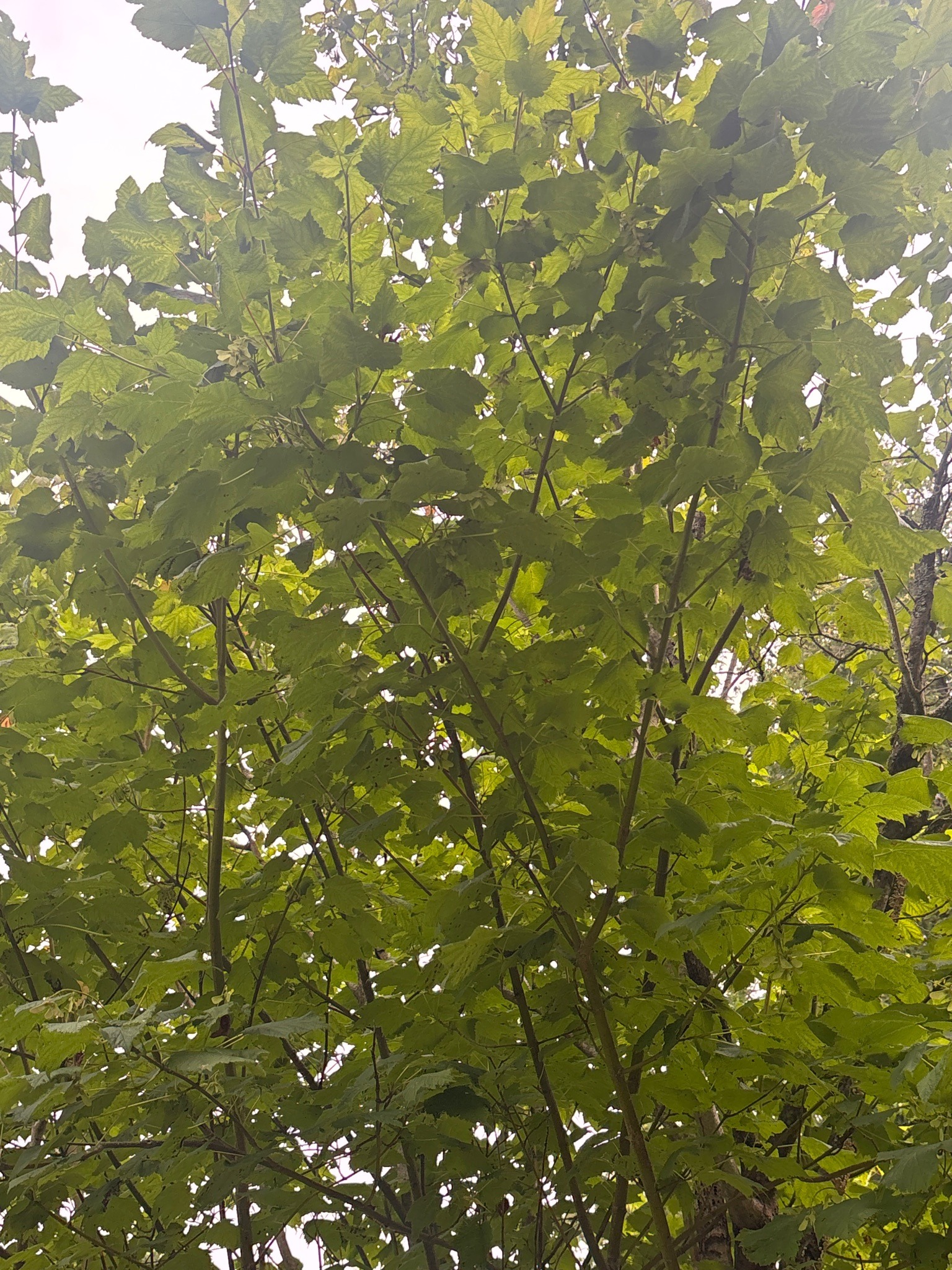
A large deciduous tree known for its dense canopy, broad lobed leaves, and winged seeds, commonly found in European woodlands and urban landscapes.
Characteristics
Features dark green leaves with five lobes, smooth grey-brown bark that flakes off in older trees, and distinctive paired winged seeds (samaras) forming a V-shape.
Habitat
Thrives in moist, well-drained soils in temperate forests, woodland edges, and along riverbanks, but is also highly adaptable to urban environments.
When to Find It
Best observed during spring and summer for vibrant green foliage, or autumn when leaves turn yellow-brown. Seeds mature and drop in late summer to autumn.
Conservation Status
Least Concern
Ecological Role
Provides essential shade, nesting sites for birds, and a food source for various insects, caterpillars, and mammals.
Easily Confused With
Often confused with Field Maple or Norway Maple; distinguished by its larger leaf size, deeper lobes, and specific angle of the samara wings.
Observation Tips
Look upward into the canopy during daylight to observe the intricate branching pattern and sunlight filtering through the dense leaves.
Interesting Facts
The wood of the Sycamore Maple is strong and fine-grained, frequently used in making musical instruments like violins and backs of stringed instruments.