Turquoise
Scientific Name: CuAl6(PO4)4(OH)8·4H2O
Category: rock
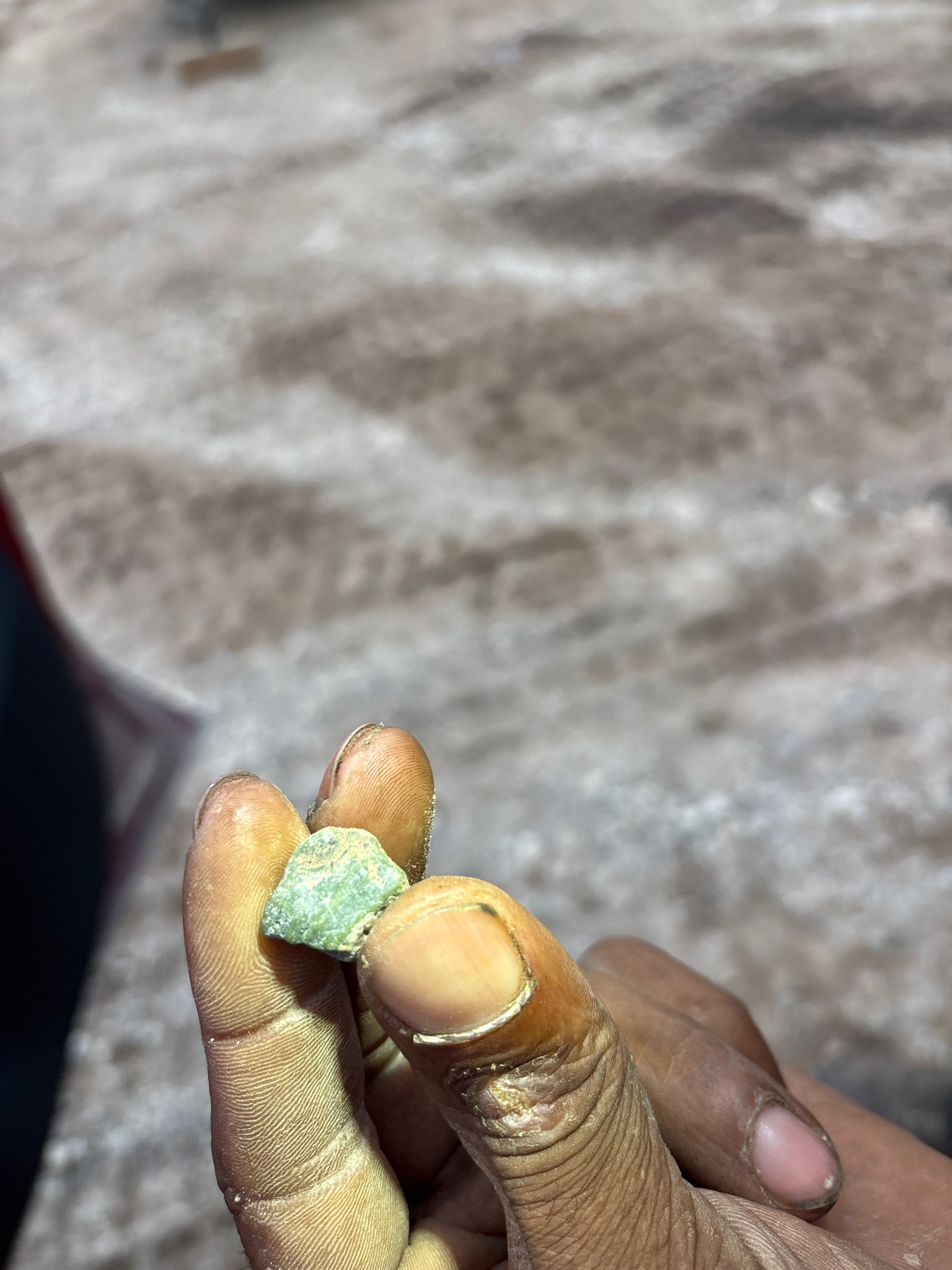
Brief Description
A hydrated phosphate of copper and aluminium, turquoise is a rare and valuable opaque, blue-to-green mineral that has been prized as a gemstone and ornamental material for thousands of years.
Characteristics
Cryptocrystalline, massive mineral; hardness of 5 to 6 on the Mohs scale; displays a waxy to subvitreous luster; distinctive robin's egg blue, greenish-blue, or yellowish-green coloration often with dark brown, dark gray, or black veins (matrix).
Habitat
Found in arid regions as a secondary mineral deposited by circulating acidic groundwater interacting with copper-bearing rocks.
When to Find It
N/A
Conservation Status
N/A
Ecological Role
Represents the culmination of complex geochemical weathering and mineral deposition processes in arid hydrogeological environments.
Easily Confused With
Chrysocolla, variscite, and smithsonite. Turquoise can often be distinguished by its specific copper-aluminum phosphate chemistry, hardness, and typical dark web-like matrix patterns.
Observation Tips
Look for weathered copper deposits in desert environments, and always practice responsible mineral collecting adhering to local land laws.
Interesting Facts
Turquoise is one of the world's most ancient gem materials, heavily utilized by ancient civilizations including the Egyptians, Persians, and Native Americans of the southwestern United States.