Eastern Chipmunk
Scientific Name: Tamias striatus
Category: mammal
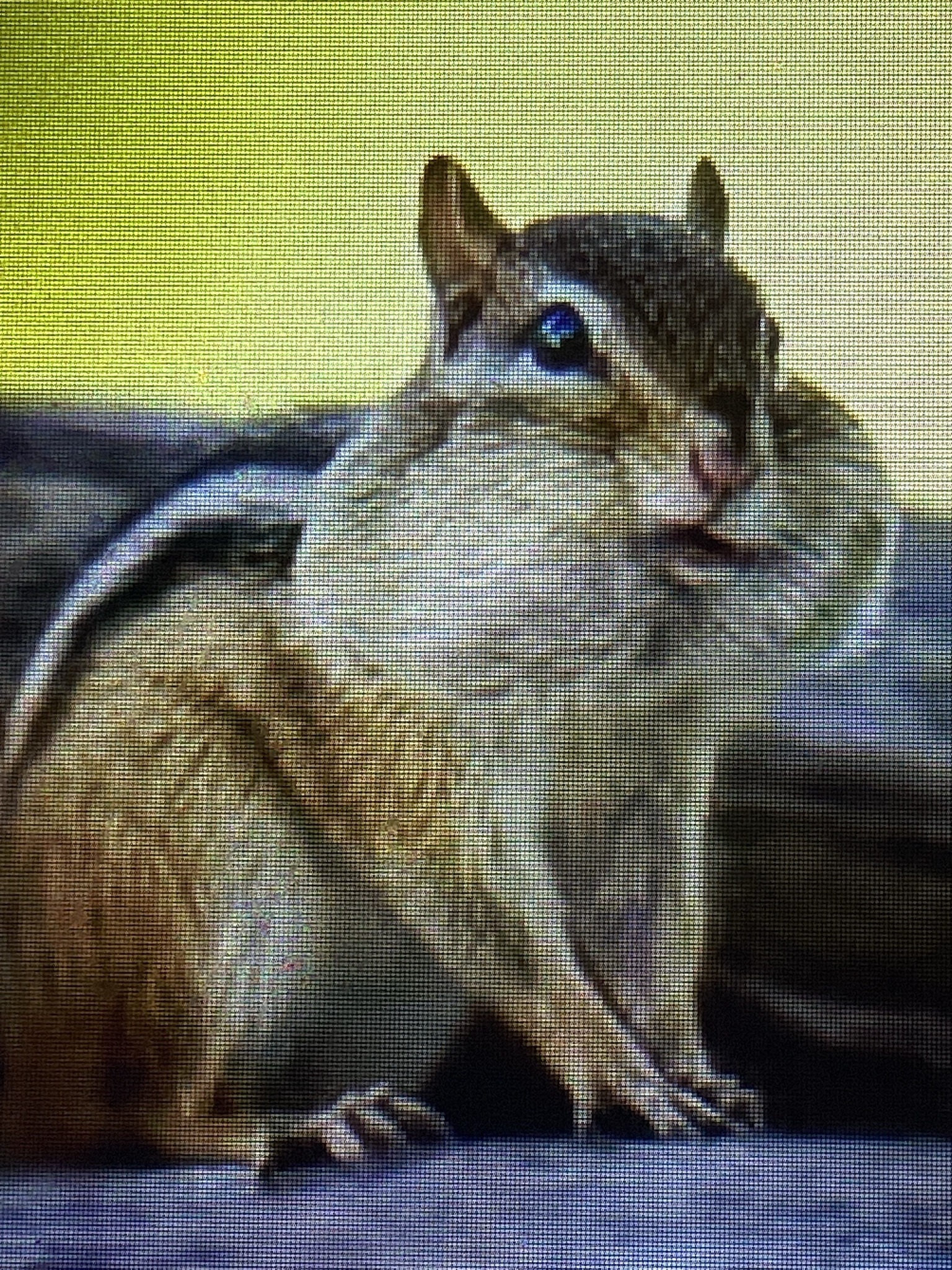
Brief Description
The Eastern Chipmunk is a small ground-dwelling rodent in the squirrel family, recognizable by its striped back and facial markings, and its expandable cheek pouches used for storing food.
Characteristics
Reddish-brown fur with five dark stripes and two light stripes along its back, facial stripes around the eyes, small erect ears, and large stretchable cheek pouches.
Habitat
Deciduous forests, woodlands, urban parks, gardens, and rocky areas with plenty of cover across eastern North America.
When to Find It
Most active during daytime (diurnal) in spring, summer, and autumn. They enter periods of torpor during winter within underground burrows.
Conservation Status
Least Concern (IUCN)
Ecological Role
Acts as an important seed disperser, mycorrhizal fungal spore vector, prey species for various predators, and soil aerator through burrowing activity.
Easily Confused With
Least Chipmunk (Tamias minimus), which is smaller with stripes extending all the way to the base of the tail, and Thirteen-lined Ground Squirrel, which has alternating rows of spots and stripes.
Observation Tips
Look near stone walls, fallen logs, and leaf litter during early morning or late afternoon. Keep quiet and still as they are easily startled by sudden movements.
Interesting Facts
An Eastern Chipmunk's cheek pouches can expand to the size of its head, allowing it to transport multiple nuts or seeds back to its burrow in a single trip.