Cardinal Flower
Scientific Name: Lobelia cardinalis
Category: plant
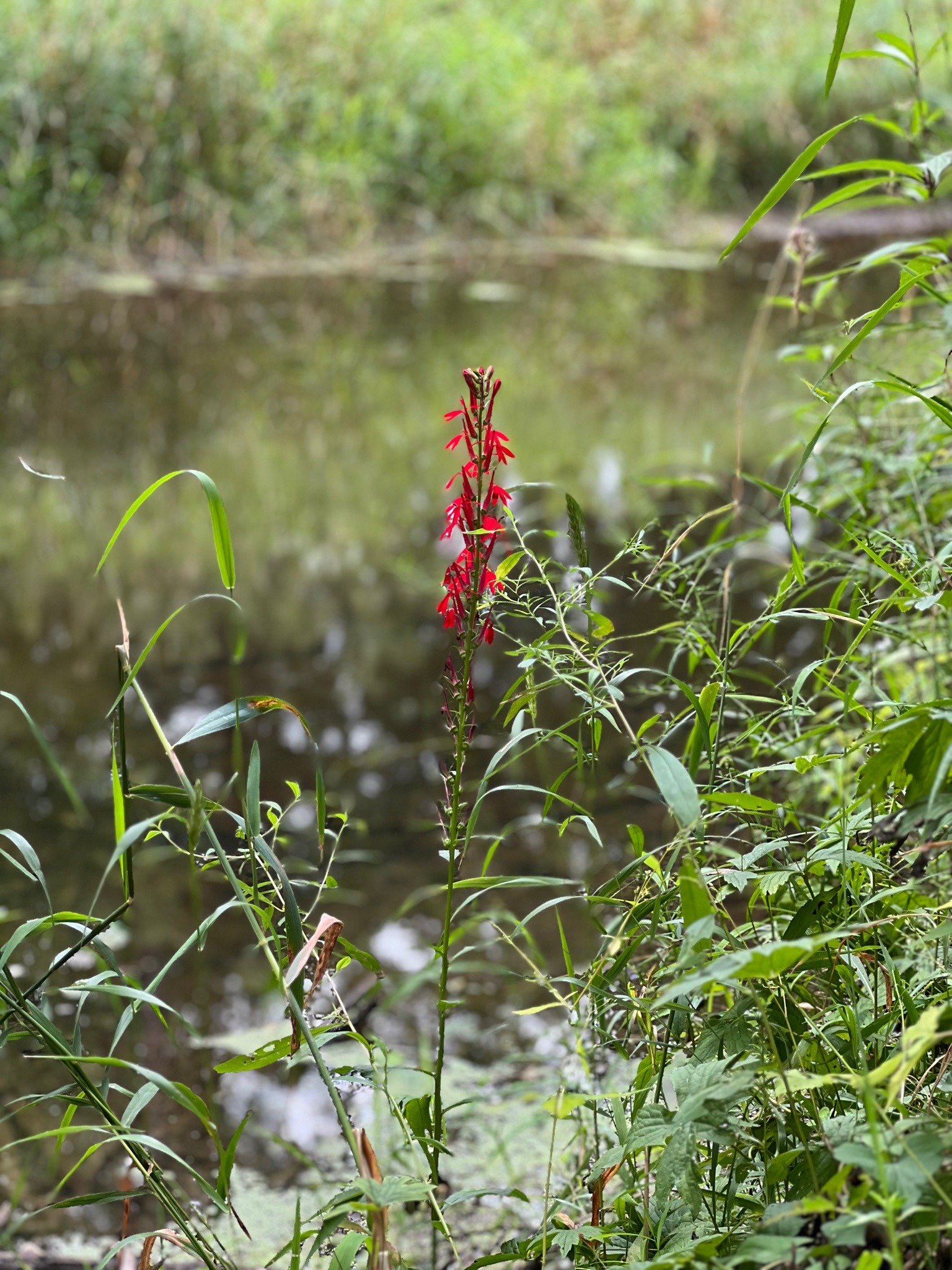
Brief Description
A striking herbaceous perennial native to the Americas, easily recognized by its vibrant, deep red tubular flowers arranged in a tall, terminal spike.
Characteristics
Grows up to 2-4 feet tall with alternate, lance-shaped, toothed dark green leaves. The flowers are bright cardinal red, roughly an inch long, with three lower lobes and two upper lobes forming a distinct tubular structure.
Habitat
Found in damp soils, wetlands, stream banks, pond edges, marshes, and low wooded areas.
When to Find It
Blooms from mid-summer through early fall (typically July to October).
Conservation Status
Secure globally, though vulnerable to habitat loss in localized areas.
Ecological Role
Crucial nectar source for hummingbirds, which are its primary pollinators due to the flower's tubular shape and red color; also attracts butterflies and long-tongued bees.
Easily Confused With
Great Blue Lobelia (Lobelia siphilitica), which has blue flowers, and Indian Paintbrush, which features distinct bracts rather than individual tubular flowers.
Observation Tips
Look along wet, shaded or partially sunny stream banks during late summer. Bring a macro lens for close-ups of visiting hummingbirds.
Interesting Facts
Named after the brilliant red robes worn by Roman Catholic cardinals. Indigenous peoples historically used parts of the plant medicinally, though it is toxic in large quantities due to alkaloid content.