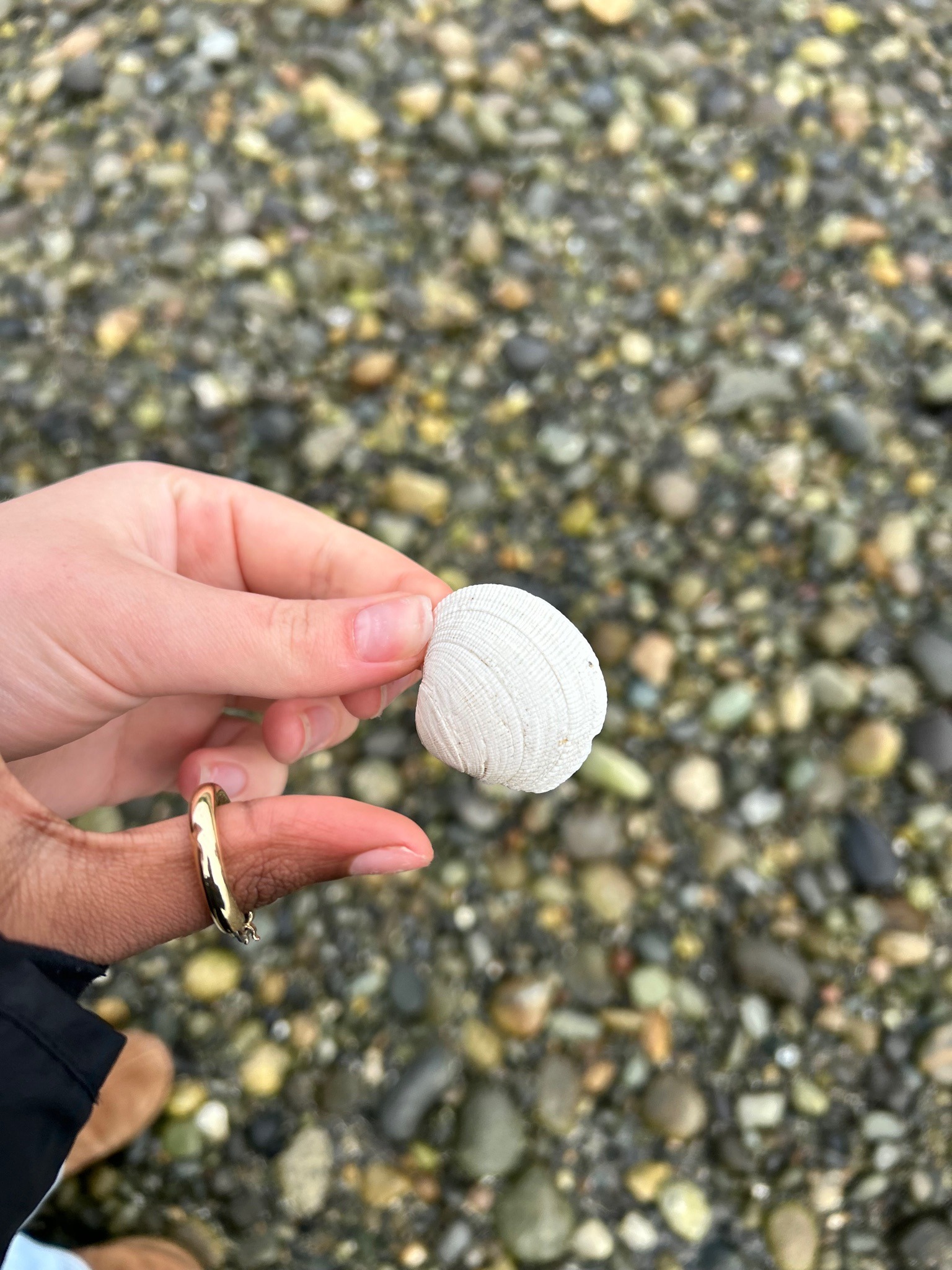
Pacific Littleneck Clam Shell
Scientific Name: Leukoma staminea
Category: shell
Brief Description
A small, rounded bivalve shell often found on rocky or gravelly beaches.
Characteristics
Oval to round shape with strong radiating ribs and less prominent concentric ridges, giving it a cross-hatched or latticed texture. Usually white, cream, or grey.
Habitat
Intertidal and shallow subtidal zones, particularly in gravel, coarse sand, or mud under rocks.
When to Find It
Found year-round on beaches as empty shells; live specimens are best observed during low tide.
Conservation Status
Generally common, though populations can be affected by over-harvesting or pollution.
Ecological Role
Filter feeders that help maintain water quality and serve as a primary food source for crabs, sea stars, snails, and shorebirds.
Easily Confused With
Manila Clams (Ruditapes philippinarum), which tend to be more elongated and often have more colorful patterns or purple staining inside.
Observation Tips
Look for them in tide pools or among cobble at low tide. When collecting shells, ensure they are empty and check local regulations.
Interesting Facts
Pacific Littleneck Clams can live for up to 10-15 years and are a traditionally important food source for Indigenous coastal communities.