Amur Honeysuckle
Scientific Name: Lonicera maackii
Category: plant
Brief Description
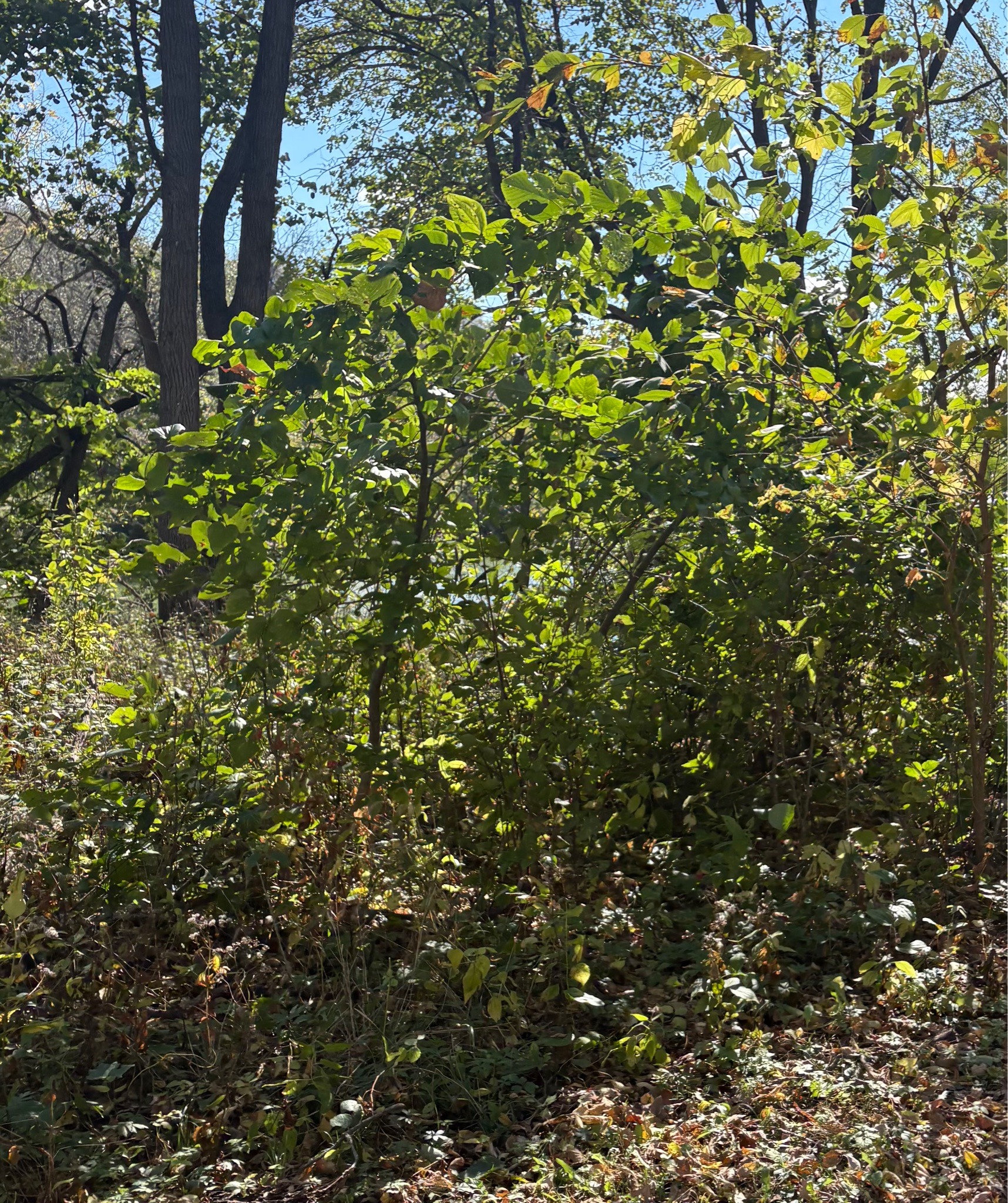
An invasive deciduous shrub with opposite, simple leaves, fragrant white-to-yellow tubular flowers, and bright red berries.
Characteristics
Grows up to 5 meters tall with multiple arching stems. Leaves are dark green, oval-shaped, tapering to a point, with finely hairy undersides. Flowers appear in spring, and distinct paired red berries develop in late summer and autumn.
Habitat
Forest edges, woodlands, successional fields, roadsides, and riparian areas, thriving in full sun to partial shade.
When to Find It
Leaves emerge earlier in spring and stay green later in autumn than most native plants, making them easily identifiable in early spring or late fall.
Conservation Status
N/A
Ecological Role
Considered a highly invasive exotic species in North America. It outcompetes native understory vegetation for light, moisture, and nutrients, altering forest structure.
Easily Confused With
Can be confused with native honeysuckles (like Tartarian honeysuckle) or other shrubs with opposite leaves such as buckthorns or viburnums. Distinguished by its larger size, serrated-free margin leaves, and hairy leaf undersides.
Observation Tips
Look for dense thickets in woodland edges. In Iowa, its ability to hold green leaves longer into the autumn than surrounding native brush is a dead giveaway.
Interesting Facts
Amur honeysuckle was introduced to North America from Asia in the late 19th century as an ornamental landscape plant and for wildlife cover, before its invasive nature was recognized.
User Notes
Found in Iowa