Tussock Moth Caterpillar
Scientific Name: Lymantriinae
Category: insect
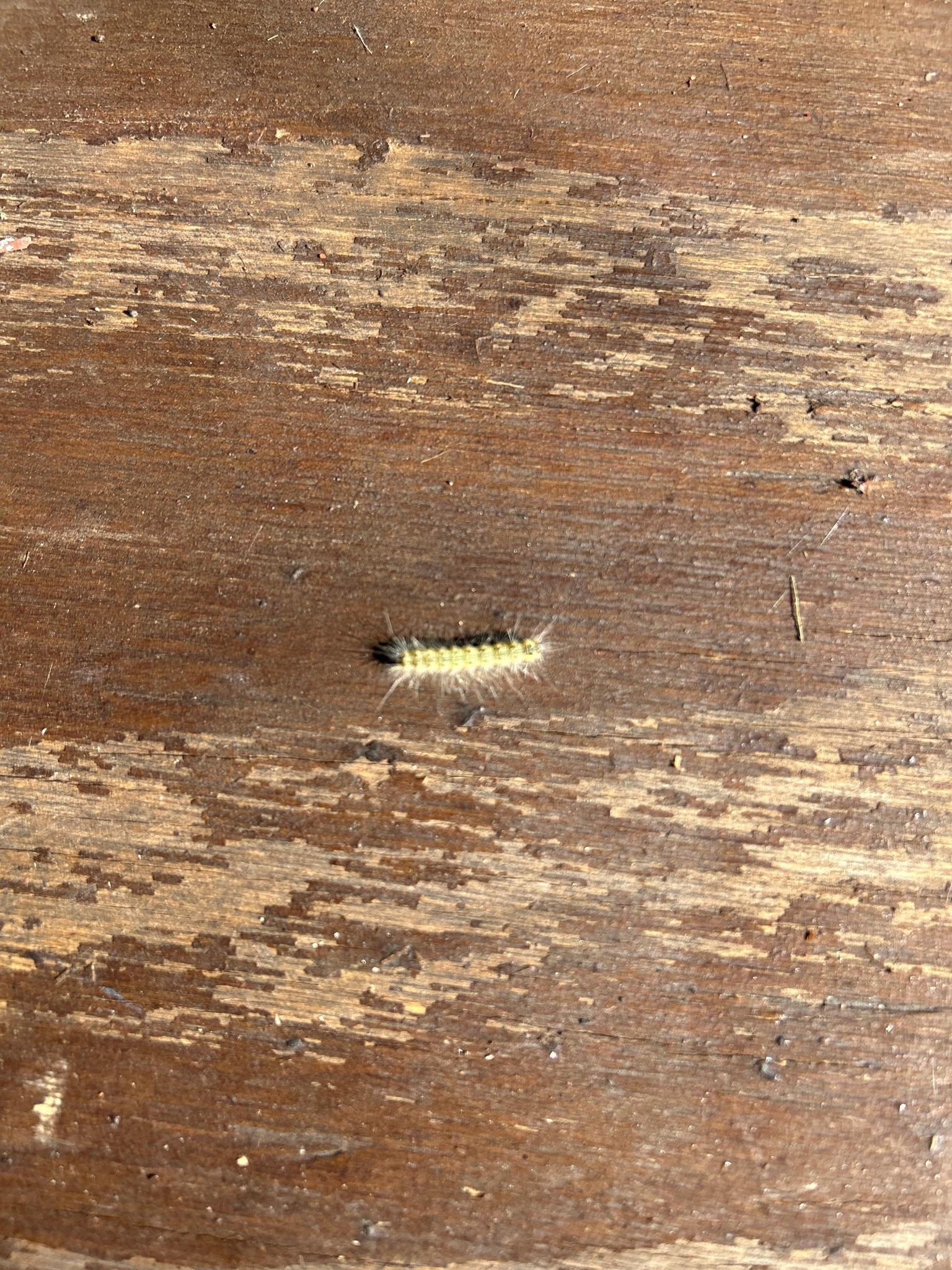
Brief Description
A small, hairy caterpillar often found crawling on wood or vegetation, belonging to the subfamily Lymantriinae.
Characteristics
Features distinct tufts or pencils of hairs along its back, often yellowish or pale with darker markings. The hairs can be irritating to human skin.
Habitat
Forests, woodlands, and suburban areas with deciduous trees and shrubs.
When to Find It
Most commonly observed during spring and summer months when larvae are actively feeding.
Conservation Status
N/A
Ecological Role
Serves as an important food source for many bird species, though some species can experience population outbreaks that defoliate trees.
Easily Confused With
Other fuzzy caterpillars such as woolly bears or tiger moth larvae; distinguished by specific tufted hair arrangements.
Observation Tips
Observe from a safe distance and avoid touching with bare hands, as the specialized hairs (setae) can cause skin irritation or allergic reactions.
Interesting Facts
Many tussock moth caterpillars use their bright coloration and irritating hairs as a defense mechanism to deter predators.