American Sweetgum
Scientific Name: Liquidambar styraciflua
Category: tree
Brief Description
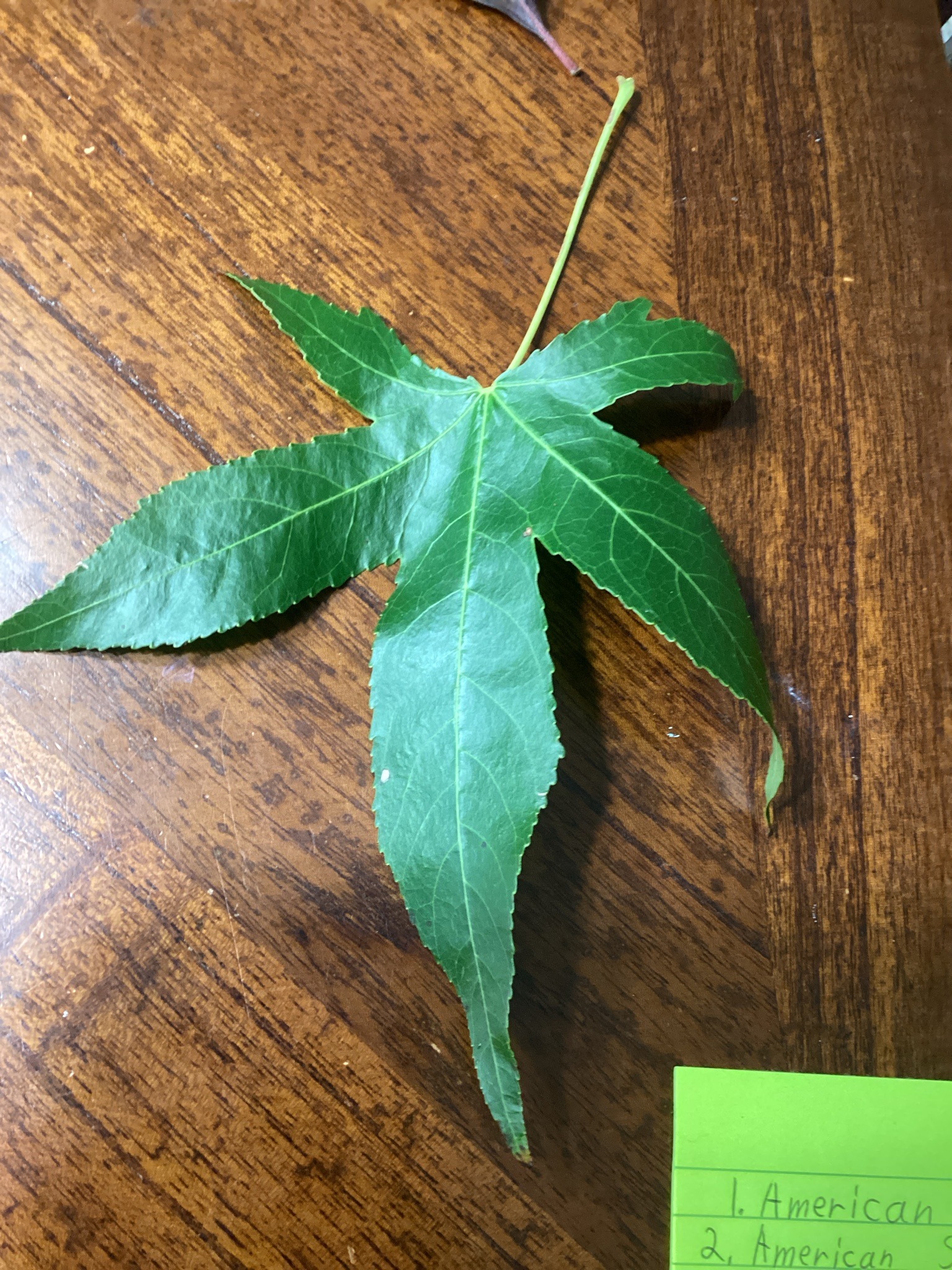
A star-shaped, 5-lobed green leaf characteristic of the American Sweetgum tree, featuring finely serrated margins and alternate arrangement on branches.
Characteristics
Star-shaped leaves typically with 5 (sometimes 7) pointed lobes, finely toothed edges, bright green in spring and summer, turning vibrant shades of red, purple, yellow, and orange in autumn. Crushed leaves emit a characteristic balsamic or resinous fragrance.
Habitat
Moist, rich alluvial soils along streams, river bottoms, and floodplains, as well as disturbed early-successional upland sites.
When to Find It
Best observed in spring and summer for vibrant green foliage, or autumn for brilliant multicolored leaves and spiky fruit balls ('gumballs').
Conservation Status
Least Concern
Ecological Role
Provides food and cover for various wildlife, including squirrels and finches that eat the seeds within the woody fruit capsules.
Easily Confused With
Maples (Acer species), but sweetgum leaves are arranged alternately on the stem and are star-shaped with finely serrated margins, whereas maples typically have opposite leaves and different lobe structures.
Observation Tips
Look for the distinctive star-shaped leaves on trees in deciduous or mixed forests, and watch out for the spiky seed pods on the ground beneath.
Interesting Facts
The sweetgum gets its name from the sweet resin or gum exuded from wounds in the bark, which was historically used to make chewing gum and incense.