Shoebill
Scientific Name: Balaeniceps rex
Category: bird
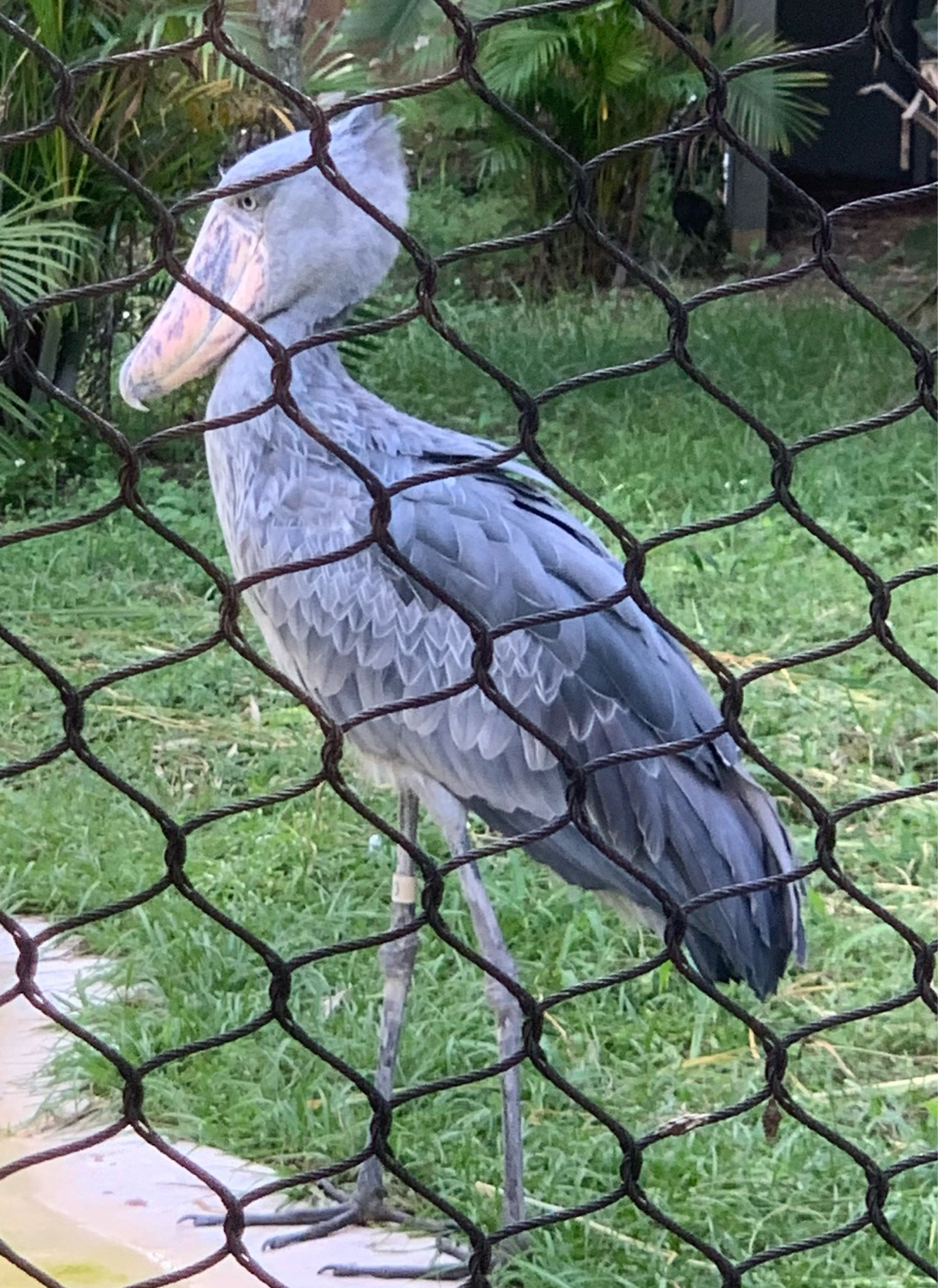
Brief Description
A large, prehistoric-looking wading bird famous for its massive, shoe-shaped bill.
Characteristics
Stands about 3.5 to 5 feet tall with a bulbous, sharp-hooked bill that is mottled grey and pink. It has blue-grey plumage, a small crest on its head, and very long, thin legs with large feet.
Habitat
Found in large freshwater swamps and marshes with dense vegetation like papyrus and reeds. Its range is centered in East-Central Africa, specifically South Sudan, Uganda, and Zambia.
When to Find It
Non-migratory and generally sedentary, though they may move locally based on water levels and food availability. Most active during the day.
Conservation Status
Vulnerable
Ecological Role
Acts as an apex predator in its wetland ecosystem, controlling populations of large fish, lungfish, snakes, and even juvenile crocodiles.
Easily Confused With
Sometimes confused with large herons or storks, but easily distinguished by its unique bulbous bill and grey coloration. Pelicans also have large bills but lack the sharp hook and prehistoric head shape.
Observation Tips
They are incredibly patient hunters and will stand motionless for hours. If observing in the wild, maintain silence and distance as they are sensitive to human disturbance.
Interesting Facts
Despite their appearance, genetic studies suggest they are more closely related to pelicans than to storks. They communicate by clattering their bills, which sounds similar to a machine gun.