Jersey Tiger
Scientific Name: Euplagia quadripunctaria
Category: insect
Brief Description
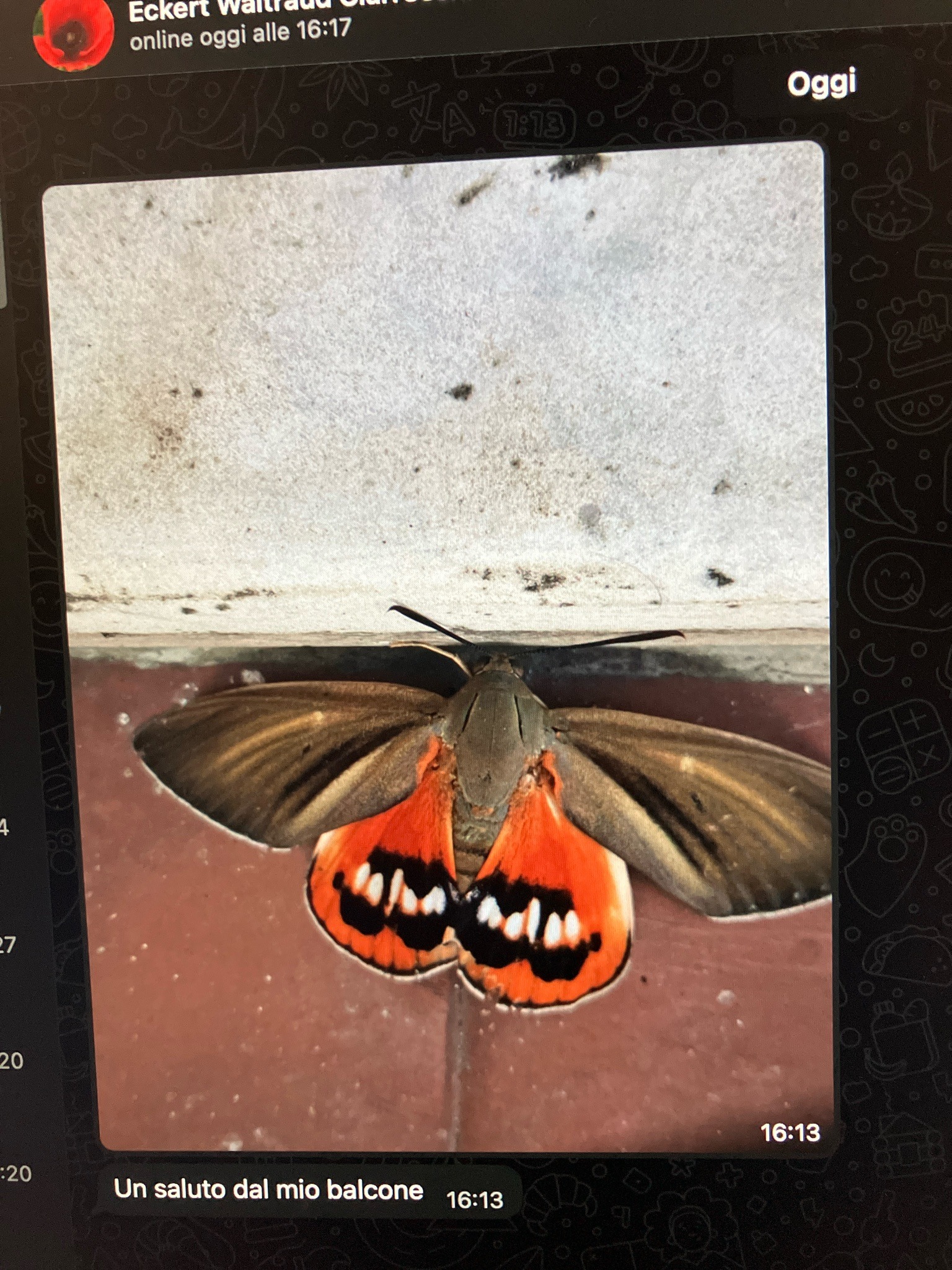
A striking day-flying moth recognized by its creamy-white striped forewings and vibrant orange-red hindwings marked with black spots and white bars.
Characteristics
Forewings are dark brown or black with distinct white diagonal stripes forming a V-shape pattern. Hindwings are brilliant orange-red with a submarginal row of black spots and prominent white markings outlined in black. Wingspan ranges from 52 to 65 mm.
Habitat
Dry scrub, bushy areas, river valleys, woodland edges, and urban gardens with abundant flowering plants.
When to Find It
Adults are typically active and visible during the summer months from July to September, flying actively during the day.
Conservation Status
Least Concern globally, though protected in specific regions like the UK under Schedule 5 of the Wildlife and Countryside Act.
Ecological Role
Adults act as pollinators when visiting flowers for nectar. The bright colors of the hindwings serve as a warning to predators that the moth is unpalatable due to toxic compounds retained from its larval diet.
Easily Confused With
Can be confused with the Scarlet Tiger moth (Callimorpha dominula), which has more spotted forewings and a different distribution of white markings on the red hindwings.
Observation Tips
Look for them resting on walls, fences, or vegetation during the day, or feeding on nectar from flowers such as buddleia, ivy, and brambles in sunny weather.
Interesting Facts
Unlike many moths, the Jersey Tiger is diurnal, meaning it is naturally active during the daytime as well as at night. When disturbed, it flashes its bright red hindwings to startle potential predators.