Ninebark
Scientific Name: Physocarpus opulifolius
Category: plant
Brief Description
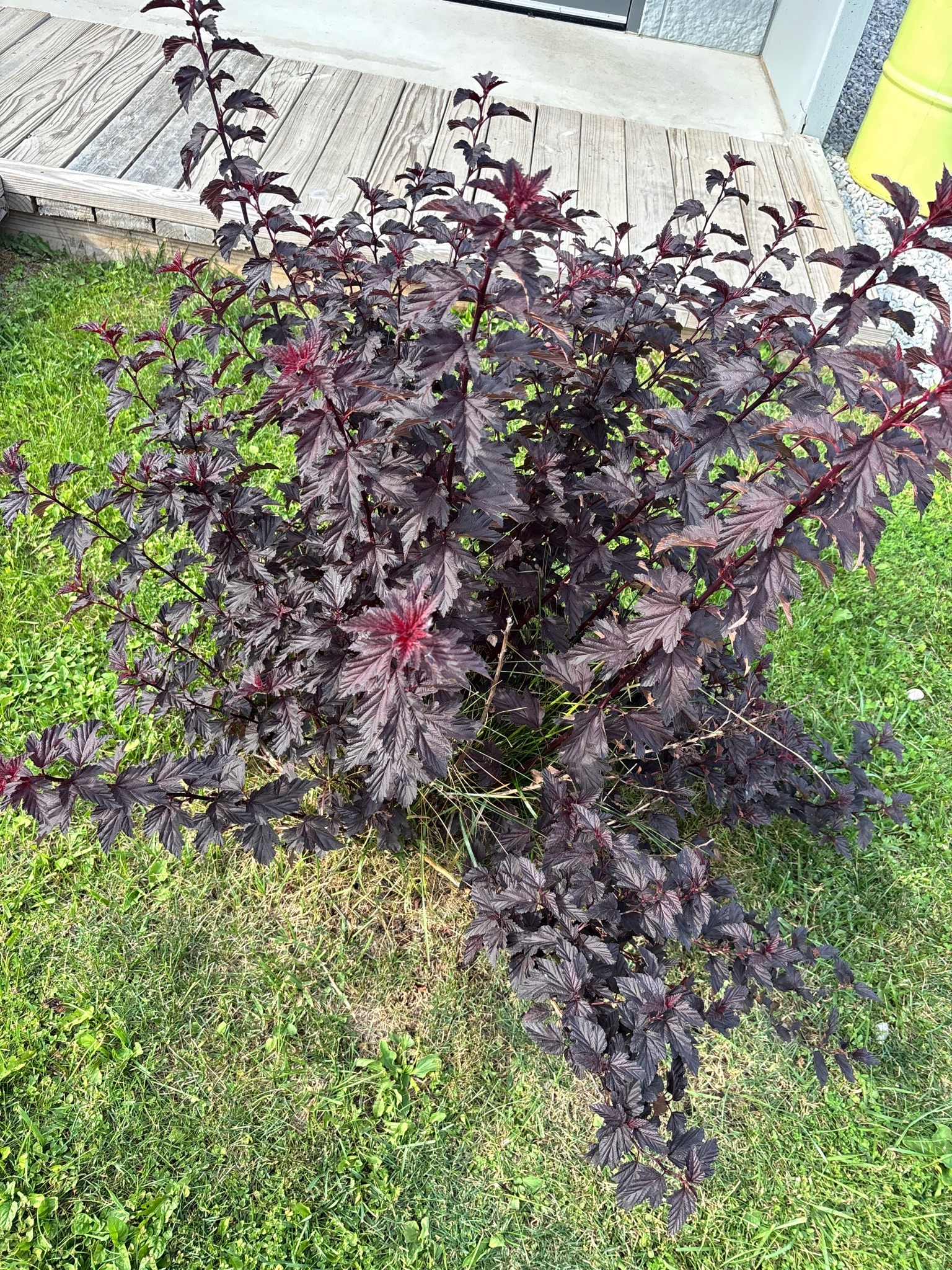
A deciduous shrub known for its dark purple leaves and peeling bark, often grown as an ornamental landscape plant.
Characteristics
Features deep purple to nearly black alternate leaves that are lobed and sharply toothed. The stems have exfoliating, papery bark that peels in thin strips.
Habitat
Typically found in moist thickets, rocky hillsides, and along stream banks in the wild, though widely cultivated in gardens and residential landscapes.
When to Find It
Best observed during the growing season from spring through autumn for its vibrant foliage, and winter for its distinctive peeling bark.
Conservation Status
N/A
Ecological Role
Provides shelter and nesting sites for small birds and insects. Its flowers offer nectar for pollinators.
Easily Confused With
Can be confused with other purple-leaf shrubs like certain varieties of barberry (Berberis), but ninebark is distinguished by its maple-like leaves and peeling bark.
Observation Tips
Plant in full sun to partial shade to ensure the deepest leaf coloration. Prune lightly after flowering to maintain shape.
Interesting Facts
The common name 'ninebark' refers to the thin layers of bark that peel off in strips, revealing multiple lighter layers underneath.