Asian Shore Crab Molt
Scientific Name: Hemigrapsus sanguineus
Category: other
Brief Description
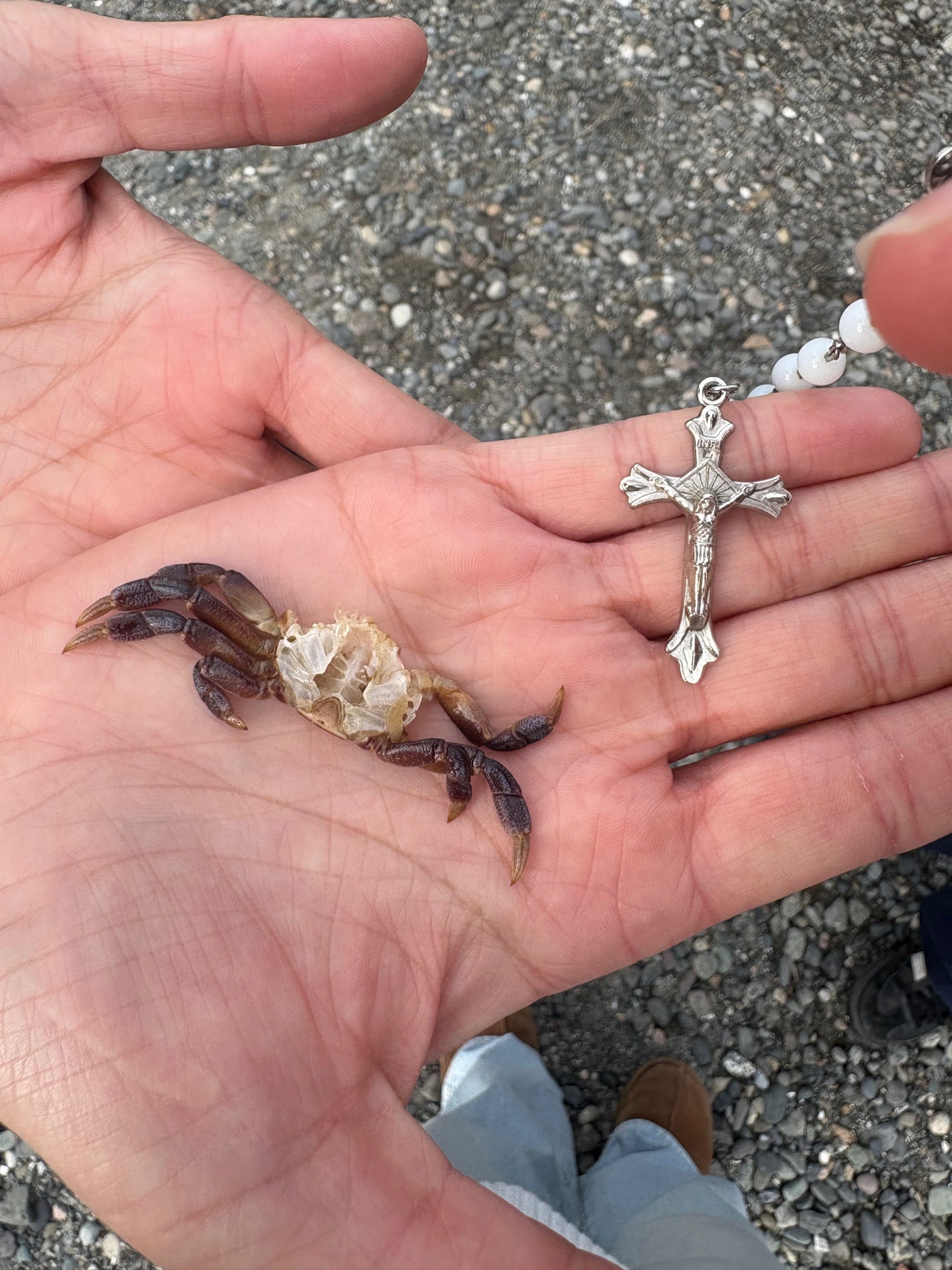
An empty exoskeleton of a small crab, likely the invasive Asian Shore Crab, showing the clear internal structures where the body once sat.
Characteristics
Small, square-shaped carapace with three teeth on each side of the eyes. Legs often have light and dark banding. The specimen in the image is a molt, which is why the top of the shell is missing and the white internal gill structures are visible.
Habitat
Intertidal zones, specifically rocky shores, oyster reefs, and mudflats. They are highly adaptable to various salinities and temperatures.
When to Find It
Molting occurs throughout the warmer months as the crab grows. Visible year-round as debris on beaches.
Conservation Status
Invasive / Stable
Ecological Role
As an invasive species in North America and Europe, they compete with native crabs for food and habitat, often displacing native species like the Blue Crab or Mud Crab.
Easily Confused With
Native Mud Crabs (Panopeidae family) which have more rounded carapaces and non-banded legs. Green Crabs (Carcinus maenas) are larger with five teeth on the carapace sides.
Observation Tips
Look under rocks in the intertidal zone at low tide. Handle live crabs carefully as they are quite fast and can pinch. When finding a molt, notice how the entire internal framework of the shell is preserved.
Interesting Facts
Crabs must shed their hard outer shells to grow; after molting, their new skin is soft for several days, making them extremely vulnerable to predators. The Asian Shore Crab is known for its high reproductive rate, with females able to produce up to 50,000 eggs several times per season.