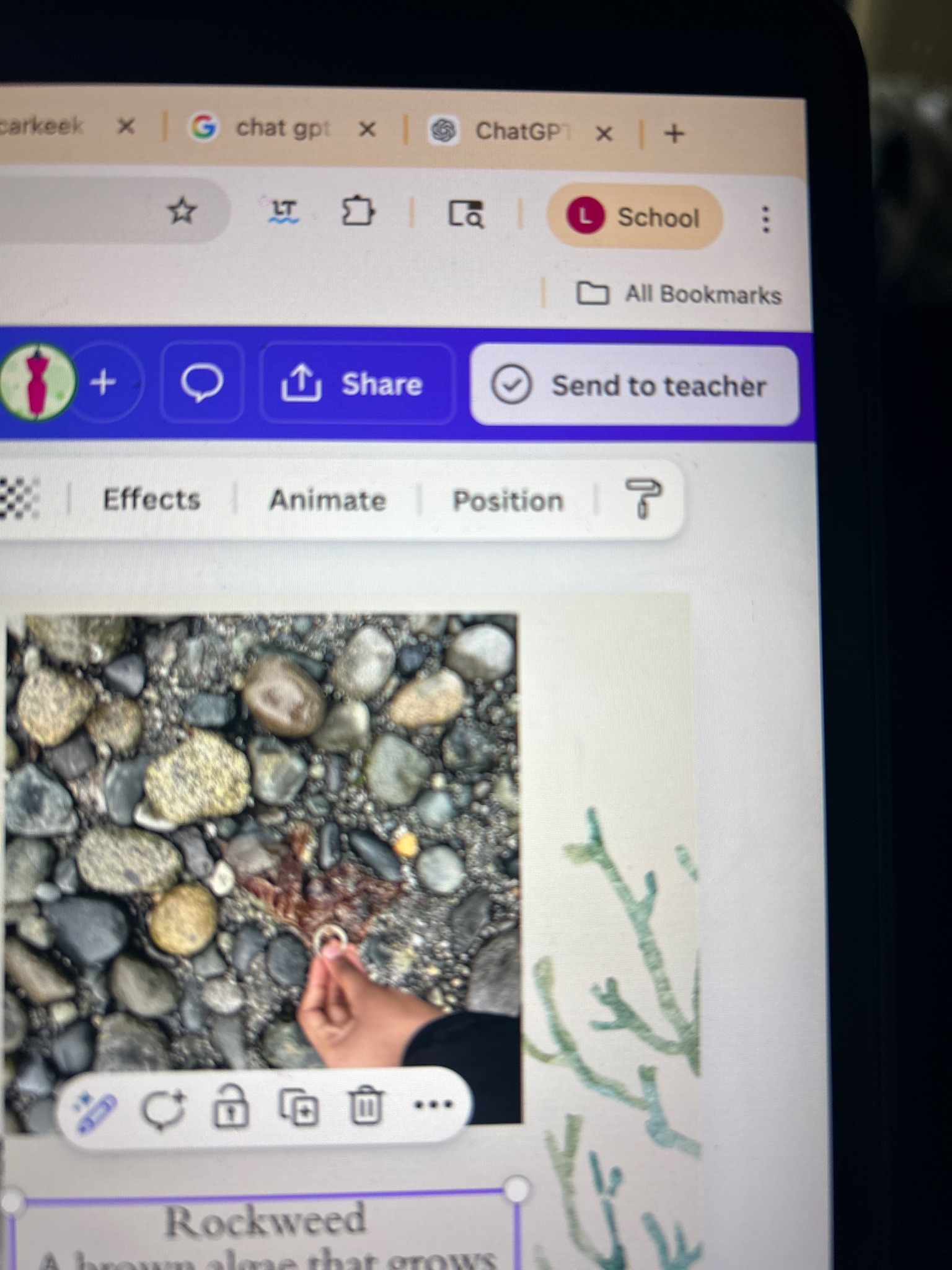
Rockweed
Scientific Name: Fucus distichus
Category: other
Brief Description
A common brown alga found attached to rocks in the intertidal zone, known for its distinctive air bladders.
Characteristics
Olive-brown to dark green fronds that are flattened and dichotomously branched. They often have swollen, paired tips (receptacles) and midribs running through the fronds.
Habitat
Attached to rocks in the mid to high intertidal zones of rocky shores.
When to Find It
Visible year-round, primarily during low tide when the shoreline is exposed.
Conservation Status
Common/Not Threatened
Ecological Role
Provides critical habitat, shelter, and food for many small marine organisms including crabs, snails, and small fish.
Easily Confused With
Bladderwrack (Fucus vesiculosus), which has distinct paired air bladders along the fronds rather than just at the tips. Sargassum is another brown algae but usually has leaf-like structures and berry-like bladders.
Observation Tips
Look for it on rocky beaches during low tide. Be careful as it becomes very slippery when wet.
Interesting Facts
Rockweed produces a jelly-like substance that helps it retain moisture when exposed to air during low tide, preventing it from drying out.